


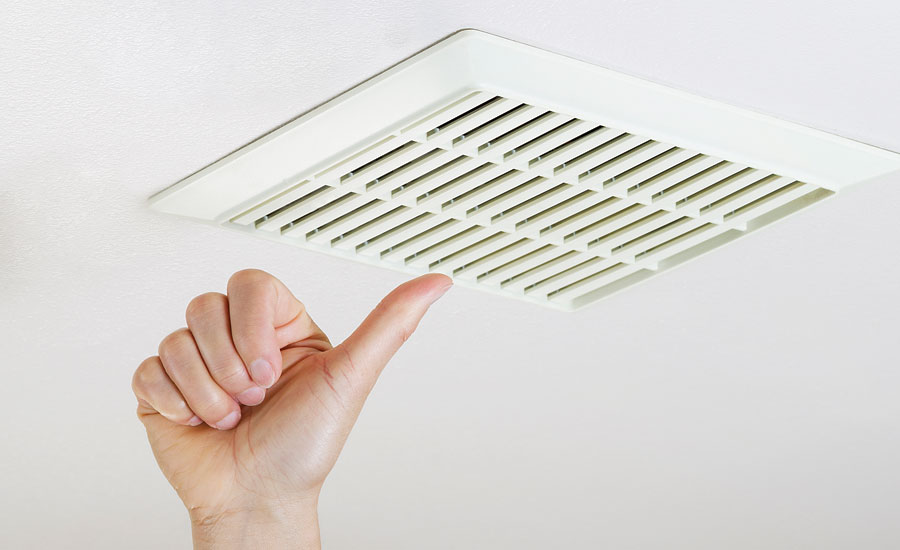
The majority of home maintenance is superficial. We may retouch paint. Clean gutters. Possibly replace filters annually. But the most hardworking systems are invisible – those that move air throughout walls, ceilings, and floor gaps, which in turn, show the real problem when they stop working properly. When that ventilation isn’t working, the results can remain unseen until it’s too late, such as in structural damage, malfunctioning systems, and unhealthy indoor air.
What restricted airflow does to mechanical components
Issues on the equipment side are no less costly. When ductwork is partially blocked – be it by a section that’s collapsed inward, accumulated debris forcing its way into the airstream, or a damper that was closed for maintenance and then forgotten – the system’s fan motor has to make up the difference. The increase in static pressure required causes the motor to draw a substantially higher wattage of electricity, shortening the part’s life and costing more to operate.
Coils can fail in a fan motor that’s starting to reach the end of its life, but more commonly the motor just slowly gets weaker, spinning with less torque (and again, less efficiency) until the assembly finally freezes up. Evaporator coils can also freeze if the airflow-restriction is severe enough, and then you’re looking at repair bills for both the air-moving side and for refrigeration work. None of this is self-evident to a casual observer.
The most consistently effective way to get out in front of both of these problems is also the simplest: service ducted air conditioning systems through a professional who brings the tools to check and maintain airflow balance, duct integrity, and system static pressure along with the usual components on a regular basis. Surface cleaning is simply not designed to get into these spaces.
How stagnant air becomes a structural problem
Water vapor is the enemy within any house and it’s ventilation that erodes its power. But when that air exchange slackens, condensation can gradually accumulate in the most lightless, unseen-to-human-eye parts of our living structures – inside the cavities of ceilings, the nooks and crannies of walls, the ductwork coursing through unheated cellars, crawl spaces, or garages. It doesn’t take long for that damp to get to work on wooden building materials and insulation.
This is how “Sick Building Syndrome” develops. Mold can grow to problematic quantities within wall cavities long before we start to smell the familiar musty tang, notice paint peeling from a wall, or see the steady creep of microbial foliage upon gypsum board. Indeed, by the time we become aware of visible red flags, the trouble may have been mounting and spreading for many weeks. In that case, the smell isn’t the problem – it’s the barometer of what is already a serious problem.
The air quality problem hiding in plain sight
Most people are not aware of the load carried by the indoor air. There are volatile organic compounds that are released by furniture, flooring adhesives, and cleaning products. If these are not released through proper air exchange, they get stored in the house. According to the EPA, the level of indoor pollutants can be two to five times higher than outdoor pollutants; in some cases, it can be more than 100 times higher due to insufficient ventilation.
This can be solved with a Heat Recovery Ventilator, which pulls the stale indoor air and brings fresh air in, transferring the heat in between so that the system does not lose energy. But for even the simplest system to work, you need clear, unobstructed pathways. Ducts that have not been checked for years get gaps, causing the conditioned air to bleed into wall cavities instead of going into rooms, a problem known as duct leakage, creating pressure imbalances and energy waste.
Then there is backdrafting. In houses where combustion appliances, like water heaters or furnaces, coexist with poorly balanced ventilation, negative pressure sucks the combustion gases back into the living area. This does not happen too often, but when it does, the situation becomes quite serious.
Spotting hidden failures before they escalate
There are a few telltale signs that you already have ventilation problems:
1. Your windows are constantly foggy or covered in condensation, especially in rooms that aren’t exposed to high humidity levels.
2. Paint is peeling or cracking near the ceiling corners of certain rooms, even if you’ve applied a fresh coat of paint recently. Bathrooms and kitchens are particularly prone to this issue.
3. You notice musty or chemical smells that don’t go away, despite cleaning the space and ensuring there are no leaks.
4. Certain rooms in your home are always too hot or too cold compared to other parts of the house.
5. Your HVAC’s MERV-rated filter is extremely dirty or clogged within a couple of weeks of changing it.
The maintenance gap most homeowners miss
It’s not that homeowners don’t care about maintenance. They do. It’s that ventilation systems don’t offer much in the way of feedback that they’re failing. They don’t leak in the way that a faucet does. They don’t make noise in the way a failing engine does. They just move less air, trap more moisture, and put more strain on mechanical components – until something fails or the damage is already done.