


Innovative garage floor ideas can turn an ordinary garage into a sleek and efficient space.
Whether you use your garage for parking, as a workshop, or for storage, a well-chosen floor can enhance both functionality and style.
Explore our list of seven sleek garage floor ideas to find inspiration for your project.
Classic Red Cabinets And Grey Floor
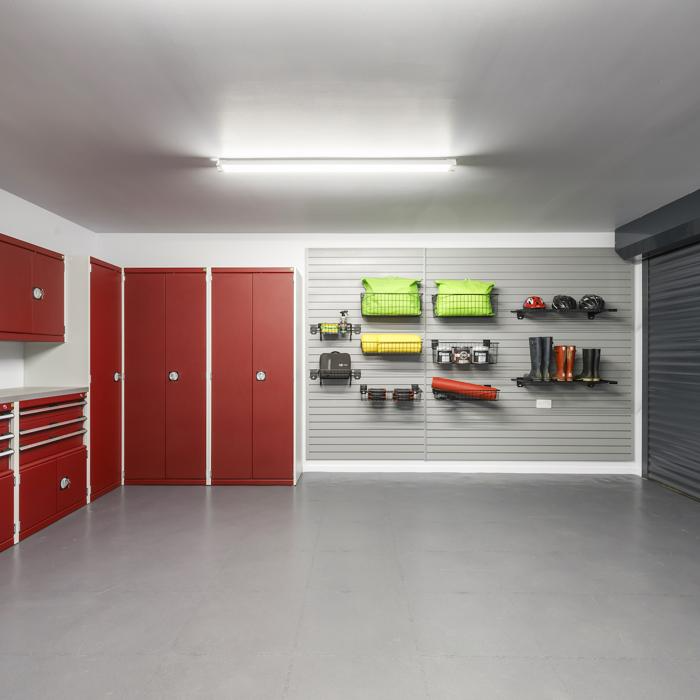
Adding red cabinets and a grey tiled floor can give your garage a bold yet sophisticated look. The contrast between the vibrant red storage units and the neutral grey floor creates a striking aesthetic.
This setup offers ample storage while maintaining a clean and organised appearance, making it ideal for those who like to keep their tools and equipment tidy.
High-Tech LED Ceiling and Checkered Floor
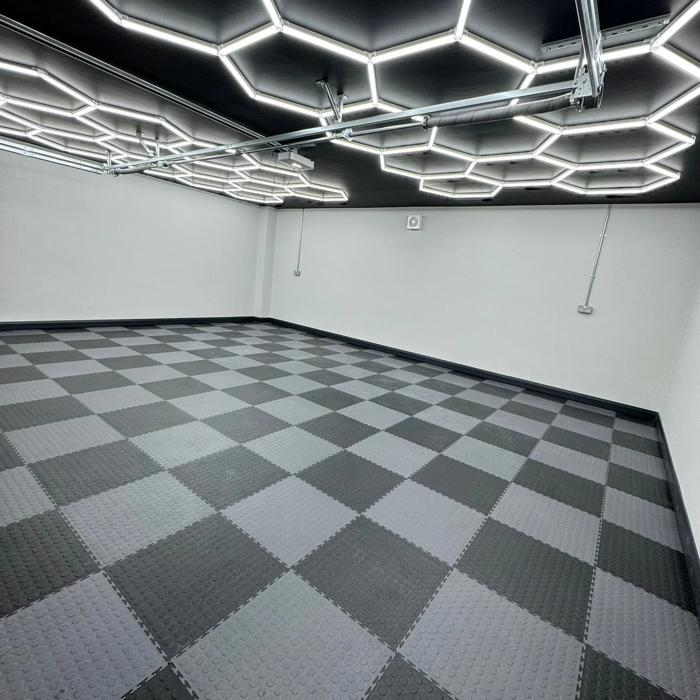
Combine a high-tech LED ceiling with a checkered floor to create a modern, futuristic garage space. The LED lighting enhances visibility and adds a unique visual element. The checkered floor tiles add a classic touch that complements the sleek ceiling design.
Industrial Rubber Tiles for a Durable Workspace
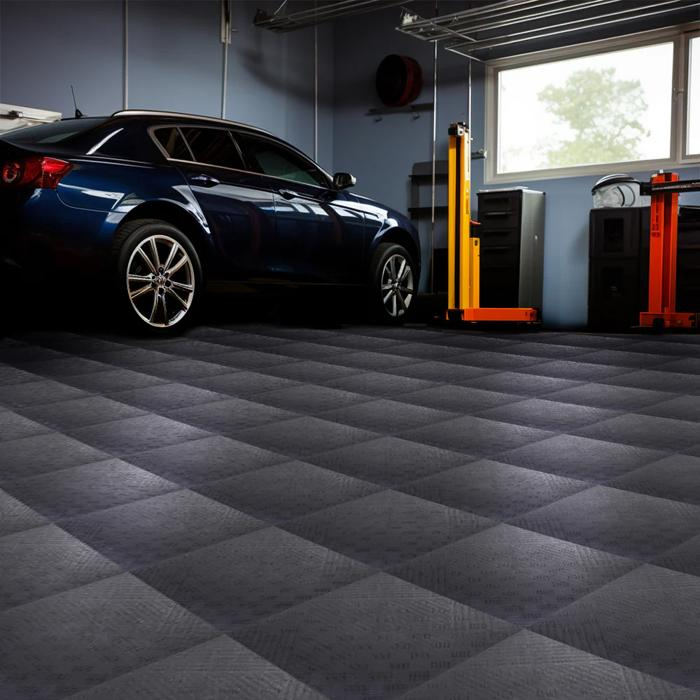
Opt for industrial rubber tiles if you need a durable and practical workspace. Rubber tiles provide excellent grip and withstand heavy use, making them ideal for garages where mechanical work is frequent.
The interlocking design ensures easy installation and replacement of damaged tiles. Rubber flooring is perfect for those who require a tough and reliable surface for their projects.
Classic Black and White Checkered Floor
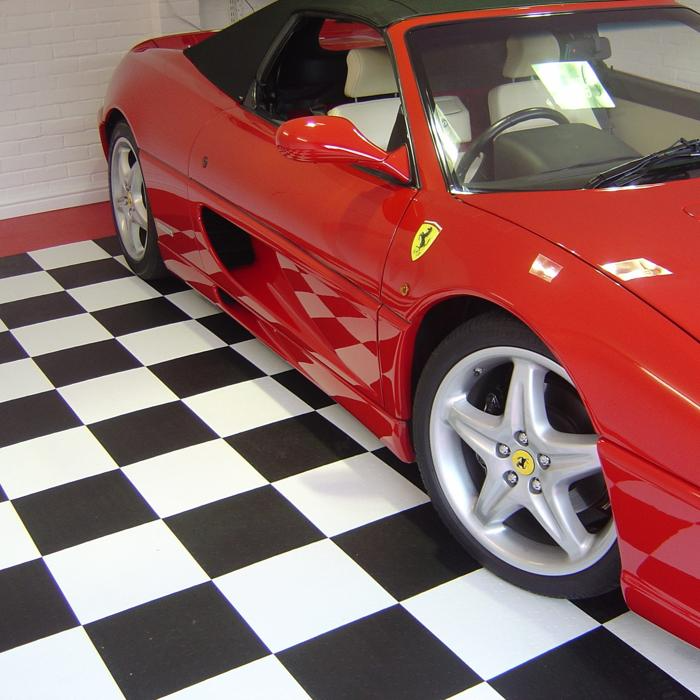
The classic black and white floor never goes out of style. Checkered patterns are timeless and add a touch of elegance and nostalgia to your garage. Pair them with sleek car models or vintage decor for a garage with character and charm.
Luxurious Marble Tiles for a Showroom Finish

For a truly luxurious garage, consider marble tiles. Marble garage floor ideas give your space a showroom finish, perfect for displaying high-end cars. The reflective surface of marble enhances the lighting and makes the space feel more expansive.
Modern Industrial Garage with Beams and Tiles
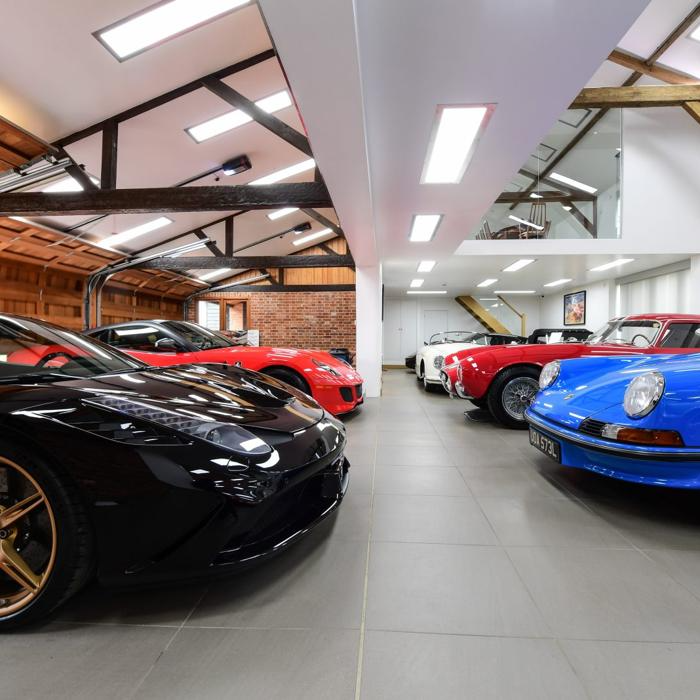
Transform your garage into a chic, modern space by combining industrial elements with sleek tiling. Exposed beams add a rustic touch, while large, neutral floor tiles provide a clean and polished look.
This blend of materials creates a stylish and functional environment perfect for car enthusiasts who want a contemporary and practical garage.
Versatile Rubber Flooring for a Multifunctional Space
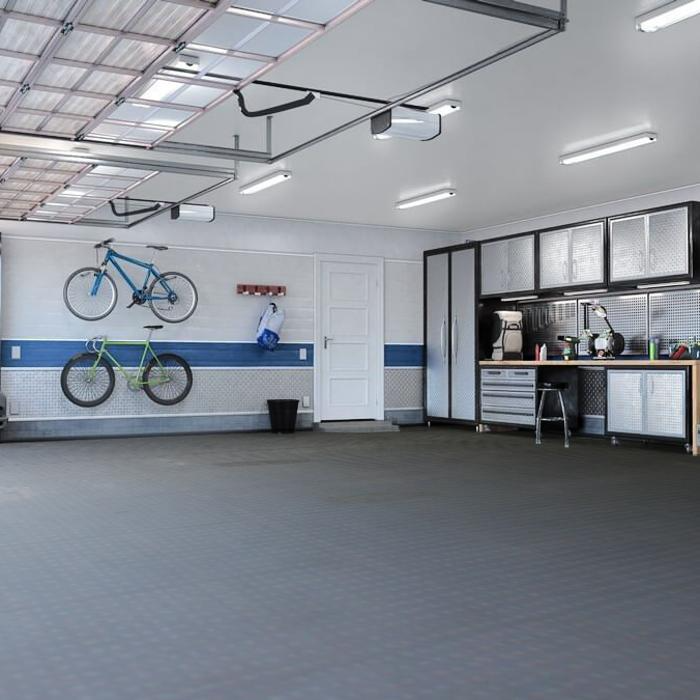
For a garage that serves multiple purposes, versatile rubber flooring is an excellent choice. This durable and easy-to-clean option can withstand heavy use and provide comfort underfoot.
Rubber flooring makes it easy to keep the garage tidy and functional. It’s ideal for those who use their garage for hobbies, repairs, and storage.
Comparing the Best Garage Flooring Ideas
Looks are only half the decision. The best garage flooring ideas also stand up to car tyres, dropped tools, oil drips and the cold that rises off a concrete slab. Here is how the main options compare so you can match the finish to how you actually use the space.
Epoxy and resin coatings
A poured epoxy or polyurethane coating bonds to the concrete and gives you a seamless, wipe-clean surface that shrugs off oil and chemicals. It is hard-wearing and looks sharp, but the slab has to be sound and properly prepared, and a damp or pitted floor needs fixing first or the coating will fail.
Interlocking tiles
Rigid PVC or rubber tiles clip together straight over the existing concrete with no adhesive, so they are the friendliest option for a DIY weekend. They hide a tired slab, lift your feet off the cold floor, and a damaged tile can be swapped out on its own. The trade-off is the visible joins, where grit can collect over time.
Porcelain floor tiles
For a true showroom finish, porcelain rated for heavy traffic is extremely tough and easy to keep clean. It needs a flat slab, a flexible tile adhesive and a competent tiler, and you should choose a slip-resistant finish, but the result outlasts almost everything else.
Painted concrete and rubber rolls
The cheapest route is a dedicated garage floor paint, which freshens a sound slab and cuts down on dust, though it wears at the tyre contact points and needs redoing. Rolled rubber matting is the quick, forgiving alternative: roll it out for grip and cushioning in a gym or workshop without committing to a permanent finish.
Garage flooring ideas for a damp slab: test before you choose
Most garage flooring ideas fail for the same reason: the concrete underneath is damp. A garage slab often has no damp-proof membrane, and moisture rising through it lifts paint and epoxy in sheets. So the first decision is not the colour or the finish, it is whether the slab is dry enough for a coating at all.
The test is cheap. The UK floor paint maker Everest Paints tells customers to tape a heavy-duty plastic sheet, or a cut-open bin bag, flat to the clean floor, seal every edge with duct tape and leave it for 24 hours. If the concrete underneath is the same colour as the rest of the floor and the plastic is dry, it passes. If the concrete has darkened or there are droplets on the underside of the plastic, it fails, and standard floor paint is off the table. It is the same idea as the US standard ASTM D4263, the plastic sheet method, which ASTM describes as a check for capillary moisture before coatings go on to concrete.
What the result means for the ideas above:
- Dry slab: every option is open, including paint and a full epoxy or resin coating.
- Damp slab, you still want a coating: you need a damp-tolerant two-part epoxy primer first. Everest sells these for wet concrete; an ordinary primer will not hold.
- Damp slab, you would rather not fight it: loose-laid interlocking PVC or rubber tiles and rolled rubber matting sit on top of the concrete instead of bonding to it, so they are the forgiving choice. Lift a corner now and then so trapped moisture can dry out.
- Porcelain: a tiler will want the slab flat, sound and dry before any adhesive goes down, so a damp result means fixing the cause first.
Two more garage flooring ideas: polished concrete and studded PVC
Two options UK garages use that the seven looks above do not show. Polished concrete is the existing slab ground and honed with diamond tooling until it shines, then sealed. There is nothing to peel, but it is a specialist job with heavy machinery, it suits a new or very sound slab, and it will not hide cracks. Studded PVC or vinyl sheet rolls out over the concrete like lino: the raised studs give grip under wet tyres and boots, it is quick to fit, and it can be laid over an existing floor.
FAQ
How Do I Know If My Garage Floor Is Too Damp for Epoxy?
Tape a heavy plastic sheet to the clean floor, seal all four edges and leave it for 24 hours. Darker concrete or droplets under the sheet mean the slab is too damp for standard floor paint or epoxy; you need a damp-tolerant epoxy primer, or a loose-laid floor such as interlocking tiles instead.
What Type of Flooring Is Best for a Garage?
The best type of flooring for a garage depends on how the space is used. Epoxy coatings are popular for their durability and glossy finish, which make them ideal for showrooms and high-traffic areas.
Rubber tiles offer excellent grip and cushioning, making them perfect for workshops. For a luxurious look, consider porcelain or ceramic tiles, which are stylish and easy to clean.
What Is the Least Expensive Way to Cover a Garage Floor?
Paint is the least expensive way to cover a garage floor. Concrete floor paint is cost-effective and easy to apply, providing a fresh look and protecting the surface.
Although it may require more frequent touch-ups, it’s affordable for those on a tight budget.
What Is the Best Thing to Cover a Garage Floor?
Epoxy coatings are often considered the best option for covering a garage floor. They are durable, resistant to stains and chemicals, and provide a sleek, high-gloss finish.
Epoxy floors also come in various colours and styles, allowing you to customise them to suit your garage’s aesthetic.
How Can I Cover My Concrete Floor Cheaply?
Consider using interlocking rubber or vinyl tiles to cover your concrete floor cheaply. These tiles are easy to install, provide cushioning, and can be individually replaced if damaged. Alternatively, roll-out mats are another budget-friendly option that can quickly cover large areas and provide a non-slip surface.
Can You Tile a Garage Floor?
Yes. Porcelain floor tiles rated for heavy traffic, or interlocking PVC tiles laid over the slab, both work well in a garage. Use a flexible adhesive and a slip-resistant tile for a permanent tiled floor, or clip-together tiles if you want a no-adhesive finish you can lift later.
Is Epoxy or Tile Better for a Garage Floor?
Epoxy gives a seamless, easy-clean surface that resists oil and chemicals, which suits a working garage, but it depends on a sound, dry slab. Tiles, whether porcelain or interlocking, are more forgiving of an imperfect floor and let you replace a damaged section. For most home garages, interlocking tiles are the simplest upgrade and epoxy is the hardest-wearing finish.
Conclusion
Renovating your garage floor can significantly enhance the functionality and appearance of your space.
Whether you opt for durable epoxy coatings, stylish tiles, or budget-friendly rubber options, there are garage flooring ideas to suit every need and budget.
Explore different materials and styles to find the perfect fit for your garage, making it a space you enjoy using every day.
What each garage floor idea costs in 2026
Looks and durability decide the shortlist; the budget decides the winner. The
gap between the cheapest and the dearest of these garage flooring ideas is
roughly tenfold for the same 15 square metres of concrete, so it is worth
knowing the numbers before you fall for a finish.
| Floor | Cost per m² | Single garage, fitted | Who fits it |
|---|---|---|---|
| Garage floor paint | Materials only | The cheapest route by a distance | DIY, a weekend |
| Interlocking PVC tiles | £20 to £25 supply only | About £300 to £435 excl VAT | DIY, no adhesive |
| Water-based epoxy | £30 to £50 fitted | Lower end of £1,500 to £3,000 | Installer |
| Solvent-based epoxy | £40 to £70 fitted | Mid range | Installer |
| Flake or chip system | £50 to £90 fitted | Mid to upper range | Installer |
| 100% solid epoxy | £60 to £100 fitted | Upper range | Installer |
| Metallic epoxy | £80 to £150 fitted | Top of £1,500 to £3,000 | Installer |
| Porcelain tiles | Tiles plus £25 to £95 labour | Depends on the tile chosen | Tiler |
Interlocking tiles: the predictable one
Interlocking garage tiles are the easiest to budget because there is no labour
in the figure. Most UK systems sit at £20 to £25 per square
metre, four 500mm tiles to the metre. Puzzlink prices its recycled PVC
tiles at £22.99 per m² excluding VAT, with ramp
edging from £3.49 a piece, which works out at roughly
£301 for a standard 12.5 m² single garage,
£435 for a large 18 m² single, £603 for a 25 m²
double and £863 for a 36 m² double, edging included. You lay
them yourself in an afternoon, and because they sit loose over the slab they are
the only option on this page that you can lift and take with you.
Epoxy: the wide range, and why
A fitted epoxy or resin floor runs £30 to £150 per square
metre, which sounds unhelpfully vague until you split it. The resin
system is most of the difference: water-based at £30 to £50 is the
usual residential choice, solvent-based £40 to £70, a flake or chip
finish £50 to £90, 100% solid epoxy £60 to £100, and a
marbled metallic finish £80 to £150. Underneath that sits the
preparation, £5 to £20 per m² for grinding, crack repair and
priming, which is the line people try to cut and the reason coatings fail.
In whole-job terms a standard single-car garage of 15 to 18 m² comes
in at £1,500 to £3,000 and a double garage at
£2,500 to £5,400. Watch the minimum charge: most
installers will not turn out for less than £500 to £800, so a small
single garage does not get proportionally cheaper.
Porcelain: priced like any other tiling job
Porcelain is the one where the tile itself sets the budget, because heavy-duty
floor porcelain ranges from supermarket prices to specialist rates. The labour is
predictable: UK tiling rates run £25 to £95 per m²
depending on tile size, format and region, set out in full in our
2026 tiling cost guide.
Add a flexible adhesive suitable for a garage slab, and budget for the slab to be
ground flat first if it is not.
The cheap route, and its catch
Garage floor paint is the least expensive way to cover a garage floor, and on a
sound, dry slab it genuinely works: it kills the concrete dust and brightens the
space for the price of a couple of tins. It wears through at the tyre contact
points and needs redoing, and it will not stick to a damp slab. Which paint, and
how to prepare for it, is covered in
what is the best garage floor paint.
If the slab is cold as much as it is tired, look at
insulating the garage floor
before you commit to a finish, and if damp is the problem, start with
sealing the concrete floor.
How much does it cost to redo a garage floor in the UK?
Between about £300 and £3,000 for a single garage,
depending entirely on the finish. Interlocking PVC tiles you fit yourself are
roughly £300 for a standard single garage. A professionally installed epoxy
floor on the same space is £1,500 to £3,000. Paint is cheaper than
either and lasts the least time.
Sources
- MyBuilder, epoxy floor cost 2026, for the per-m² rates by resin type, the preparation cost, the single and double garage totals and the minimum call-out charge.
- Puzzlink, garage floor tiles cost UK, for interlocking tile prices per square metre, ramp edging and the worked totals by garage size.
Prices checked 5 September 2026. Materials and labour rates move; get a written quote for your own slab.