


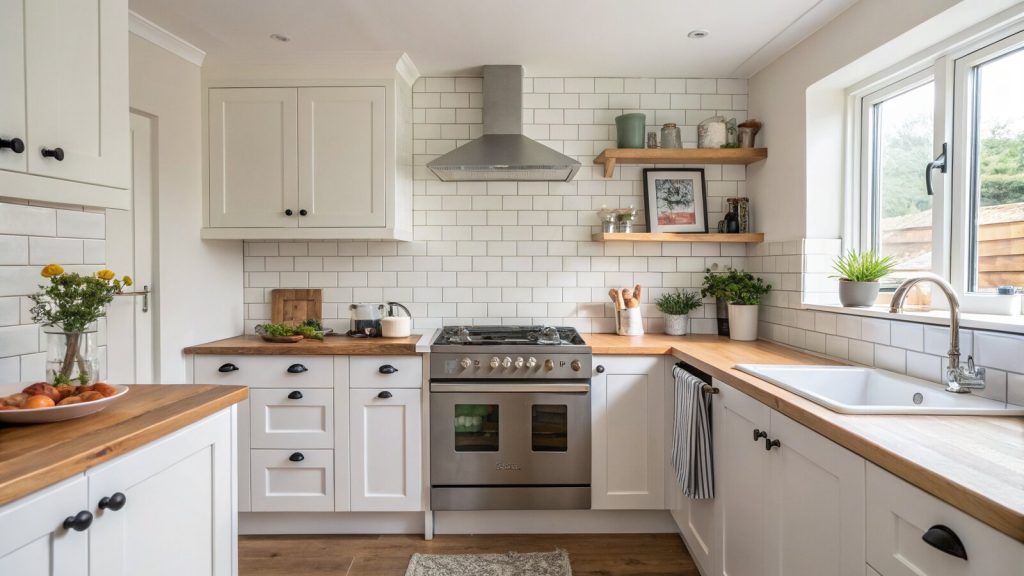
Kitchen splashback tile ideas give you a small, high-impact area to set the tone for the whole room, and because the space is modest you can be braver here than almost anywhere else in the house. A splashback protects the wall behind a hob or sink from grease and water, but it is also the strip of wall most people see first. Get the tile right and a plain kitchen lifts. Below are twelve looks that work in real UK kitchens, plus the practical bits a tiler in Bromley gets asked about every week: how high to go, which materials cope behind a hob, and how to keep the grout looking clean.
How to choose the right splashback tile
Three things decide a good splashback: the material, the size of the area, and the grout. Behind a hob the surface needs to shrug off heat and grease, so a glazed ceramic, porcelain or toughened glass tile is sensible, and anything porous like unsealed stone wants treating first. In a small kitchen a glossy tile bounces light and makes the room feel larger; in a bright open-plan space you can get away with a deep matt colour. Plan the layout so cut tiles fall at the edges rather than dead centre, and pick a grout colour at the same time as the tile, because it changes the look as much as the tile itself.
12 kitchen splashback tile ideas
Use these as a starting point. Most work as a slim run between worktop and wall units, or taken full height behind a hob or range as a feature.
1. Classic white metro tiles
The default for a reason. White metro (subway) tiles in a brick bond suit shaker, country and modern kitchens alike, and they are forgiving to fit. Swap white grout for grey or charcoal to make the bricks stand out.
2. Herringbone metro
Take the same metro tile and lay it in a herringbone or vertical stack instead of the usual brick bond. It costs nothing extra in materials and instantly looks more considered.
3. Brick-slip and exposed-brick effect
Thin brick-effect tiles bring warmth and texture, and work beautifully in industrial and rustic kitchens behind an open shelf or a range cooker.
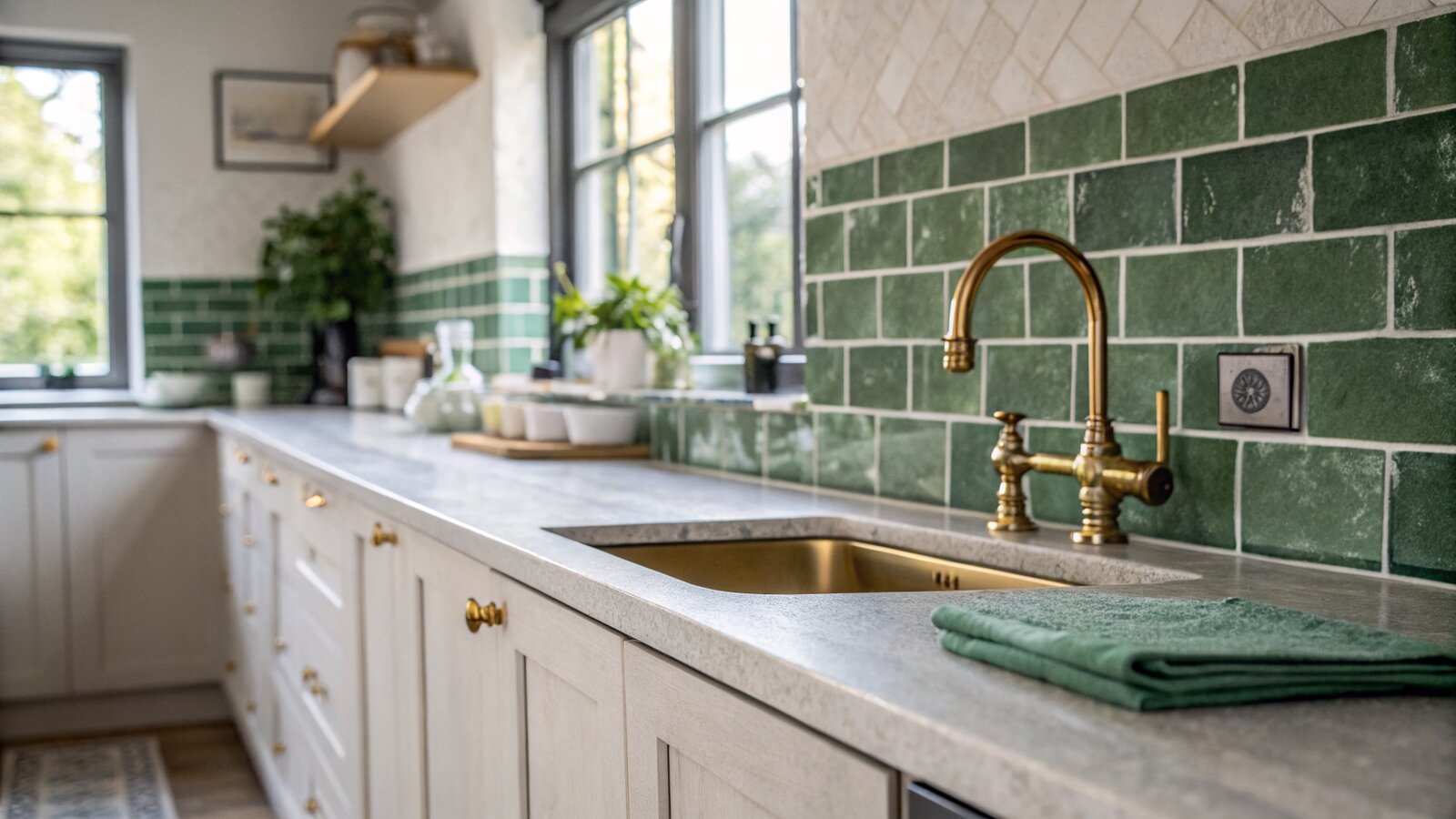
4. Zellige and handmade-look tiles
Moroccan zellige and other handmade tiles have a slightly uneven, glossy face that catches the light differently across the wall. Greens, ochres and off-whites are the popular shades.
5. Marble-effect porcelain
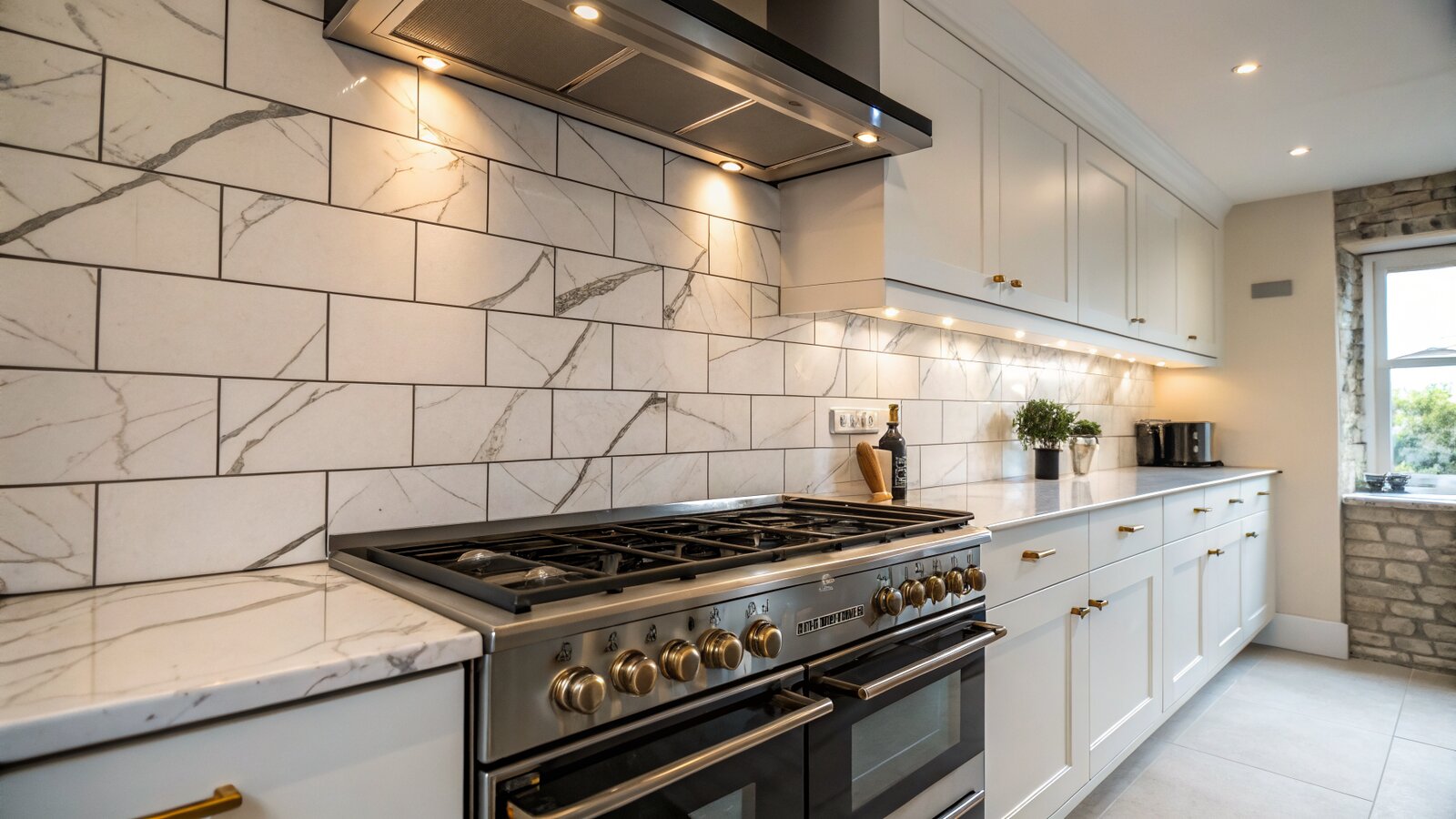
A large marble-effect porcelain tile, or a single slab-look panel, gives the veined stone look without the sealing and staining worries of real marble. Ideal taken full height behind a hob.
6. Hexagon tiles
Hexagons read as contemporary and pair well with handleless units. Keep them tonal for a calm finish, or use a two-tone mix for a graphic edge.
7. Fish-scale and scallop tiles
Also called mermaid or scallop tiles, these curved shapes add softness. A sage, blush or deep blue scallop splashback is a strong focal point in an otherwise neutral kitchen.
8. Patterned and encaustic-style tiles
Patterned tiles bring colour and movement to a small run. Because the area is contained, a busy pattern that would overwhelm a floor sits comfortably as a splashback.
9. Glass mosaic
Sheet-mounted glass mosaics are easy to fit around sockets and awkward corners, and the glossy glass is simple to wipe down. They suit sleek, modern kitchens.
10. Crackle-glaze tiles
The fine crazing in a crackle glaze adds character to a plain metro or square tile. They need sealing because the cracks are porous, so they are best away from heavy splashing.
11. A full-height feature wall
Rather than a thin strip, tile the whole wall between worktop and ceiling behind a range. A single material taken floor to ceiling looks deliberate and hides the join with the wall units.
12. Bold coloured gloss
Deep green, navy, terracotta or even black gloss tiles turn a splashback into the kitchen’s accent. They pair well with brass or matt-black taps and handles.
How high should a kitchen splashback be?
A standard splashback fills the gap between the worktop and the underside of the wall units, which is usually around 450mm to 600mm. Behind a sink with no units above, many people tile up to around 600mm or to a natural line such as a window sill. Behind a hob it is sensible to take the tiles higher, ideally to the extractor or all the way to the ceiling, because that is where heat, steam and spitting fat reach. Behind a hob you also want a non-combustible surface, which is exactly why glazed tile and toughened glass are the usual choice rather than a painted wall or a timber panel.
Grout, sealing and upkeep
Grout makes or breaks a splashback. A matching grout lets the tiles read as one surface; a contrasting grout emphasises the pattern. Near cookers and sinks, use a grout rated for wet and high-use areas and finish the joints neatly, because grease shows up fastest in rough or uneven lines. Porous tiles, including natural stone, crackle glaze and some handmade tiles, should be sealed before grouting and topped up over time. For everyday cleaning, warm soapy water and a soft cloth keep glazed tiles looking new; avoid harsh abrasives that can dull the glaze. If you would rather have the cuts around sockets and the run behind a hob done properly first time, this is a quick job for a professional tiler. You can see more of our work and guidance on the Bromley Tilers homepage.
Frequently asked questions
What is the best tile for a kitchen splashback?
Glazed ceramic, porcelain and toughened glass are the most practical because they resist heat and grease and wipe clean easily. Metro tiles remain the most popular single choice. Natural stone and handmade tiles look lovely but need sealing to cope with splashing.
Can you put tiles behind a gas hob?
Yes. Glazed tiles are non-combustible and are a standard, safe choice behind both gas and electric hobs. Take them higher than the rest of the splashback, ideally up to the extractor or ceiling, to catch heat and spitting fat.
How much does it cost to tile a kitchen splashback?
It depends on the size of the area, the tile you choose and how fiddly the cuts are around sockets and corners. A small splashback is one of the cheaper tiling jobs, and the tile cost varies far more than the labour, so a feature tile is often worth it over such a small area.
Should splashback grout match the tiles?
That is down to taste. Matching grout gives a clean, seamless look and hides minor irregularities, while a contrasting grout shows off the shape and pattern, as with white metro tiles and dark grout. Near cookers, a mid-grey grout often stays looking cleaner than bright white.
Do I need to seal a tiled splashback?
Glazed ceramic and porcelain do not need sealing, though the grout benefits from it. Porous tiles such as natural stone, crackle glaze and some handmade tiles should be sealed before grouting and resealed occasionally to stop grease and water marking them.
Related guides
- How to Tile a Bathroom Wall: A UK Step-by-Step Guide
- How Much Does Tiling Cost in the UK? A Realistic Price Guide
- How to Remove Old Wall Tiles Without Damaging the Wall
- Porcelain vs Ceramic Tiles: Which Is Right for Your Bathroom or Kitchen?
- How to Tank and Waterproof a Wet Room Before Tiling: A Bromley Homeowner’s Guide
- Do You Need to Seal Natural Stone Tiles Before Grouting? A Tiler Explains
- How to Tile a Bathroom Floor (Including Around the Toilet)
- How to Tile a Shower: Walls, Niche and Waterproofing
- Bathroom Tiling Guide: How to Plan, Prep and Finish a Lasting Job
- Tile Backer Board vs Plasterboard for Bathrooms
- Best Tiles for Small Bathrooms (and How to Make a Space Look Bigger)
- Wall and Floor Tiles for a Wet Room: What Actually Works
- Tiling vs Wall Panels for a Bathroom: Which Is Better?
- Do You Tile the Floor or Walls First in a Bathroom?
- Kitchen Tiling: Splashbacks, Walls and Floors Explained
- How to Tile a Kitchen Splashback: Step-by-Step Bromley Guide
- How to Tile Around Kitchen Sockets, Switches and Worktops
- How to Lay Metro Tiles in a Herringbone Pattern
- Tiled vs Glass Splashback (and Acrylic): Which Is Best?
- How High Should a Kitchen Splashback Be Tiled? UK Heights Guide
- Types of Tiles: The Complete UK Buyer’s Guide
- Porcelain vs Natural Stone Tiles: Which Should You Choose?
- Natural Stone Tiles Explained: Marble, Travertine, Slate and Limestone
- Mosaic Tiles: Where to Use Them and How They’re Fixed
- Tile Slip Ratings Explained: R Ratings and PTV for UK Floors
- Matt vs Gloss Tiles: Which Finish Is Right for Your Room?
- Cost to Tile a Bathroom in the UK: 2026 Price Breakdown
- Polystyrene Ceiling Tiles: Are They Any Good?
- Cost to Tile a Kitchen in 2026: Floor and Splashback Prices
- Tiling Cost Per Square Metre 2026: Labour and All-In Prices
- Tiler Day Rate UK: What Tilers Charge Per Day in 2026
- Cost to Regrout a Bathroom in 2026: UK Prices Explained
- Floor Tile Prices UK 2026: What You Will Pay Per Square Metre
- Is It Cheaper to Tile or Use Wall Panels? A UK Cost Comparison
- How to Tile: A Complete Beginner’s Guide (UK)
- How to Cut Tiles: Manual Cutter, Wet Saw and Nippers
- How to Cut Holes in Tiles for Pipes and Taps
- How to Grout Tiles (and Get Clean, Even Lines)
- Cork Flooring: Pros, Cons and Where It Works in UK Homes
- How to Mix and Apply Tile Adhesive Correctly
- How to Set Out Tiles for a Perfect Layout
- How to Seal Grout and Tiles in a Bathroom (UK Guide)
- Can You Tile Over Tiles? When It Works and When It Doesn’t
- Tiling Tools List: What You Need for a Professional Finish
- How Much Tile Adhesive Do I Need? Coverage Per Square Metre
- Tile Problems: 9 Common Faults and How to Fix Each
- How to Fix Loose Tiles Without Removing Them
- Cracked Grout Repair: Why It Happens and How to Fix It
- How to Replace a Broken Tile Without Redoing the Wall
- Water Leaking Through Shower Tiles: 6 Causes and Fixes
- Remove Mouldy Silicone Sealant: A 24-Hour Reseal Job
- How to Clean Grout: What Works, and What Etches Stone
- Why Are My Floor Tiles Lifting? The 40m² Bay Rule
- How to Lay Porcelain Paving: 1:80 Fall, 150mm Below DPC
- Tile Patterns: Why Big Tiles Need a One-Third Offset
- Grout Colour Ideas: How to Get the Shade You Chose
- Can You Paint Tiles? Yes on Walls, No in the Shower
- Decoupling Membrane for Tiles: When You Actually Need One
- Can You Tile Over a Wooden Floor? What Changed in 2024
- Tiling Cost 2026: £25 to £95 per m² Labour, UK Rates
- Tile Ideas: 7 Looks and the One Rule Each Needs
- Metro Tiles: Sizes, Bevels and the 1/3 Offset Rule
- Tile Feature Wall: The Weight Limit That Decides Yours
- Tiling Over Underfloor Heating: 14 Days Before Heat On
- How to Tile a Hallway Floor: Set Out From the Door
- Wood Effect Tiles and Marble Effect: 5 Specs to Check
- Tile Levelling Systems: The 3mm Rule That Decides It
- Floor Levelling Compound: How Deep and How Long to Dry
- How to Find a Good Tiler: 9 Checks Before You Book
- Tiling Quote: The 10 Lines a Proper One Must Show
- Tile Trim: Sizes, Profiles and the One-Size-Up Rule
- Tile Spacers: 2mm or 3mm, and When to Pull Them Out
- Tiling the Fireplace: 125mm Hearths, Adhesive and Tiles
- Porcelain vs Stone Paving: Grip, Sealing and Upkeep
- Tiling a Large Floor: Movement Joints Every 10 Metres
- DIY Tiling vs Professional: 6 Jobs to Never Do Yourself
- Terracotta Tiles: Seal Before Grouting, Wait 7 Days
- Tile Drill Bits: Which Bit Won’t Crack Porcelain
- Tiling Corners With Trim: Which Profile, and When to Mitre
- Travertine Tiles: Filled or Unfilled, and How to Seal Them
- Slate Tiles: Calibrated or Riven, and How to Lay Them
- Zellige Tiles: Order 15% Extra and Fix Them Edge to Edge
- Terrazzo Tiles: Real 20mm vs Porcelain, Seal Before Grouting
- Split Face Tiles: Will Your Wall Take 27kg per m²?
- Tile Sealer: Which Tiles Need It and Which Type to Buy
- How to Remove Grout Haze: Which Cleaner for Which Grout
- Efflorescence on Tiles: Why It Comes Back and How to Stop It
- Tile Primer: Which Surfaces Need It and How Much to Dilute
- Epoxy Grout: Where It’s Worth It and How to Apply It
- How to Tile Stairs: Keep Every Riser the Same Height
- Shower Niche: Sizes, Height and Which Wall Can Take One
- How Many Tiles Do I Need? Add 10% to 20% by Layout
- How to Tile a Window Sill: Sill Last, Silicone at the Frame
- How to Tile Around a Toilet: Lift the Pan or Cut Round It