


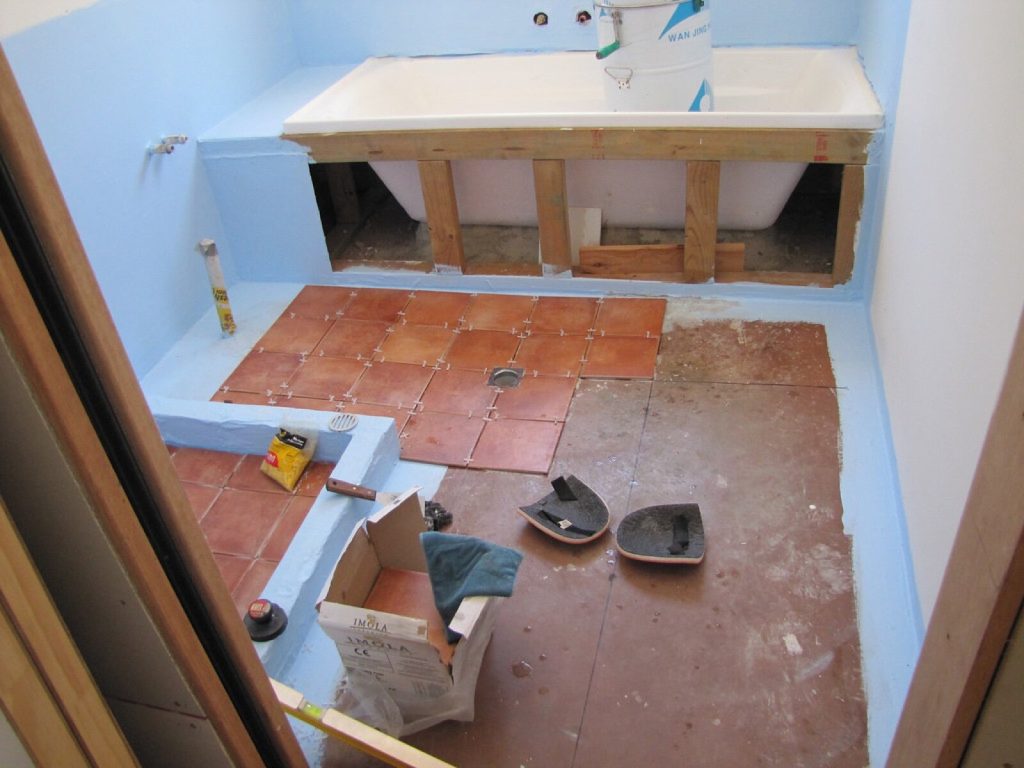
Getting a wall or floor to look sharp comes down to preparation, patience and the right kit. This tiling tools list runs through everything you need to measure, cut, fix, grout and finish a tiling job to a standard you would be happy to pay for. Whether you are tiling a splashback for the first time or taking on a full bathroom, having the correct tools to hand is the difference between crisp joints and a job you end up redoing.
We have grouped the tools by the stage of work they belong to, so you can build your kit in the order you will actually use it. A few items are worth buying well; others you can hire for a single job.
Setting out and measuring tools
Every good tiling job starts before a single tile is fixed. Accurate setting out stops you finishing a wall with a sliver of tile in the most visible corner.
- Tape measure and pencil: for measuring the area, marking tiles and working out your tile count.
- Spirit level: a 600mm or 1200mm level to check your rows are dead level and your battens are true. A longer level gives fewer errors across a wall.
- Chalk line: snaps a straight reference line across a floor so you can lay from the centre out.
- Set square or speed square: for marking accurate 90-degree and 45-degree cuts.
- Timber battens and a few screws: a horizontal batten fixed to the wall carries the weight of the first full row so tiles cannot slide while the adhesive sets.
- Tile gauge: a straight length of timber marked with your tile width plus joint, used to plan rows and avoid thin cuts.
Time spent here pays for itself. The British Standard for tiling, BS 5385, sets out good practice for setting out and background preparation, and professional tilers plan the layout so that cut tiles fall in the least conspicuous places.
Cutting tools
How you cut depends on the tile. Ceramic wall tiles score and snap easily; porcelain and natural stone are harder and usually need a powered tool.
- Manual tile cutter: a score-and-snap cutter is fast and clean for straight cuts on ceramic and softer porcelain. Buy one with a rail long enough for your largest tile.
- Electric wet cutter or wet saw: a diamond blade running through water cuts porcelain, stone and large-format tiles without chipping. Worth hiring for a floor or a porcelain job.
- Tile nippers: for nibbling small curved cuts, for example around a pipe or a corner.
- Diamond hole saws and a drill: for clean round holes for pipes, taps and shower fittings. A cordless drill on a slow speed with a guide keeps the bit from wandering.
- Rubbing stone or diamond pad: to smooth a sharp cut edge before it meets a trim or a corner.
Fixing and adhesive tools
This is the stage where a few inexpensive tools do the most work. Consistent adhesive coverage is what keeps tiles stuck for decades.
- Notched trowel: the ridges control how much adhesive you leave on the wall or floor. A 6mm to 10mm notch suits most wall tiles; larger floor and format tiles need a bigger notch or a back-buttering approach.
- Bucket and a mixing paddle: for mixing powdered adhesive to a smooth, lump-free consistency. A paddle in a cordless drill saves your arm.
- Tile spacers: cross or T-shaped spacers set an even joint. Common sizes run from 1.5mm to 5mm depending on the tile and look you want.
- Tile levelling system: clips and wedges pull adjacent tiles flush and stop lippage, where one tile sits proud of its neighbour. These come into their own with large-format and floor tiles.
- Rubber mallet: to gently bed a tile into the adhesive without cracking it.
- Notched spreader: a smaller plastic spreader is handy for splashbacks and tight areas.
Grouting and finishing tools
Grout and sealant are the last things people see, so a tidy finish here lifts the whole job.
- Grout float: a rubber-faced float presses grout into the joints and scrapes off the excess.
- Grout sponge and two buckets: one bucket of clean water to wipe the surface, changed often, gives a haze-free finish.
- Grout finishing tool: or a rounded stick, for a neat, consistent concave joint.
- Silicone sealant and a sealant gun: a flexible silicone bead seals internal corners and the joint where tiles meet a bath, worktop or shower tray. These junctions move, so they need silicone rather than grout.
- Sealant smoothing tool: gives a clean, professional silicone line.
- Microfibre cloths: for the final polish once everything has cured.
Safety kit and useful extras
Cutting and mixing throws off dust and sharp fragments, so protection is not optional.
- Safety glasses and work gloves: essential when cutting tiles.
- Dust mask: cutting porcelain and stone releases fine dust; a wet cutter and a mask reduce the risk.
- Knee pads: any floor job will thank you for these.
- Tile trim and edging: metal or plastic profiles give external corners and tile edges a finished look.
- Scraper and dust sheets: for prepping the surface and protecting the room.
The essential tiling tools list at a glance
If you are starting from nothing and want the short version, this is the core tiling tools list for a typical wall or floor:
- Tape measure, pencil, spirit level and set square
- Manual tile cutter, tile nippers and a diamond hole saw
- Notched trowel, bucket, mixing paddle, spacers and a levelling system
- Grout float, grout sponge, two buckets and a finishing tool
- Silicone, sealant gun and a smoothing tool
- Safety glasses, gloves, dust mask and knee pads
Hire the wet cutter for one-off porcelain or floor jobs and buy the smaller tools, which you will use again. If your project involves a full bathroom, waterproofing or a wet room, it is often worth talking to a professional. You can see the kind of work we take on across South East London on the Bromley Tilers homepage.
Frequently asked questions
What tools do I need to tile a bathroom?
For a bathroom you need the full kit: a tape measure, spirit level and set square for setting out; a tile cutter, nippers and a diamond hole saw for cuts around pipes and fittings; a notched trowel, spacers and a levelling system for fixing; and a grout float, sponge, silicone and sealant gun to finish. A wet cutter is worth hiring if you are using porcelain or stone.
Do I need a tile levelling system?
Not for small ceramic wall tiles, but a levelling system makes a real difference with large-format and floor tiles, where even a small amount of lippage is obvious and can be a trip hazard. The clips and wedges hold neighbouring tiles flush while the adhesive sets.
What size notched trowel should I use?
As a rough guide, a 6mm to 8mm notch suits standard wall tiles, a 10mm to 12mm notch suits floor tiles, and large-format tiles need a larger notch plus back-buttering to achieve near-full adhesive coverage. Always check the adhesive manufacturer’s coverage guidance for your tile size.
Can I cut tiles without a wet saw?
Yes, for straight cuts on ceramic and many porcelain tiles a manual score-and-snap cutter works well. For hard porcelain, natural stone, large tiles or lots of curved cuts, an electric wet cutter gives a cleaner, chip-free edge and is usually worth hiring.
Which tiling tools are worth buying rather than hiring?
Buy the small, frequently used tools: trowel, level, spacers, grout float, sponge and a sealant gun. Hire the expensive, occasional items such as an electric wet cutter or a large-format levelling kit unless you tile regularly.
What does the British Standard say about tiling?
BS 5385 is the British Standard covering the design and installation of wall and floor tiling. It sets out good practice for background preparation, adhesives, movement joints and setting out. The Tile Association publishes guidance based on these standards for both trade and homeowners.
Related guides
- How to Tile a Bathroom Wall: A UK Step-by-Step Guide
- How Much Does Tiling Cost in the UK? A Realistic Price Guide
- How to Remove Old Wall Tiles Without Damaging the Wall
- Porcelain vs Ceramic Tiles: Which Is Right for Your Bathroom or Kitchen?
- How to Tank and Waterproof a Wet Room Before Tiling: A Bromley Homeowner’s Guide
- Do You Need to Seal Natural Stone Tiles Before Grouting? A Tiler Explains
- How to Tile a Bathroom Floor (Including Around the Toilet)
- How to Tile a Shower: Walls, Niche and Waterproofing
- Bathroom Tiling Guide: How to Plan, Prep and Finish a Lasting Job
- Tile Backer Board vs Plasterboard for Bathrooms
- Best Tiles for Small Bathrooms (and How to Make a Space Look Bigger)
- Wall and Floor Tiles for a Wet Room: What Actually Works
- Tiling vs Wall Panels for a Bathroom: Which Is Better?
- Do You Tile the Floor or Walls First in a Bathroom?
- Kitchen Tiling: Splashbacks, Walls and Floors Explained
- How to Tile a Kitchen Splashback: Step-by-Step Bromley Guide
- How to Tile Around Kitchen Sockets, Switches and Worktops
- Kitchen Splashback Tile Ideas: 12 Looks That Work
- How to Lay Metro Tiles in a Herringbone Pattern
- Tiled vs Glass Splashback (and Acrylic): Which Is Best?
- How High Should a Kitchen Splashback Be Tiled? UK Heights Guide
- Types of Tiles: The Complete UK Buyer’s Guide
- Porcelain vs Natural Stone Tiles: Which Should You Choose?
- Natural Stone Tiles Explained: Marble, Travertine, Slate and Limestone
- Mosaic Tiles: Where to Use Them and How They’re Fixed
- Tile Slip Ratings Explained: R Ratings and PTV for UK Floors
- Matt vs Gloss Tiles: Which Finish Is Right for Your Room?
- Cost to Tile a Bathroom in the UK: 2026 Price Breakdown
- Polystyrene Ceiling Tiles: Are They Any Good?
- Cost to Tile a Kitchen in 2026: Floor and Splashback Prices
- Tiling Cost Per Square Metre 2026: Labour and All-In Prices
- Tiler Day Rate UK: What Tilers Charge Per Day in 2026
- Cost to Regrout a Bathroom in 2026: UK Prices Explained
- Floor Tile Prices UK 2026: What You Will Pay Per Square Metre
- Is It Cheaper to Tile or Use Wall Panels? A UK Cost Comparison
- How to Tile: A Complete Beginner’s Guide (UK)
- How to Cut Tiles: Manual Cutter, Wet Saw and Nippers
- How to Cut Holes in Tiles for Pipes and Taps
- How to Grout Tiles (and Get Clean, Even Lines)
- Cork Flooring: Pros, Cons and Where It Works in UK Homes
- How to Mix and Apply Tile Adhesive Correctly
- How to Set Out Tiles for a Perfect Layout
- How to Seal Grout and Tiles in a Bathroom (UK Guide)
- Can You Tile Over Tiles? When It Works and When It Doesn’t
- How Much Tile Adhesive Do I Need? Coverage Per Square Metre
- Tile Problems: 9 Common Faults and How to Fix Each
- How to Fix Loose Tiles Without Removing Them
- Cracked Grout Repair: Why It Happens and How to Fix It
- How to Replace a Broken Tile Without Redoing the Wall
- Water Leaking Through Shower Tiles: 6 Causes and Fixes
- Remove Mouldy Silicone Sealant: A 24-Hour Reseal Job
- How to Clean Grout: What Works, and What Etches Stone
- Why Are My Floor Tiles Lifting? The 40m² Bay Rule
- How to Lay Porcelain Paving: 1:80 Fall, 150mm Below DPC
- Tile Patterns: Why Big Tiles Need a One-Third Offset
- Grout Colour Ideas: How to Get the Shade You Chose
- Can You Paint Tiles? Yes on Walls, No in the Shower
- Decoupling Membrane for Tiles: When You Actually Need One
- Can You Tile Over a Wooden Floor? What Changed in 2024
- Tiling Cost 2026: £25 to £95 per m² Labour, UK Rates
- Tile Ideas: 7 Looks and the One Rule Each Needs
- Metro Tiles: Sizes, Bevels and the 1/3 Offset Rule
- Tile Feature Wall: The Weight Limit That Decides Yours
- Tiling Over Underfloor Heating: 14 Days Before Heat On
- How to Tile a Hallway Floor: Set Out From the Door
- Wood Effect Tiles and Marble Effect: 5 Specs to Check
- Tile Levelling Systems: The 3mm Rule That Decides It
- Floor Levelling Compound: How Deep and How Long to Dry
- How to Find a Good Tiler: 9 Checks Before You Book
- Tiling Quote: The 10 Lines a Proper One Must Show
- Tile Trim: Sizes, Profiles and the One-Size-Up Rule
- Tile Spacers: 2mm or 3mm, and When to Pull Them Out
- Tiling the Fireplace: 125mm Hearths, Adhesive and Tiles
- Porcelain vs Stone Paving: Grip, Sealing and Upkeep
- Tiling a Large Floor: Movement Joints Every 10 Metres
- DIY Tiling vs Professional: 6 Jobs to Never Do Yourself
- Terracotta Tiles: Seal Before Grouting, Wait 7 Days
- Tile Drill Bits: Which Bit Won’t Crack Porcelain
- Tiling Corners With Trim: Which Profile, and When to Mitre
- Travertine Tiles: Filled or Unfilled, and How to Seal Them
- Slate Tiles: Calibrated or Riven, and How to Lay Them
- Zellige Tiles: Order 15% Extra and Fix Them Edge to Edge
- Terrazzo Tiles: Real 20mm vs Porcelain, Seal Before Grouting
- Split Face Tiles: Will Your Wall Take 27kg per m²?
- Tile Sealer: Which Tiles Need It and Which Type to Buy
- How to Remove Grout Haze: Which Cleaner for Which Grout
- Efflorescence on Tiles: Why It Comes Back and How to Stop It
- Tile Primer: Which Surfaces Need It and How Much to Dilute
- Epoxy Grout: Where It’s Worth It and How to Apply It
- How to Tile Stairs: Keep Every Riser the Same Height
- Shower Niche: Sizes, Height and Which Wall Can Take One
- How Many Tiles Do I Need? Add 10% to 20% by Layout
- How to Tile a Window Sill: Sill Last, Silicone at the Frame
- How to Tile Around a Toilet: Lift the Pan or Cut Round It