


A tiling quote should tell you what is going on the wall, what is going behind it and who carries the risk if the substrate is wrong. Most of the ones homeowners in Bromley send us do none of that. They show a price per square metre, a total, and a date. That is not enough information to compare two tilers, and it is not enough to argue from if the job goes sideways.
Here is what a proper quote carries, line by line, and the consumer law that sits behind it.
Quote or estimate: the difference is legal, not cosmetic
A quote is a firm offer. Accept it and you have a contract at that figure, and the tiler cannot raise it later unless you change the job or something genuinely unforeseen turns up and you agree the variation. An estimate is a considered guess and the final bill can move.
If no price is agreed at all, the Consumer Rights Act 2015 fills the gap: section 51 says you must pay a reasonable price and no more, section 52 says the work must be done in a reasonable time, and section 49 says it must be carried out with reasonable care and skill. Those terms are implied into every contract for services whether anyone writes them down or not. But “reasonable” is a question of fact, decided after the argument has started. A written quote settles it in advance, which is why the word at the top of the document matters.
The 10 lines a tiling quote should carry
- The measured area, split by surface. Wall metres and floor metres are different jobs at different rates. A single combined figure hides which one is driving the price. The quote should say how the area was measured and whether openings such as a window reveal or a door were deducted.
- The substrate as found, and what is being done to it. Bare plaster, plasterboard, old tiles, a chipboard floor and a screed all need different preparation. This is the single most common omission and the most expensive one to discover halfway through.
- Waterproofing, and exactly where it stops. In a shower enclosure or a wet room, the tanking specification and its extent should be written down. Tiles and grout are not a waterproof layer.
- The tile: format, finish and who supplies it. A 600mm by 600mm porcelain is a different day’s work from a 100mm metro tile, and a mosaic is different again. If you are supplying the tiles, the quote should say so and say what happens if they arrive short or damaged.
- The adhesive and grout by type, not by brand alone. Cement-based adhesives are classified under BS EN 12004, and a deformable S1 or highly deformable S2 adhesive is specified for heated floors, large format tiles and boards that move. Grout carries a class too. “Adhesive and grout included” tells you nothing.
- Movement joints and trims. Perimeter joints, joints over structural joints and intermediate joints in large floors are part of the British Standard, not an upgrade. So are the edge trims at external corners and around baths.
- The setting out. Where the first full tile lands, where the cuts fall, which wall is the focal wall, whether the pattern is stack bond, brick bond or herringbone. Herringbone and diagonal layouts take longer and waste more tile, so they belong in the price, not in a conversation on day two.
- The wastage allowance. Ten per cent on top of the measured area is the usual starting point for a straight layout. Fifteen per cent or more is sensible for diagonals, herringbone, heavy patterning and rooms with a lot of cuts. If you are buying the tiles, the quote should state the allowance it assumes.
- Clearance, protection and waste removal. Lifting old tiles, bagging the rubble, taking it away, protecting the bath and the landing carpet. Removal of old ceramic from a plastered wall often takes the plaster with it, and the quote should say who makes that good.
- The price basis and the payment schedule. Day rate or price per square metre, what a day is, whether VAT is included, what deposit is asked for and when the balance falls due.
What the quote must say about the substrate
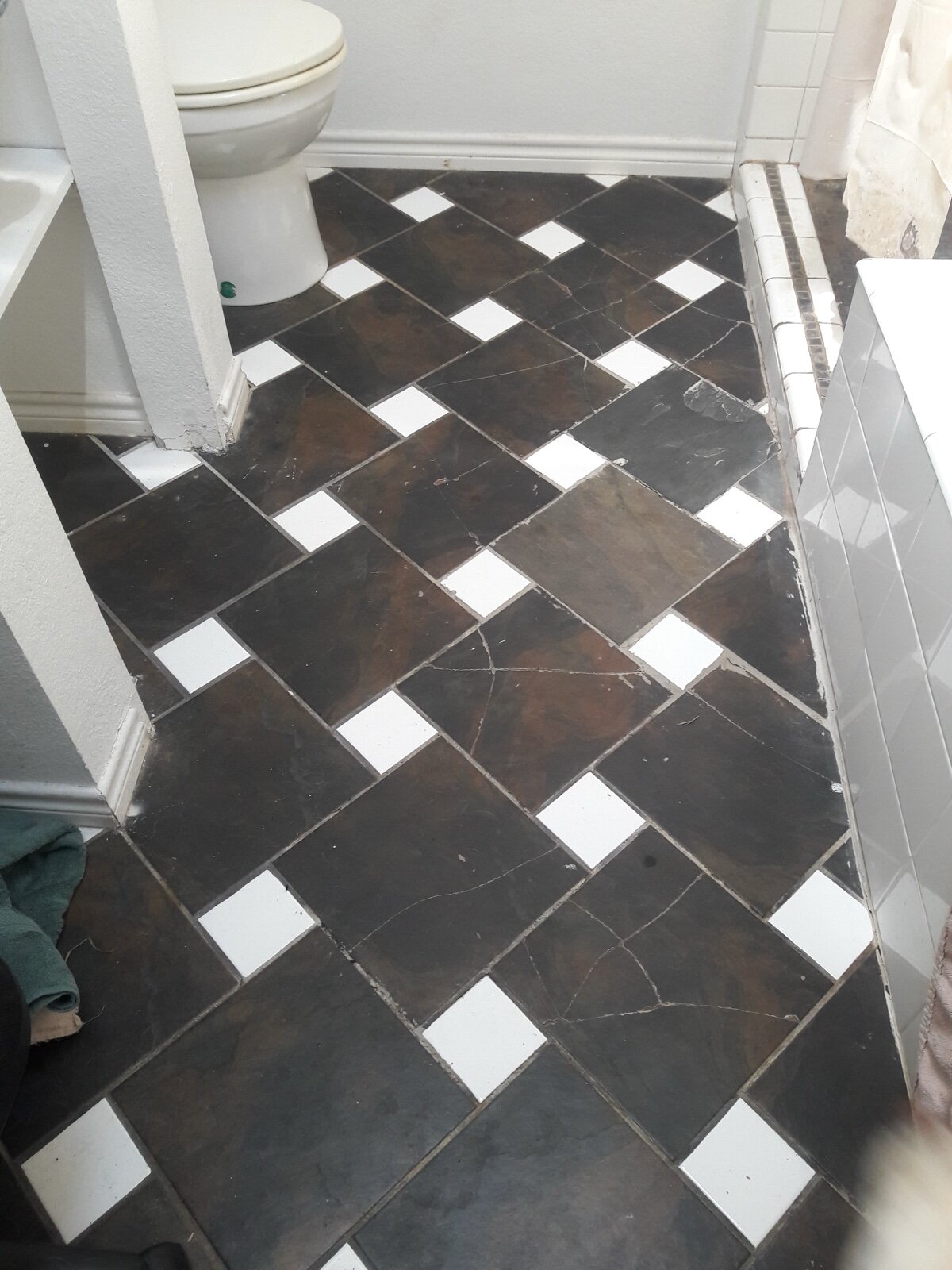
Tiling is only as sound as what it is stuck to. Standard plasterboard will carry a limited weight of tile per square metre and is not a wet-area board. Old adhesive left proud of a wall will telegraph through a large format tile. A flexing timber floor will crack grout lines within a season, then the tiles.
The BS 5385 series is the code of practice the trade works to: part 1 covers internal ceramic, natural stone and mosaic wall tiling, part 3 covers internal and external floor tiling, and part 4 deals with tiling in specific conditions such as heavy duty or chemically aggressive environments. A quote that names the preparation, whether that is overboarding with a tile backer, priming a dusty screed, or putting down a self-levelling compound, is a quote from someone who has read the wall rather than glanced at it.
Watch for the phrase “subject to substrate”. It is not automatically a warning sign, but it should come with a figure: what the provisional sum is, and what triggers it.
Wastage, cuts and the tiles that vanish
Order the exact measured area and you will run out. Tiles break on the cutter, corners need slivers, and a batch ordered later can be a visibly different shade. Shade and calibre are batch-specific on porcelain, which is why the allowance is not optional.
The other reason to get this in writing is that supply and fixing are often split. If the tiler measured, advised 10 per cent, you ordered 5 per cent and the job stops on Thursday waiting on a delivery, the written allowance decides whose problem the lost day is.
VAT, day rates and price per square metre
Plenty of good tilers are not VAT registered. Registration only becomes compulsory once taxable turnover passes the £90,000 threshold, and a sole trader fixing tiles five days a week may sit under it. That is not a red flag. What matters is that the quote is unambiguous: a consumer price should be the price you actually pay, so “£2,400” and “£2,400 plus VAT” are 20 per cent apart and the document has to say which.
On pricing basis, neither model is inherently better. A price per square metre suits a straightforward run of wall. A day rate suits awkward, cut-heavy work such as a small ensuite with a niche, a window reveal and a boxed soil pipe, where a per-metre price would either be padded or would come back for more. We have written separately on how tiler day rates work and on tiling cost per square metre.
Your cancellation rights, and the trap of accepting on the spot
This is the part almost nobody knows, and it runs opposite to most people’s instinct.
If a tiler comes to your house and you agree the contract there and then, that is an off-premises contract under the Consumer Contracts Regulations 2013. You get 14 days to cancel for any reason, the trader must give you that information on a durable medium before you are bound, and failing to give the cancellation information is a criminal offence. Contracts of £42 or less are exempt from those requirements.
But if the tiler measures up, leaves a written quote and you telephone a week later to accept it, the Chartered Trading Standards Institute’s guidance treats that as an on-premises contract, and no automatic 14-day cancellation right attaches. Taking time to think loses you the statutory cooling-off period. If you want to keep it, say so and agree a cancellation term in the contract instead of relying on the regulations.
One more practical point: if you do have a cancellation right and you ask for the work to start inside the 14 days, you can still cancel, but you will owe a proportionate amount for what has already been done.
Five things worth a second question
- A deposit above the cost of materials. A tiler buying your tiles and adhesive up front has a real reason to ask for money. A labour-only job rarely does.
- No mention of the substrate at all. See above. The risk has not disappeared, it has just been left with you.
- A price that arrives without a site visit. Nobody can price a bathroom off a photograph and a room size.
- Cash only, no paperwork. Without a written contract the implied terms still protect you, but you will be proving what was agreed from memory.
- A start date but no duration. Adhesive and grout have curing times. A quote that promises a bathroom tiled and grouted inside a day is either a very small bathroom or a corner being cut.
How to compare three tiling quotes fairly
Send all three tilers the same written brief: the rooms, the tile you have chosen or the one you are considering, whether you are supplying it, the layout you want, and anything you already know about the substrate. Without that, you are not comparing prices, you are comparing assumptions.
Then read the cheapest one hardest. A quote comes in low for one of three reasons: the tiler is quicker, the tiler has assumed less preparation, or the tiler has not spotted something. Only the first is good news for you, and the difference usually shows in whether the substrate and the adhesive specification are written down.
The Tile Association, the trade body for the UK wall and floor tiling industry, runs a member search and a technical inspection service for homeowners unhappy with completed work. Membership is not a guarantee, but the inspection route is useful to know about before you need it.
If you want a quote that does all of the above on a bathroom, kitchen or floor in Bromley or the surrounding boroughs, get in touch with us.
Frequently asked questions
Should a tiling quote be free?
For domestic work in and around Bromley, a measured quote after a site visit is normally free. Charging is more common where the visit is really a design or survey job, for example setting out a complex floor pattern or assessing a failed installation. If a charge applies it should be told to you before the visit, not on the invoice.
Is a quote legally binding once I accept it?
Yes. Acceptance of a quote forms a contract at that price, and both sides are bound. The price can change if you change the scope or if you agree a variation for something genuinely unforeseen. An estimate does not bind in the same way, which is why the heading on the document matters more than its layout.
How much deposit should a tiler ask for?
There is no legal cap, but the sensible test is whether the deposit matches a real cost the tiler has to carry before starting, usually materials. Ask what the deposit is for, pay it by card or bank transfer so there is a record, and keep stage payments tied to work actually completed.
Does a tiling quote have to include VAT?
Only if the tiler is VAT registered, which is compulsory once taxable turnover passes £90,000. Either way the quote must make clear whether the figure shown is the total you will pay. A quote to a consumer that turns out to have 20 per cent added later is the kind of thing trading standards takes an interest in.
Can I cancel after signing a tiling quote in my own home?
If you agreed the contract during the visit, you generally have 14 days to cancel under the Consumer Contracts Regulations 2013, and the tiler must have given you that information in writing beforehand. If you took the quote away and accepted it later, that automatic right does not usually apply, so any cancellation terms are whatever the contract says.
What if the tiler finds a problem behind the old tiles?
That is a variation, not a free extra. Work should pause, the tiler should tell you what has been found and what it costs to put right, and you should agree it before it goes ahead. A quote that already carries a provisional sum for substrate repair makes this conversation short.
Related guides
- How to Tile a Bathroom Wall: A UK Step-by-Step Guide
- How Much Does Tiling Cost in the UK? A Realistic Price Guide
- How to Remove Old Wall Tiles Without Damaging the Wall
- Porcelain vs Ceramic Tiles: Which Is Right for Your Bathroom or Kitchen?
- How to Tank and Waterproof a Wet Room Before Tiling: A Bromley Homeowner’s Guide
- Do You Need to Seal Natural Stone Tiles Before Grouting? A Tiler Explains
- How to Tile a Bathroom Floor (Including Around the Toilet)
- How to Tile a Shower: Walls, Niche and Waterproofing
- Bathroom Tiling Guide: How to Plan, Prep and Finish a Lasting Job
- Tile Backer Board vs Plasterboard for Bathrooms
- Best Tiles for Small Bathrooms (and How to Make a Space Look Bigger)
- Wall and Floor Tiles for a Wet Room: What Actually Works
- Tiling vs Wall Panels for a Bathroom: Which Is Better?
- Do You Tile the Floor or Walls First in a Bathroom?
- Kitchen Tiling: Splashbacks, Walls and Floors Explained
- How to Tile a Kitchen Splashback: Step-by-Step Bromley Guide
- How to Tile Around Kitchen Sockets, Switches and Worktops
- Kitchen Splashback Tile Ideas: 12 Looks That Work
- How to Lay Metro Tiles in a Herringbone Pattern
- Tiled vs Glass Splashback (and Acrylic): Which Is Best?
- How High Should a Kitchen Splashback Be Tiled? UK Heights Guide
- Types of Tiles: The Complete UK Buyer’s Guide
- Porcelain vs Natural Stone Tiles: Which Should You Choose?
- Natural Stone Tiles Explained: Marble, Travertine, Slate and Limestone
- Mosaic Tiles: Where to Use Them and How They’re Fixed
- Tile Slip Ratings Explained: R Ratings and PTV for UK Floors
- Matt vs Gloss Tiles: Which Finish Is Right for Your Room?
- Cost to Tile a Bathroom in the UK: 2026 Price Breakdown
- Polystyrene Ceiling Tiles: Are They Any Good?
- Cost to Tile a Kitchen in 2026: Floor and Splashback Prices
- Tiling Cost Per Square Metre 2026: Labour and All-In Prices
- Tiler Day Rate UK: What Tilers Charge Per Day in 2026
- Cost to Regrout a Bathroom in 2026: UK Prices Explained
- Floor Tile Prices UK 2026: What You Will Pay Per Square Metre
- Is It Cheaper to Tile or Use Wall Panels? A UK Cost Comparison
- How to Tile: A Complete Beginner’s Guide (UK)
- How to Cut Tiles: Manual Cutter, Wet Saw and Nippers
- How to Cut Holes in Tiles for Pipes and Taps
- How to Grout Tiles (and Get Clean, Even Lines)
- Cork Flooring: Pros, Cons and Where It Works in UK Homes
- How to Mix and Apply Tile Adhesive Correctly
- How to Set Out Tiles for a Perfect Layout
- How to Seal Grout and Tiles in a Bathroom (UK Guide)
- Can You Tile Over Tiles? When It Works and When It Doesn’t
- Tiling Tools List: What You Need for a Professional Finish
- How Much Tile Adhesive Do I Need? Coverage Per Square Metre
- Tile Problems: 9 Common Faults and How to Fix Each
- How to Fix Loose Tiles Without Removing Them
- Cracked Grout Repair: Why It Happens and How to Fix It
- How to Replace a Broken Tile Without Redoing the Wall
- Water Leaking Through Shower Tiles: 6 Causes and Fixes
- Remove Mouldy Silicone Sealant: A 24-Hour Reseal Job
- How to Clean Grout: What Works, and What Etches Stone
- Why Are My Floor Tiles Lifting? The 40m² Bay Rule
- How to Lay Porcelain Paving: 1:80 Fall, 150mm Below DPC
- Tile Patterns: Why Big Tiles Need a One-Third Offset
- Grout Colour Ideas: How to Get the Shade You Chose
- Can You Paint Tiles? Yes on Walls, No in the Shower
- Decoupling Membrane for Tiles: When You Actually Need One
- Can You Tile Over a Wooden Floor? What Changed in 2024
- Tiling Cost 2026: £25 to £95 per m² Labour, UK Rates
- Tile Ideas: 7 Looks and the One Rule Each Needs
- Metro Tiles: Sizes, Bevels and the 1/3 Offset Rule
- Tile Feature Wall: The Weight Limit That Decides Yours
- Tiling Over Underfloor Heating: 14 Days Before Heat On
- How to Tile a Hallway Floor: Set Out From the Door
- Wood Effect Tiles and Marble Effect: 5 Specs to Check
- Tile Levelling Systems: The 3mm Rule That Decides It
- Floor Levelling Compound: How Deep and How Long to Dry
- How to Find a Good Tiler: 9 Checks Before You Book
- Tile Trim: Sizes, Profiles and the One-Size-Up Rule
- Tile Spacers: 2mm or 3mm, and When to Pull Them Out
- Tiling the Fireplace: 125mm Hearths, Adhesive and Tiles
- Porcelain vs Stone Paving: Grip, Sealing and Upkeep
- Tiling a Large Floor: Movement Joints Every 10 Metres
- DIY Tiling vs Professional: 6 Jobs to Never Do Yourself
- Terracotta Tiles: Seal Before Grouting, Wait 7 Days
- Tile Drill Bits: Which Bit Won’t Crack Porcelain
- Tiling Corners With Trim: Which Profile, and When to Mitre
- Travertine Tiles: Filled or Unfilled, and How to Seal Them
- Slate Tiles: Calibrated or Riven, and How to Lay Them
- Zellige Tiles: Order 15% Extra and Fix Them Edge to Edge
- Terrazzo Tiles: Real 20mm vs Porcelain, Seal Before Grouting
- Split Face Tiles: Will Your Wall Take 27kg per m²?
- Tile Sealer: Which Tiles Need It and Which Type to Buy
- How to Remove Grout Haze: Which Cleaner for Which Grout
- Efflorescence on Tiles: Why It Comes Back and How to Stop It
- Tile Primer: Which Surfaces Need It and How Much to Dilute
- Epoxy Grout: Where It’s Worth It and How to Apply It
- How to Tile Stairs: Keep Every Riser the Same Height
- Shower Niche: Sizes, Height and Which Wall Can Take One
- How Many Tiles Do I Need? Add 10% to 20% by Layout
- How to Tile a Window Sill: Sill Last, Silicone at the Frame