


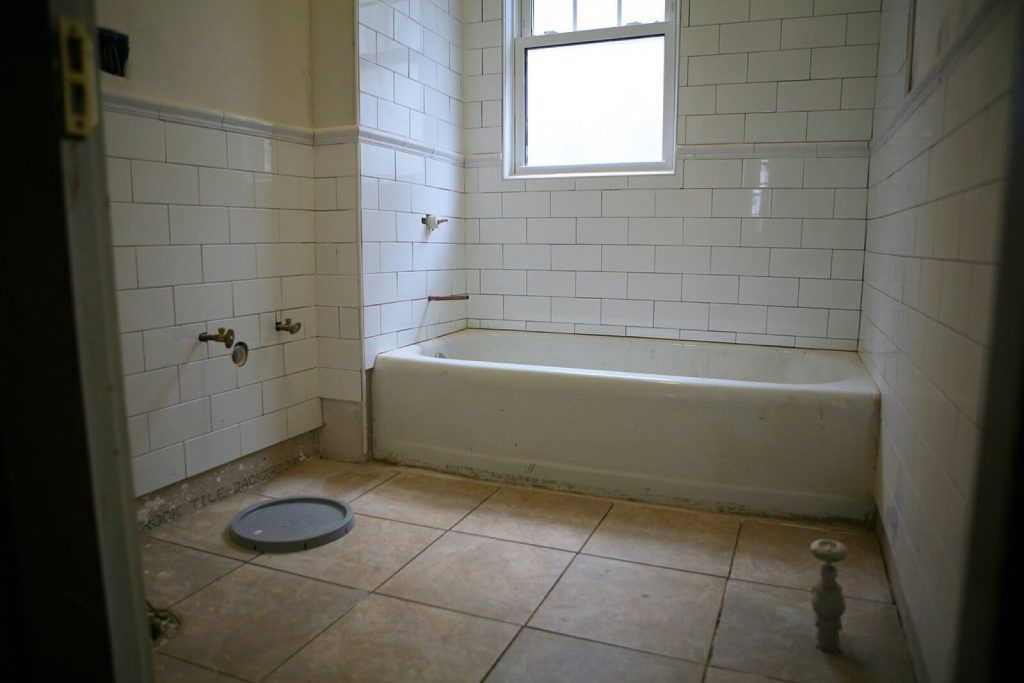
Tiling corners with trim is the detail that separates a tidy wall from an obviously amateur one, and it is where most of the remedial work we get called to in Bromley has failed. A tiled wall has two kinds of corner and they need opposite treatments. An external corner, where the tiling turns round a window reveal, a boxed soil pipe or a bath panel, needs a mechanical edge that protects the glaze. An internal corner, where two tiled walls meet, needs a flexible joint that lets the two planes move independently. Treat them the same and you get chipped tile edges on one and cracked grout on the other.
This is what we use where, how to size a profile so it finishes flush, when a mitre is worth the extra hour, and why an internal corner should never be filled with cement grout.
External and internal corners are two different problems
An external corner is the vulnerable one. The glazed face of the tile stops at a cut edge, and that edge takes every knock from a vacuum cleaner, a laundry basket or a shoulder on the way past. Porcelain is the worst offender, because the body under the glaze is usually a different colour, so one chip shows as a bright white nick. The two honest answers are a profile that covers the edge, or a mitre that folds the glaze round the corner.
An internal corner has the opposite problem. Nothing is exposed and nothing needs protecting. What it needs is room to move. Two tiled planes meeting at 90 degrees expand and contract at slightly different rates from each other and from the background behind them, and that stress concentrates exactly at the corner. BS 5385-1:2018, the British Standard code of practice for ceramic, natural stone and mosaic wall tiling in normal internal conditions, treats internal vertical corners as a movement joint position, alongside intermediate joints at roughly three to four and a half metre centres on walls. Fill that corner solid with a cement grout and it will crack, usually during the first winter the heating goes on.
The trim profiles that work on an external corner
Three shapes cover nearly every domestic job, and every manufacturer makes their own version of each.
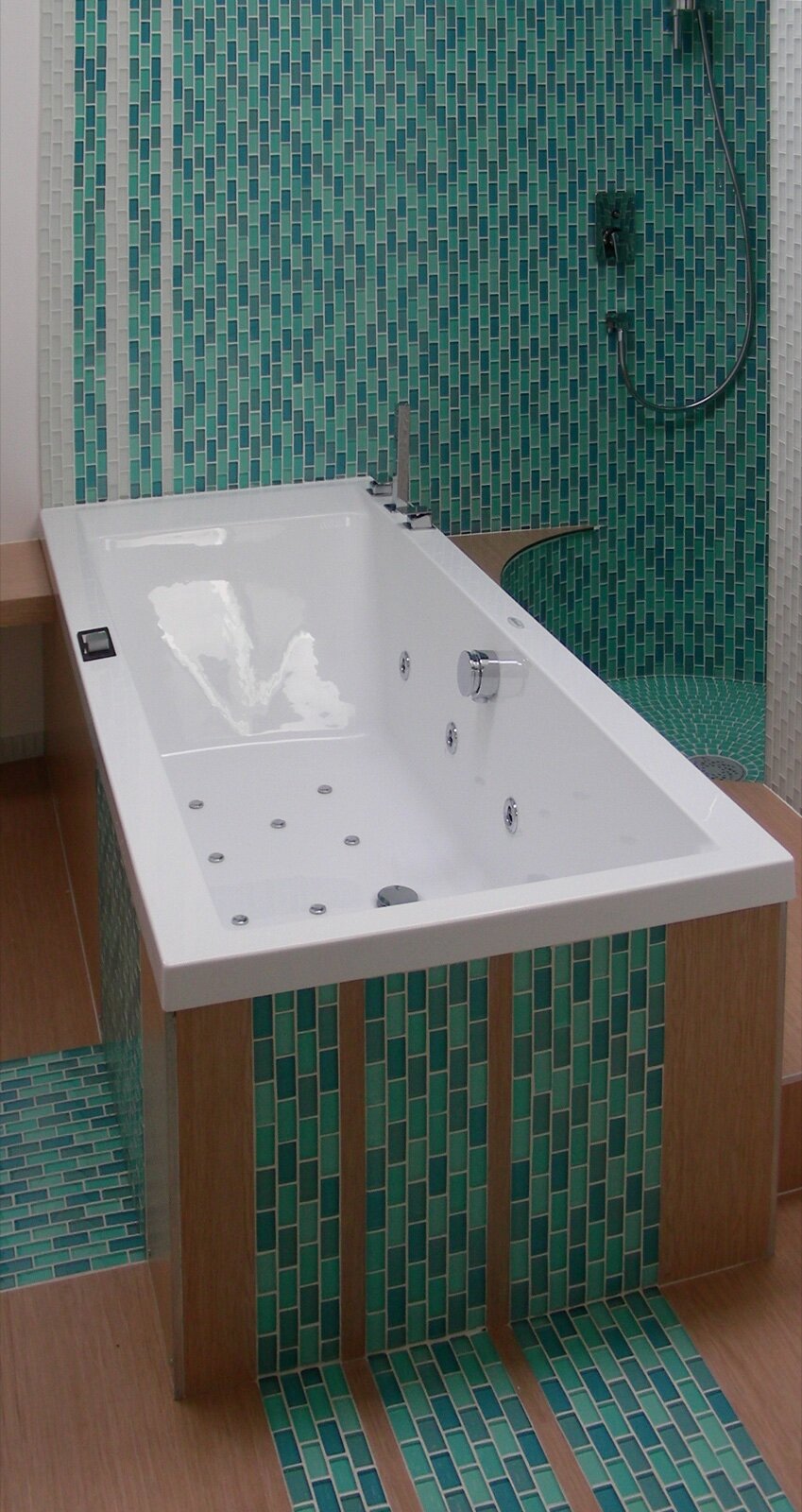
- Square edge. A flat face with a square return, so the corner reads as a crisp line. Schlüter call theirs QUADEC. It suits square-edged rectified porcelain and modern bathrooms where you want the corner to look deliberate.
- Rounded edge. A symmetrically rounded reveal that softens the corner. Schlüter RONDEC is the reference version. It is the forgiving choice, because a rounded face hides small variations in tile thickness better than a square one.
- Angled or tapered. A 90 degree finishing profile for external wall corners, sold by Schlüter as JOLLY. The sloped face is the least visually intrusive of the three and is the usual pick when you want the trim to disappear.
Material matters more than shape for how long it lasts. JOLLY alone is listed in coloured PVC, chrome-plated brass, brushed stainless steel, anodised aluminium, colour-coated aluminium and a textured coating. In practice: PVC is fine on a splashback or a low-traffic wall; anodised or colour-coated aluminium is the sensible domestic default; brushed stainless steel earns its money in a family shower or wet room; chrome-plated brass is for matching the taps rather than the grout.
What size tile trim do you need?
Trim is sized on the depth of the tile plus the adhesive bed underneath it, which is where most DIY orders go wrong. Topps Tiles put the rule simply: to account for the adhesive you should choose a trim one size up from the depth of your tile, so a 10mm tile takes a 12.5mm trim. Trims come in steps of 6mm, 8mm, 10mm, 12mm and 12.5mm, then larger for floor formats, and it is worth measuring the tile rather than trusting the box.
Get it wrong in either direction and it shows:
- Trim too shallow. The tile sits proud of the profile and you are left with a raised lip along the whole corner. It catches cloths, it collects grime, and there is no fixing it without lifting the tiles.
- Trim too deep. The profile stands proud of the tile face instead, so the corner reads as a metal band rather than a neat edge, and the recess behind it holds water on a shower wall.
If you are between sizes, go up rather than down. A profile a fraction proud can be lived with. A tile edge standing above the trim cannot.
Mitred corners: when the extra hour pays
A mitre means cutting both tiles at 45 degrees so the glazed faces meet at the corner with no metal at all. On large-format porcelain, on marble-effect tiles where a metal line would cut through the veining, and in a high-end bathroom where the corner is at eye level, it is the better looking answer by some distance.
It is also the riskier one. A true knife edge at 45 degrees is fragile, so cut the mitre and leave one to two millimetres of the tile body at the tip rather than running the blade right out. That small flat is what stops the edge shattering the first time something touches it. You need a wet cutter with a tilting head or a dedicated mitre jig; a score-and-snap cutter cannot do it at all. We would not mitre thin ceramic wall tiles, anything under about 8mm, or a low-level corner in a family bathroom.
Internal corners: silicone, not grout
The internal corner is the one people get wrong most often, because grouting it looks like the obvious finish. It is not. Leave the same joint width as you have across the field, keep adhesive out of the corner so the joint is not bridged solid, and fill it with a flexible sealant. A neutral-cure sanitary silicone colour-matched to the grout is the standard answer, and most grout brands sell one.
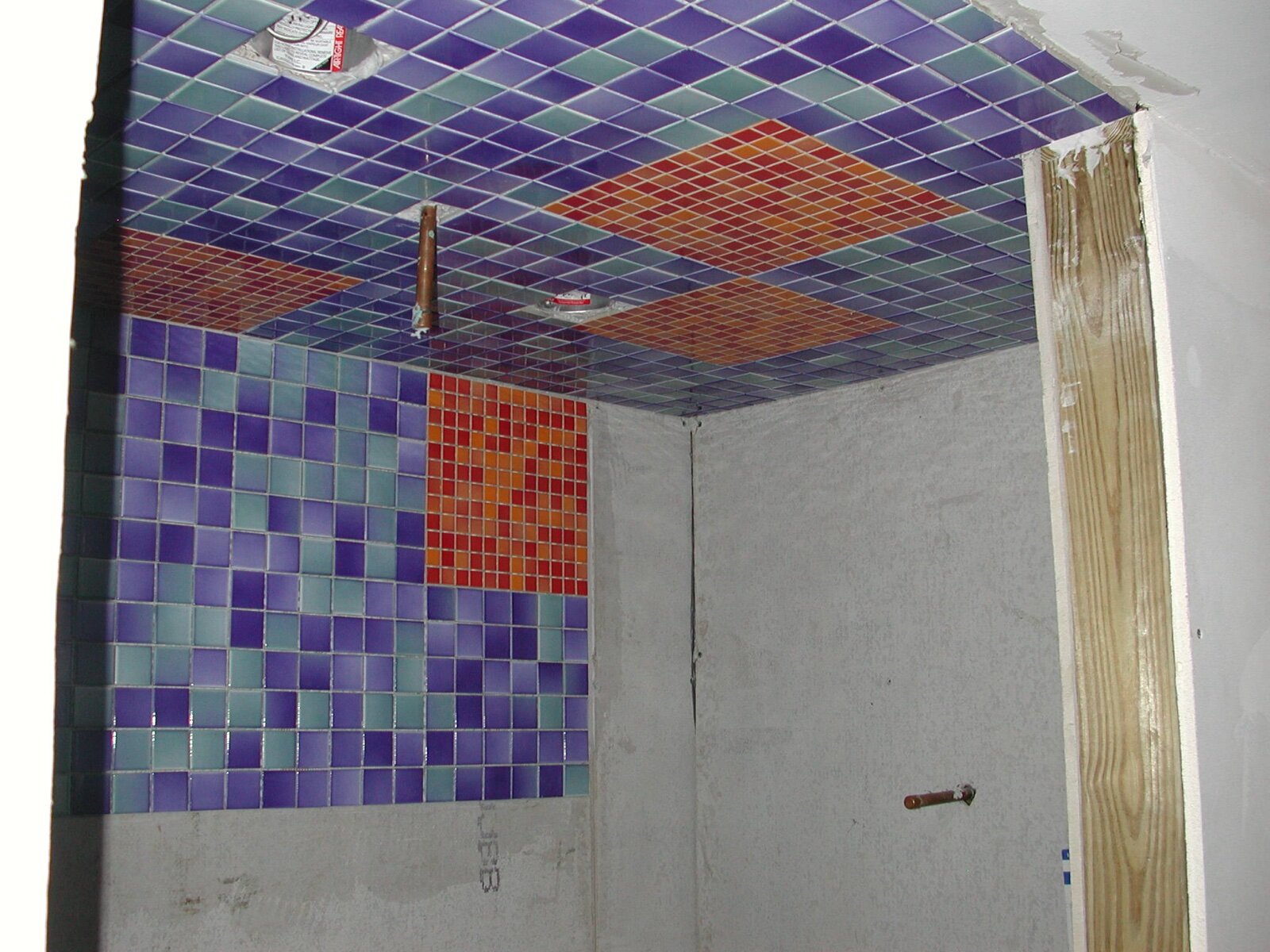
The same rule covers every junction where tiling meets something that moves independently: bath rim to tile, shower tray to tile, worktop to splashback, floor to wall. Fill the bath before you seal it and leave it full until the silicone has skinned, so the joint forms at its widest instead of tearing the first time somebody gets in.
In a large tiled area, or a corner that will take real movement, there is a purpose-made alternative to a silicone bead. Schlüter’s DILEX-EKE is a one-piece internal corner profile with perforated PVC legs that bed into the adhesive and a five millimetre soft movement zone forming the visible surface. One leg has a chamber that swallows the cut tile edge.
Fitting corner trim: the order that actually works
Trim goes in with the tiling, not after it. The perforated leg is designed to be buried in the adhesive bed, and a profile stuck on afterwards with silicone will lift within a year.
- Set out first. Decide which wall runs past and which butts into the profile. On a boxed pipe or a reveal, the face you see most from the doorway runs through.
- Cut the trim to length. Where two profiles meet at the top of a reveal, mitre them at 45 degrees with a fine hacksaw and a mitre block, or buy the matching corner piece. A butt joint here is the most visible mistake on the wall.
- Bed the anchoring leg. Comb adhesive onto the wall, press the perforated leg in, align it with a straightedge and a level, then trowel more adhesive over the leg so it is fully encased.
- Tile up to it. Leave roughly a 2mm joint between the tile and the profile, the same as your field joint, so the trim does not look like an afterthought.
- Grout and seal. Grout the joint between tile and trim on an external corner. Silicone, not grout, at internal corners and at every junction with sanitaryware.
The corner mistakes we are called out to fix
- Trim siliconed on at the end. It looks passable on day one and peels off the corner by the following summer.
- A grouted internal corner in a shower. Hairline cracks appear, water tracks behind the tiles, and the first sign is usually a damp patch on the other side of the wall.
Frequently asked questions
Do you have to use trim on tile corners?
No, but you have to do something. The three legitimate finishes on an external corner are a profile, a mitre, or a tile with a factory glazed edge, such as a bullnose or a metro tile with a rounded end. Leaving a raw cut edge exposed is not a finish, it is damage waiting to happen.
Can you use tile trim on an internal corner?
You can, but only a profile designed for it. A standard edge trim is rigid and will not accommodate movement. A dedicated internal corner movement profile with a soft flexible zone, or a simple silicone joint, are the two correct options. A rigid edge trim jammed into an internal corner will crack along the line within a season.
What size tile trim do I need for a 10mm tile?
12.5mm. The rule is the tile thickness plus an allowance of a couple of millimetres for the adhesive bed, which is why trims are sold one step above the common tile depths. Measure the tile itself rather than trusting the stated thickness.
Is a mitred corner better than a metal trim?
It looks better, particularly on large-format and stone-effect porcelain, and it is the right call in a bathroom where the corner is at eye height and you do not want a metal line. It is more fragile and it takes longer. In a hallway, a utility room or a family bathroom where the corner will get knocked, a metal profile is the more sensible choice.
Why does the grout in my bathroom corners keep cracking?
Because it is grout. An internal corner is a movement joint and cement grout has no flexibility to give. Rake it out to the full depth of the joint, let it dry, and refill with a flexible sanitary silicone matched to the grout colour. If it cracks again, the background is moving more than the sealant can take.
Getting it right first time
Almost all of this is settled before a tile goes on the wall: measure the tile and buy the trim one size up, match the material to how hard the corner will be used, order the corner pieces for any reveal, and plan internal corners as movement joints rather than something to grout at the end. If you would rather not gamble a bathroom on it, Bromley Tilers covers Bromley, Beckenham, Chislehurst and Orpington.
Related guides
- How to Tile a Bathroom Wall: A UK Step-by-Step Guide
- How Much Does Tiling Cost in the UK? A Realistic Price Guide
- How to Remove Old Wall Tiles Without Damaging the Wall
- Porcelain vs Ceramic Tiles: Which Is Right for Your Bathroom or Kitchen?
- How to Tank and Waterproof a Wet Room Before Tiling: A Bromley Homeowner’s Guide
- Do You Need to Seal Natural Stone Tiles Before Grouting? A Tiler Explains
- How to Tile a Bathroom Floor (Including Around the Toilet)
- How to Tile a Shower: Walls, Niche and Waterproofing
- Bathroom Tiling Guide: How to Plan, Prep and Finish a Lasting Job
- Tile Backer Board vs Plasterboard for Bathrooms
- Best Tiles for Small Bathrooms (and How to Make a Space Look Bigger)
- Wall and Floor Tiles for a Wet Room: What Actually Works
- Tiling vs Wall Panels for a Bathroom: Which Is Better?
- Do You Tile the Floor or Walls First in a Bathroom?
- Kitchen Tiling: Splashbacks, Walls and Floors Explained
- How to Tile a Kitchen Splashback: Step-by-Step Bromley Guide
- How to Tile Around Kitchen Sockets, Switches and Worktops
- Kitchen Splashback Tile Ideas: 12 Looks That Work
- How to Lay Metro Tiles in a Herringbone Pattern
- Tiled vs Glass Splashback (and Acrylic): Which Is Best?
- How High Should a Kitchen Splashback Be Tiled? UK Heights Guide
- Types of Tiles: The Complete UK Buyer’s Guide
- Porcelain vs Natural Stone Tiles: Which Should You Choose?
- Natural Stone Tiles Explained: Marble, Travertine, Slate and Limestone
- Mosaic Tiles: Where to Use Them and How They’re Fixed
- Tile Slip Ratings Explained: R Ratings and PTV for UK Floors
- Matt vs Gloss Tiles: Which Finish Is Right for Your Room?
- Cost to Tile a Bathroom in the UK: 2026 Price Breakdown
- Polystyrene Ceiling Tiles: Are They Any Good?
- Cost to Tile a Kitchen in 2026: Floor and Splashback Prices
- Tiling Cost Per Square Metre 2026: Labour and All-In Prices
- Tiler Day Rate UK: What Tilers Charge Per Day in 2026
- Cost to Regrout a Bathroom in 2026: UK Prices Explained
- Floor Tile Prices UK 2026: What You Will Pay Per Square Metre
- Is It Cheaper to Tile or Use Wall Panels? A UK Cost Comparison
- How to Tile: A Complete Beginner’s Guide (UK)
- How to Cut Tiles: Manual Cutter, Wet Saw and Nippers
- How to Cut Holes in Tiles for Pipes and Taps
- How to Grout Tiles (and Get Clean, Even Lines)
- Cork Flooring: Pros, Cons and Where It Works in UK Homes
- How to Mix and Apply Tile Adhesive Correctly
- How to Set Out Tiles for a Perfect Layout
- How to Seal Grout and Tiles in a Bathroom (UK Guide)
- Can You Tile Over Tiles? When It Works and When It Doesn’t
- Tiling Tools List: What You Need for a Professional Finish
- How Much Tile Adhesive Do I Need? Coverage Per Square Metre
- Tile Problems: 9 Common Faults and How to Fix Each
- How to Fix Loose Tiles Without Removing Them
- Cracked Grout Repair: Why It Happens and How to Fix It
- How to Replace a Broken Tile Without Redoing the Wall
- Water Leaking Through Shower Tiles: 6 Causes and Fixes
- Remove Mouldy Silicone Sealant: A 24-Hour Reseal Job
- How to Clean Grout: What Works, and What Etches Stone
- Why Are My Floor Tiles Lifting? The 40m² Bay Rule
- How to Lay Porcelain Paving: 1:80 Fall, 150mm Below DPC
- Tile Patterns: Why Big Tiles Need a One-Third Offset
- Grout Colour Ideas: How to Get the Shade You Chose
- Can You Paint Tiles? Yes on Walls, No in the Shower
- Decoupling Membrane for Tiles: When You Actually Need One
- Can You Tile Over a Wooden Floor? What Changed in 2024
- Tiling Cost 2026: £25 to £95 per m² Labour, UK Rates
- Tile Ideas: 7 Looks and the One Rule Each Needs
- Metro Tiles: Sizes, Bevels and the 1/3 Offset Rule
- Tile Feature Wall: The Weight Limit That Decides Yours
- Tiling Over Underfloor Heating: 14 Days Before Heat On
- How to Tile a Hallway Floor: Set Out From the Door
- Wood Effect Tiles and Marble Effect: 5 Specs to Check
- Tile Levelling Systems: The 3mm Rule That Decides It
- Floor Levelling Compound: How Deep and How Long to Dry
- How to Find a Good Tiler: 9 Checks Before You Book
- Tiling Quote: The 10 Lines a Proper One Must Show
- Tile Trim: Sizes, Profiles and the One-Size-Up Rule
- Tile Spacers: 2mm or 3mm, and When to Pull Them Out
- Tiling the Fireplace: 125mm Hearths, Adhesive and Tiles
- Porcelain vs Stone Paving: Grip, Sealing and Upkeep
- Tiling a Large Floor: Movement Joints Every 10 Metres
- DIY Tiling vs Professional: 6 Jobs to Never Do Yourself
- Terracotta Tiles: Seal Before Grouting, Wait 7 Days
- Tile Drill Bits: Which Bit Won’t Crack Porcelain
- Travertine Tiles: Filled or Unfilled, and How to Seal Them
- Slate Tiles: Calibrated or Riven, and How to Lay Them
- Zellige Tiles: Order 15% Extra and Fix Them Edge to Edge
- Terrazzo Tiles: Real 20mm vs Porcelain, Seal Before Grouting
- Split Face Tiles: Will Your Wall Take 27kg per m²?
- Tile Sealer: Which Tiles Need It and Which Type to Buy
- How to Remove Grout Haze: Which Cleaner for Which Grout
- Efflorescence on Tiles: Why It Comes Back and How to Stop It
- Tile Primer: Which Surfaces Need It and How Much to Dilute
- Epoxy Grout: Where It’s Worth It and How to Apply It
- How to Tile Stairs: Keep Every Riser the Same Height
- Shower Niche: Sizes, Height and Which Wall Can Take One
- How Many Tiles Do I Need? Add 10% to 20% by Layout
- How to Tile a Window Sill: Sill Last, Silicone at the Frame