


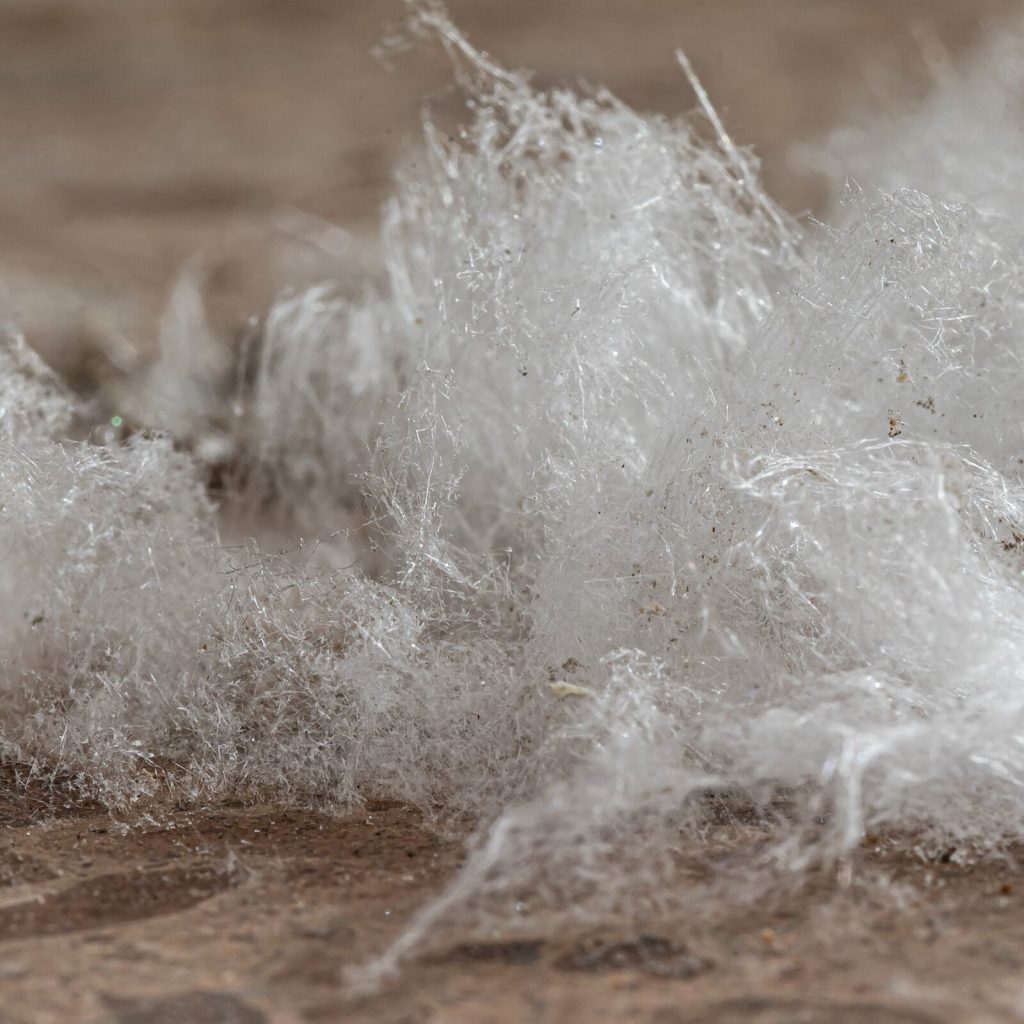
Efflorescence on tiles is the white, powdery or crystalline bloom that appears on grout lines, and sometimes across the tile faces, days or weeks after a floor or wall has been laid. It is salt. Water moving through the screed, render, adhesive or grout dissolves mineral salts, carries them to the surface and evaporates, leaving the salt behind. It is rarely a structural problem, but it will keep coming back until the moisture behind it stops, and the wrong cleaner can make a stone floor far worse.
This page explains how to tell efflorescence apart from grout haze and limescale, which cleaner suits which tile, and what to change so it does not return. We see it most on new floors laid over fresh screed, on Victorian hallways with no damp-proof membrane, and on patios jointed with cement mortar.
What efflorescence actually is
On cement-based materials the deposit is mostly calcium carbonate, with smaller amounts of other carbonate, sulphate and chloride salts, according to Pavingexpert’s technical page on efflorescence. The salts can come from any cement product under or around the tiles: a sand and cement screed, a render, the tile adhesive, or the grout itself.
Three things have to happen at once for it to show:
- Salts are present in the materials, which they almost always are in anything containing cement or lime.
- Water is moving through them, either construction water drying out of a new screed or ongoing damp from below or behind.
- The water evaporates at the surface, which is why the deposit gathers in the grout joints: grout is far more porous than a glazed or porcelain tile, so it becomes the exit route.
Take away any one of those and the bloom stops. Cleaning only removes what is already on the surface.
Efflorescence, grout haze or limescale?
All three leave a white film, and they need different treatment, so check which one you have before buying anything.
Grout haze
Haze is a thin, even film of grout residue across the tile faces, there from the day the floor was grouted. It does not grow back once removed. If the cloudiness appeared within hours of grouting, read our page on how to remove grout haze instead.
Efflorescence
Efflorescence turns up later, usually concentrated along the joints and edges, and is often fluffy or crystalline rather than a flat film. The giveaway is that it returns after cleaning, sometimes within days, because the salt is still travelling up from below. It also tends to be worse in particular patches, such as near an external wall, a leaking pipe or a doorway.
Limescale
Limescale is hard-water deposit left by splashes, so it sits where water lands: shower walls, around taps, the lower edge of a screen. It is hard rather than powdery and does not come from inside the floor.
A quick test: brush a patch with a dry stiff brush. Powdery salt brushes off easily. Check the same spot a week later. If the white has come back with nobody splashing water on it, you have efflorescence.
Why it appears on new floors and old ones
New floors over wet screed
A sand and cement screed holds a large amount of construction water, and it leaves slowly. The common rule of thumb is about a day per millimetre of thickness in good drying conditions, so a 50mm screed needs weeks, not days. Tile it too early and that water has to escape through the grout joints, bringing salts with it. Turning underfloor heating up hard to speed drying can push the moisture out faster and make the bloom heavier, so commission it gradually.
Pavingexpert notes that on paving most cases become visible three to six weeks after laying and then fade over the following months. Internal floors drying out after construction often follow a similar pattern: a burst of salt that eases off once the water has gone.
Old floors with no damp-proof membrane
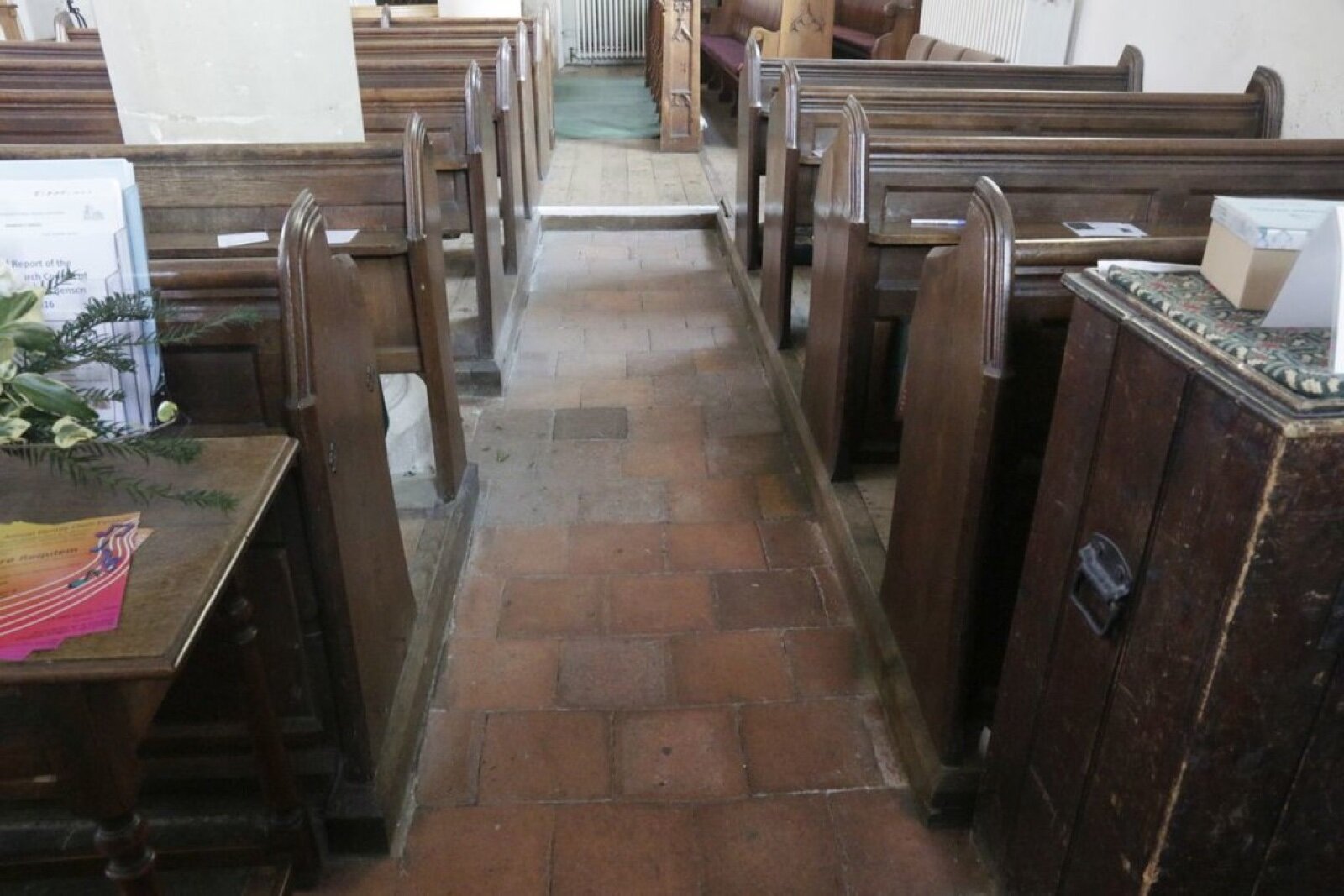
Victorian and Edwardian hallways, quarry tile kitchens and flagstone floors were usually laid straight on earth, rubble or lime with no membrane. Ground moisture rises continuously and evaporates through the joints. Tile Doctor notes that winter heating and kitchens with a constantly running range cooker speed this up, because they increase evaporation from the floor surface.
Covering one of these floors with rubber-backed mats or a non-breathable sealer does not stop the water; it moves it sideways and the salt comes out somewhere else, often in the walls.
Showers and wet rooms
In a shower, recurring white crusting along the grout lines that keeps returning, especially low down on the walls or around the tray, can be a sign that water is getting behind the tiles through cracked grout or failed sealant. That is a leak to trace, not a cleaning job.
Patios and outdoor tiles
Porcelain paving absorbs very little water, so the bloom usually appears in cement mortar joints and around the edges of slabs rather than on the faces. Natural stone and concrete slabs can show it across the whole surface.
How to remove efflorescence on tiles
Start gentle and only reach for acid if you need to.
1. Dry brush first
Brush the loose salt off with a dry stiff brush and vacuum it up. Do not start by mopping: water redissolves the salt and draws it back into the grout, ready to reappear.
2. Clean water and a stiff brush
For light bloom, Pavingexpert’s advice is a stiff brush, clean water and patience, repeated over time. On a floor that is still drying out, this is often all you should do until the moisture has finished moving, because anything stronger only treats the symptom.
3. A dedicated remover on acid-resistant tiles
For heavier deposits on porcelain, glazed ceramic, quarry tiles and terracotta, use a remover made for the job. Examples sold in the UK include:
- LTP Grout Stain Remover: an acid cleaner containing hydrochloric acid, which LTP says is not for natural stone. It is diluted 1:4 with water for mild cases and 1:1 for severe ones, agitated with a nylon brush and rinsed off. LTP quotes a one-litre bottle covering roughly 30m² at the mild dilution.
- Fila Deterdek Pro: an acidic after-laying cleaner for porcelain, ceramic and terracotta, diluted 1:5 or 1:10. Wet the surface with clean water first so the acid does not soak straight into the grout.
Always pre-wet the floor, work in small areas, keep the solution moving, then rinse thoroughly and pick up the dirty water with a wet vacuum or mop. Wear gloves and eye protection, and ventilate the room.
4. Natural stone needs a different product
Marble, limestone, travertine and polished concrete are acid sensitive. Ordinary acid cleaners etch and dull them, and Tile Doctor states that acids should not be used on them at all. LTP makes an acid-replacement product, Cement, Grout and Salt Residue Remover, and its efflorescence guidance says it can be used on limestone, travertine and other unpolished stone, but not on polished finishes. Whatever you use, test it on a hidden tile first and leave the test to dry fully before judging it.
Stopping efflorescence coming back
Removal is the easy half. These are the steps that actually end it.
- Let screeds dry before tiling. Test the moisture rather than guessing, and do not rush underfloor heating.
- Do not drown the grout. Over-wet sponging when finishing joints pushes water and fine cement to the surface. Use a well-wrung sponge.
- Avoid grouting in cold, damp conditions, when the grout dries slowly and water lingers in the joints.
- Fix the water source. Leaking pipes, failed shower sealant, a bridged damp-proof course or a patio that falls towards the house will feed the salt indefinitely.
- Use breathable sealers on old floors. On a floor with no membrane, a sealer that traps moisture can force salts to build up under the surface and damage the tile. Tile Doctor recommends fully breathable sealers for these floors.
When to seal
Wait until the efflorescence has stopped appearing before sealing anything. Sealing over active salt locks it into the tile and makes later cleaning harder. Our tile sealer page covers which tiles need sealing and which type to buy.
When to call a tiler or a damp specialist
Get the floor looked at if the bloom is still heavy months after a new installation, if it keeps appearing in one patch, if tiles sound hollow when tapped, or if grout is crumbling where the salt is worst. Salt crystallising inside a soft grout or a terracotta tile can break the surface down over time, and a persistent wet patch usually means a leak or a damp problem that a cleaner cannot fix. Bromley Tilers can tell you whether the tiles can stay or need lifting and relaying once the cause is sorted.
Frequently asked questions
Is efflorescence on tiles harmful?
The salt itself is not hazardous, and on porcelain or glazed ceramic it is mainly a cosmetic nuisance. The concern is the moisture behind it, which can point to a leak or rising damp, and on soft tiles and grout the crystals can slowly damage the surface.
Will efflorescence go away on its own?
On a new floor it often fades once the screed and grout have finished drying, which can take a few months. On an old floor with no damp-proof membrane it usually keeps returning, because the ground keeps supplying water.
Can I use vinegar to remove efflorescence?
Diluted white vinegar can shift light deposits on porcelain and ceramic, but it is still an acid. Never use it on marble, limestone or travertine, and rinse it off well so it does not attack cement grout.
Why does the white powder come back after I clean it?
Because cleaning removes only the salt on the surface. While water is still moving up through the floor and evaporating at the grout, it will keep bringing fresh salt with it.
Should I seal tiles to stop efflorescence?
Not until it has stopped. Sealing over active salt traps it, and on floors without a membrane a non-breathable sealer can make the problem worse. Use a breathable sealer, and only once the floor is dry.
Is efflorescence the same as grout haze?
No. Grout haze is residue left on the tile faces at the time of grouting and does not come back once cleaned. Efflorescence appears later, sits mainly along the joints and returns after cleaning.
Related guides
- How to Tile a Bathroom Wall: A UK Step-by-Step Guide
- How Much Does Tiling Cost in the UK? A Realistic Price Guide
- How to Remove Old Wall Tiles Without Damaging the Wall
- Porcelain vs Ceramic Tiles: Which Is Right for Your Bathroom or Kitchen?
- How to Tank and Waterproof a Wet Room Before Tiling: A Bromley Homeowner’s Guide
- Do You Need to Seal Natural Stone Tiles Before Grouting? A Tiler Explains
- How to Tile a Bathroom Floor (Including Around the Toilet)
- How to Tile a Shower: Walls, Niche and Waterproofing
- Bathroom Tiling Guide: How to Plan, Prep and Finish a Lasting Job
- Tile Backer Board vs Plasterboard for Bathrooms
- Best Tiles for Small Bathrooms (and How to Make a Space Look Bigger)
- Wall and Floor Tiles for a Wet Room: What Actually Works
- Tiling vs Wall Panels for a Bathroom: Which Is Better?
- Do You Tile the Floor or Walls First in a Bathroom?
- Kitchen Tiling: Splashbacks, Walls and Floors Explained
- How to Tile a Kitchen Splashback: Step-by-Step Bromley Guide
- How to Tile Around Kitchen Sockets, Switches and Worktops
- Kitchen Splashback Tile Ideas: 12 Looks That Work
- How to Lay Metro Tiles in a Herringbone Pattern
- Tiled vs Glass Splashback (and Acrylic): Which Is Best?
- How High Should a Kitchen Splashback Be Tiled? UK Heights Guide
- Types of Tiles: The Complete UK Buyer’s Guide
- Porcelain vs Natural Stone Tiles: Which Should You Choose?
- Natural Stone Tiles Explained: Marble, Travertine, Slate and Limestone
- Mosaic Tiles: Where to Use Them and How They’re Fixed
- Tile Slip Ratings Explained: R Ratings and PTV for UK Floors
- Matt vs Gloss Tiles: Which Finish Is Right for Your Room?
- Cost to Tile a Bathroom in the UK: 2026 Price Breakdown
- Polystyrene Ceiling Tiles: Are They Any Good?
- Cost to Tile a Kitchen in 2026: Floor and Splashback Prices
- Tiling Cost Per Square Metre 2026: Labour and All-In Prices
- Tiler Day Rate UK: What Tilers Charge Per Day in 2026
- Cost to Regrout a Bathroom in 2026: UK Prices Explained
- Floor Tile Prices UK 2026: What You Will Pay Per Square Metre
- Is It Cheaper to Tile or Use Wall Panels? A UK Cost Comparison
- How to Tile: A Complete Beginner’s Guide (UK)
- How to Cut Tiles: Manual Cutter, Wet Saw and Nippers
- How to Cut Holes in Tiles for Pipes and Taps
- How to Grout Tiles (and Get Clean, Even Lines)
- Cork Flooring: Pros, Cons and Where It Works in UK Homes
- How to Mix and Apply Tile Adhesive Correctly
- How to Set Out Tiles for a Perfect Layout
- How to Seal Grout and Tiles in a Bathroom (UK Guide)
- Can You Tile Over Tiles? When It Works and When It Doesn’t
- Tiling Tools List: What You Need for a Professional Finish
- How Much Tile Adhesive Do I Need? Coverage Per Square Metre
- Tile Problems: 9 Common Faults and How to Fix Each
- How to Fix Loose Tiles Without Removing Them
- Cracked Grout Repair: Why It Happens and How to Fix It
- How to Replace a Broken Tile Without Redoing the Wall
- Water Leaking Through Shower Tiles: 6 Causes and Fixes
- Remove Mouldy Silicone Sealant: A 24-Hour Reseal Job
- How to Clean Grout: What Works, and What Etches Stone
- Why Are My Floor Tiles Lifting? The 40m² Bay Rule
- How to Lay Porcelain Paving: 1:80 Fall, 150mm Below DPC
- Tile Patterns: Why Big Tiles Need a One-Third Offset
- Grout Colour Ideas: How to Get the Shade You Chose
- Can You Paint Tiles? Yes on Walls, No in the Shower
- Decoupling Membrane for Tiles: When You Actually Need One
- Can You Tile Over a Wooden Floor? What Changed in 2024
- Tiling Cost 2026: £25 to £95 per m² Labour, UK Rates
- Tile Ideas: 7 Looks and the One Rule Each Needs
- Metro Tiles: Sizes, Bevels and the 1/3 Offset Rule
- Tile Feature Wall: The Weight Limit That Decides Yours
- Tiling Over Underfloor Heating: 14 Days Before Heat On
- How to Tile a Hallway Floor: Set Out From the Door
- Wood Effect Tiles and Marble Effect: 5 Specs to Check
- Tile Levelling Systems: The 3mm Rule That Decides It
- Floor Levelling Compound: How Deep and How Long to Dry
- How to Find a Good Tiler: 9 Checks Before You Book
- Tiling Quote: The 10 Lines a Proper One Must Show
- Tile Trim: Sizes, Profiles and the One-Size-Up Rule
- Tile Spacers: 2mm or 3mm, and When to Pull Them Out
- Tiling the Fireplace: 125mm Hearths, Adhesive and Tiles
- Porcelain vs Stone Paving: Grip, Sealing and Upkeep
- Tiling a Large Floor: Movement Joints Every 10 Metres
- DIY Tiling vs Professional: 6 Jobs to Never Do Yourself
- Terracotta Tiles: Seal Before Grouting, Wait 7 Days
- Tile Drill Bits: Which Bit Won’t Crack Porcelain
- Tiling Corners With Trim: Which Profile, and When to Mitre
- Travertine Tiles: Filled or Unfilled, and How to Seal Them
- Slate Tiles: Calibrated or Riven, and How to Lay Them
- Zellige Tiles: Order 15% Extra and Fix Them Edge to Edge
- Terrazzo Tiles: Real 20mm vs Porcelain, Seal Before Grouting
- Split Face Tiles: Will Your Wall Take 27kg per m²?
- Tile Sealer: Which Tiles Need It and Which Type to Buy
- How to Remove Grout Haze: Which Cleaner for Which Grout
- Tile Primer: Which Surfaces Need It and How Much to Dilute
- Epoxy Grout: Where It’s Worth It and How to Apply It
- How to Tile Stairs: Keep Every Riser the Same Height
- Shower Niche: Sizes, Height and Which Wall Can Take One
- How Many Tiles Do I Need? Add 10% to 20% by Layout
- How to Tile a Window Sill: Sill Last, Silicone at the Frame