


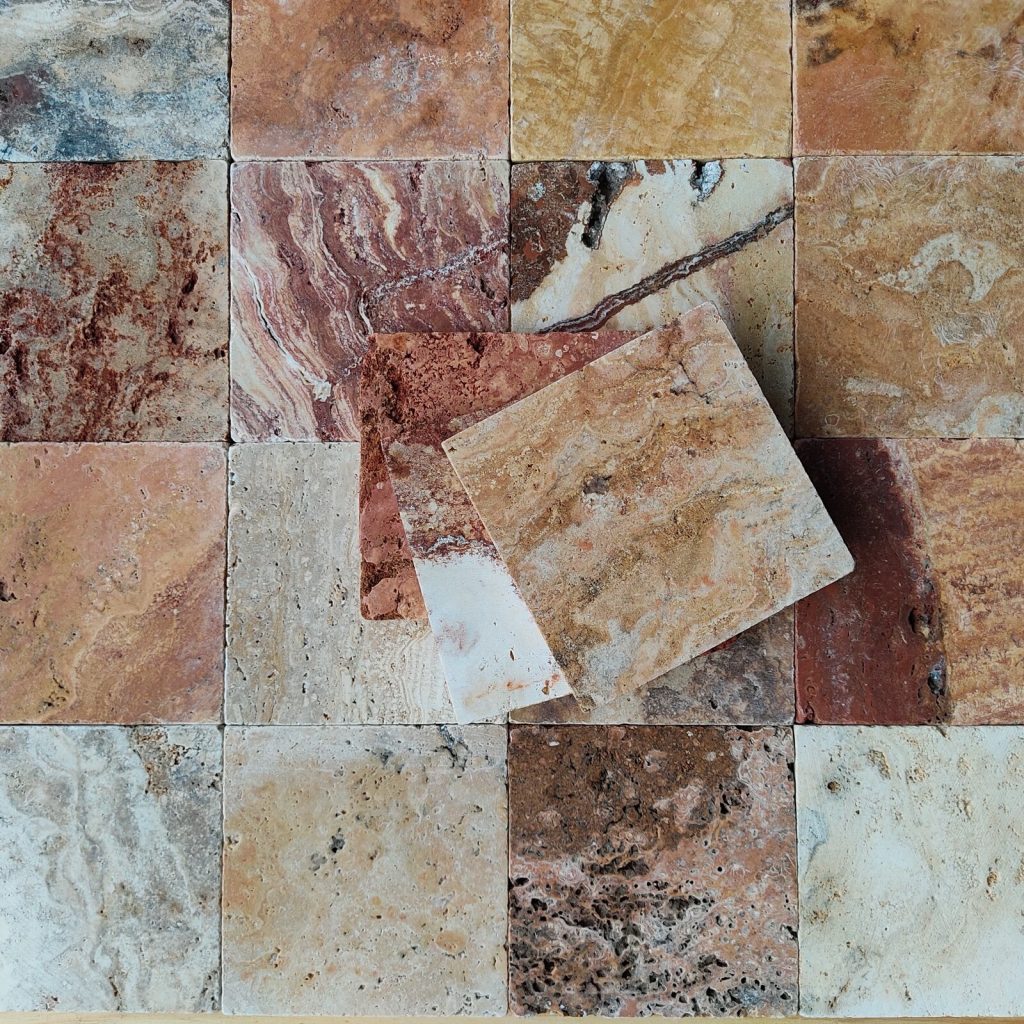
Travertine tiles are the natural stone we get asked about most in Bromley, usually by someone who has fallen for a honed cream floor in a showroom and wants to know whether it will survive a family kitchen. It can, but travertine behaves differently from porcelain in almost every way that matters after the tiler has gone home: it is porous, it reacts to acid, it is heavy, and its finish decides how much looking after it needs. Choose the right version and it will outlast the house. Choose the wrong one for the room and you will be fighting etch marks within a month.
This covers what travertine actually is, the finishes and how they wear, filled against unfilled, where it works and where it does not, how it should be fixed, and the sealing routine that keeps it looking right.
What travertine is, and why it has holes
Travertine is a form of limestone laid down by mineral-rich spring water. As the water gives up its calcium carbonate, gas bubbles and plant matter get trapped in the deposit, and those leave the pits and voids that make travertine recognisable. Most of the travertine sold in the UK is quarried in Turkey, with smaller amounts from Iran, Mexico and Italy. Italian stone tends to be paler and more even; Turkish stone runs from near-white through walnut and gold to red, often in a single batch.
Two things follow from that chemistry. First, it is soft compared with porcelain or granite, so it scratches and its edges chip more easily. Second, calcium carbonate dissolves in acid. Wine, vinegar, lemon juice, tomato, fizzy drinks and most bathroom descalers will leave a dull, pale mark called an etch. Sealer does not stop etching, because the acid attacks the stone itself rather than soaking in.
Travertine finishes: honed, tumbled, brushed and polished
The same block of stone can be finished four ways, and the finish matters more to daily life than the colour.
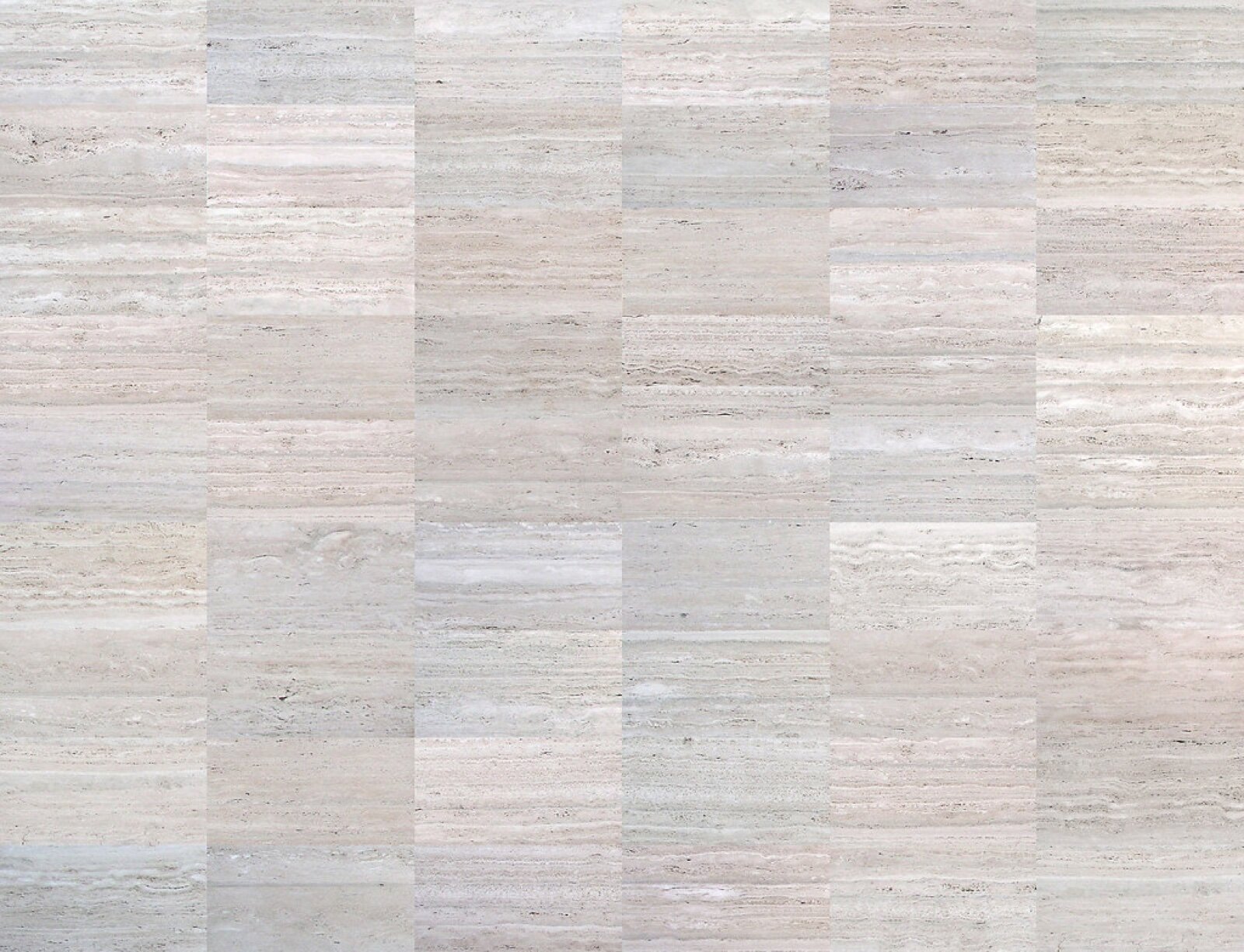
- Honed: ground flat to a smooth, matt surface. The most popular choice for floors because it has reasonable grip and hides wear. Etch marks show less on honed than on polished, since there is no shine to lose.
- Tumbled: the tiles are tumbled with grit so the edges round off and the face looks aged. Rustic, forgiving of scuffs, and usually sold unfilled.
- Brushed: wire-brushed to a slightly textured, leathery surface. A middle ground between honed and tumbled, and a good pick for a bathroom floor where you want some grip.
- Polished: buffed to a gloss. It looks sharp on a wall, but it shows every scratch and etch and it is slippery when wet, so we steer people away from it on bathroom and kitchen floors.
You will also see vein cut and cross cut. Vein cut slices across the layers of the deposit, giving long parallel stripes; cross cut slices along them, giving a cloudier, more random pattern. Vein cut looks more contemporary and suits large format and linear layouts.
Filled or unfilled travertine tiles
Because the stone is full of voids, most honed and polished travertine is filled at the factory with a cementitious filler or resin before the final finishing pass. Tumbled stone is usually left unfilled. The difference is not just looks.
Filled travertine gives a smooth, closed surface that is easy to mop and does not catch dirt. Over years of foot traffic some of the factory fill can work loose and a few pits reopen; that is normal and a tiler can refill them with a matching grout or resin.
Unfilled travertine keeps the open pores. It looks more natural, but the holes collect crumbs, soap scum and grout. If you want unfilled stone, decide before fixing whether the pits will be filled with grout at the grouting stage or left open. Left open on a floor, they will fill with dirt instead.
Where travertine works, and where it does not
Living rooms, hallways and conservatories are travertine’s best territory. Honed and filled stone on a properly prepared floor ages well and suits both period houses and modern extensions.
Kitchens are fine on the floor, with a caveat: anything acidic dropped and left will etch. Wipe spills straight away and accept that the floor will pick up a patina. We would not use travertine as a worktop or splashback behind a hob where tomato and citrus splash every day.
Bathrooms work well on floors and walls outside the shower, in honed or brushed finish, filled, and sealed. Inside a shower enclosure the stone is wet for long periods and exposed to shampoos and limescale removers, so it needs resealing often and gives up its looks faster. If you love it, use it on the walls and floor around the shower and put a porcelain in the enclosure itself. Never use acidic descalers on it.
Outdoors is possible, but in a Kent winter the risk is frost. Water gets into the pores, freezes and expands, and surfaces can spall. If you want travertine on a patio, buy thicker paving specifically sold for external use, lay it on a proper bed with drainage fall, and seal it. For most gardens around Bromley, an outdoor porcelain is the lower maintenance choice.
Underfloor heating is fine under travertine. Stone conducts heat well. The same rules apply as for any tiled floor on UFH: commission the system and run it before tiling, then bring it back up gradually. Our page on tiling over underfloor heating covers the sequence.
How travertine tiles should be fixed
Most fixing failures we see on natural stone come down to three mistakes: the wrong wall background, the wrong adhesive colour, and grouting before sealing.
Check the weight against the wall
Travertine weighs roughly 2.3 to 2.7 tonnes per cubic metre, which puts a 12mm tile at around 28 to 32kg per square metre before any adhesive. The Tile Association’s guidance limits a plastered wall to about 20kg per square metre of tile and adhesive, and plasterboard without a skim to about 32kg. So a 12mm travertine wall tile is too heavy for a plastered wall and at or over the limit for bare plasterboard. On walls we fix travertine to cement board. Our comparison of tile backer board against plasterboard explains the options.
Use a white, flexible, rapid-set adhesive
Grey adhesive can show through pale, translucent stone as dark patches, and slow-setting adhesive holds moisture against the back of the tile long enough to cause staining. Use a white adhesive sold for natural stone, ideally rapid-setting and flexible (an S1 classification) on floors, and get full solid bed coverage so there are no voids under the tile for a heel or chair leg to crack.
Seal before you grout
Grout pigment will stain unsealed travertine, especially unfilled or tumbled tiles. Apply a coat of impregnating sealer after fixing and before grouting, let it cure, grout, then apply the final coats. We go through this step in detail in sealing natural stone tiles before grouting. Pick a grout colour close to the stone; a contrasting grout on a busy travertine makes the floor look like a grid.
Sealing and cleaning travertine tiles
Use a penetrating, impregnating sealer made for natural stone, not a topical coating that sits on the surface and wears into paths. Two coats is normal, applied with a brush or lint-free cloth and any excess wiped off before it dries, since sealer left on the surface goes sticky and hazy.
How often to reseal depends on the product and the room, so test rather than guessing. Put a few drops of water on a clean, dry tile in a busy spot. If the water beads and sits there for more than half a minute, the sealer is doing its job. If the stone darkens and soaks it up, it is time to reseal. In a shower room that can be once a year; in a lounge it may be several years.
Day to day:
- Sweep or vacuum first. Grit is what wears a honed finish dull.
- Mop with water or a pH-neutral stone cleaner. Never vinegar, lemon, bleach or anything sold as a limescale remover.
- Blot spills rather than wiping them across the stone, and do it straight away.
- Put mats at external doors and felt pads under chair legs.
If a floor is already etched, a professional stone restorer can re-hone it back to an even finish.
Is travertine right for your room?
Pick travertine if you want real stone, you are happy to seal it, and the room is not constantly wet or acid-splashed. Pick a travertine-effect porcelain if you want the look with no sealing and no etching, which is often the better answer for a family bathroom or a busy kitchen. We compare the two material families in porcelain against ceramic tiles, and the Tile Association publishes guidance for anyone wanting the industry detail on backgrounds and fixing.
If you are weighing up travertine for a floor or bathroom in Bromley or south east London, Bromley Tilers can look at the room, check the subfloor or wall, and tell you honestly whether stone or porcelain will serve it better.
Frequently asked questions
Do travertine tiles need sealing?
Yes. Travertine is porous and will absorb oil, grout pigment and dirty water. Seal once after fixing and before grouting, again after grouting, and then whenever a water drop test shows the stone darkening and absorbing water.
Can you use travertine tiles in a shower?
You can, but we do not recommend it inside the enclosure. Constant water, shampoo and descalers wear the sealer and the finish quickly. Travertine on the bathroom floor and walls outside the shower, with porcelain inside it, gives the look with far less upkeep.
What is the difference between filled and unfilled travertine?
Filled travertine has its natural holes packed with a cement or resin filler at the factory, giving a smooth surface that is easy to clean. Unfilled keeps the open pores, which look more natural but collect dirt unless they are filled with grout during fixing.
Why has my travertine got dull marks that will not clean off?
Those are almost always etch marks from something acidic, such as wine, citrus, vinegar or a limescale cleaner. The acid has dissolved the surface of the stone, so no cleaner will remove them. A stone restorer can re-hone the area.
Can travertine go on a plasterboard wall?
Usually not safely. A 12mm travertine tile weighs around 28 to 32kg per square metre before adhesive, which is at or above the Tile Association’s 32kg limit for bare plasterboard. Fix it to cement backer board instead.
Is travertine good with underfloor heating?
Yes. Stone conducts heat well and travertine is a common choice over wet and electric underfloor heating. Run and commission the system before tiling and follow the adhesive maker’s guidance on curing before switching it back on.
Related guides
- How to Tile a Bathroom Wall: A UK Step-by-Step Guide
- How Much Does Tiling Cost in the UK? A Realistic Price Guide
- How to Remove Old Wall Tiles Without Damaging the Wall
- Porcelain vs Ceramic Tiles: Which Is Right for Your Bathroom or Kitchen?
- How to Tank and Waterproof a Wet Room Before Tiling: A Bromley Homeowner’s Guide
- Do You Need to Seal Natural Stone Tiles Before Grouting? A Tiler Explains
- How to Tile a Bathroom Floor (Including Around the Toilet)
- How to Tile a Shower: Walls, Niche and Waterproofing
- Construction Trade News: June 2026
- Bathroom Tiling Guide: How to Plan, Prep and Finish a Lasting Job
- Tile Backer Board vs Plasterboard for Bathrooms
- Best Tiles for Small Bathrooms (and How to Make a Space Look Bigger)
- Wall and Floor Tiles for a Wet Room: What Actually Works
- Tiling vs Wall Panels for a Bathroom: Which Is Better?
- Do You Tile the Floor or Walls First in a Bathroom?
- Tiling and Bathroom Trade News: Mid-June 2026
- Kitchen Tiling: Splashbacks, Walls and Floors Explained
- How to Tile a Kitchen Splashback: Step-by-Step Bromley Guide
- How to Tile Around Kitchen Sockets, Switches and Worktops
- Kitchen Splashback Tile Ideas: 12 Looks That Work
- Tiling and Bathroom Trade News: Late June 2026
- How to Lay Metro Tiles in a Herringbone Pattern
- Tiled vs Glass Splashback (and Acrylic): Which Is Best?
- How High Should a Kitchen Splashback Be Tiled? UK Heights Guide
- Tiling and Bathroom Trade News: Early July 2026
- Types of Tiles: The Complete UK Buyer’s Guide
- Porcelain vs Natural Stone Tiles: Which Should You Choose?
- Natural Stone Tiles Explained: Marble, Travertine, Slate and Limestone
- Tiling and Bathroom Trade News: Mid-July 2026
- Mosaic Tiles: Where to Use Them and How They’re Fixed
- Tile Slip Ratings Explained: R Ratings and PTV for UK Floors
- Matt vs Gloss Tiles: Which Finish Is Right for Your Room?
- Cost to Tile a Bathroom in the UK: 2026 Price Breakdown
- Polystyrene Ceiling Tiles: Are They Any Good?
- Cost to Tile a Kitchen in 2026: Floor and Splashback Prices
- Tiling and Bathroom Trade News: Mid-July 2026
- Tiling Cost Per Square Metre 2026: Labour and All-In Prices
- Tiler Day Rate UK: What Tilers Charge Per Day in 2026
- Cost to Regrout a Bathroom in 2026: UK Prices Explained
- Floor Tile Prices UK 2026: What You Will Pay Per Square Metre
- Is It Cheaper to Tile or Use Wall Panels? A UK Cost Comparison
- How to Tile: A Complete Beginner’s Guide (UK)
- How to Cut Tiles: Manual Cutter, Wet Saw and Nippers
- How to Cut Holes in Tiles for Pipes and Taps
- How to Grout Tiles (and Get Clean, Even Lines)
- Cork Flooring: Pros, Cons and Where It Works in UK Homes
- Tiling and Bathroom Trade News: Late July 2026
- How to Mix and Apply Tile Adhesive Correctly
- How to Set Out Tiles for a Perfect Layout
- How to Seal Grout and Tiles in a Bathroom (UK Guide)
- Can You Tile Over Tiles? When It Works and When It Doesn’t
- Tiling Tools List: What You Need for a Professional Finish
- How Much Tile Adhesive Do I Need? Coverage Per Square Metre
- Tiling Trade News: Topps App, Costs Up 6% (Aug 2026)
- Tile Problems: 9 Common Faults and How to Fix Each
- How to Fix Loose Tiles Without Removing Them
- Cracked Grout Repair: Why It Happens and How to Fix It
- Tiling Trade News: TTA Silica Warning, 2% Retentions
- How to Replace a Broken Tile Without Redoing the Wall
- Water Leaking Through Shower Tiles: 6 Causes and Fixes
- Remove Mouldy Silicone Sealant: A 24-Hour Reseal Job
- How to Clean Grout: What Works, and What Etches Stone
- Why Are My Floor Tiles Lifting? The 40m² Bay Rule
- Tiling Trade News: 3,841 Construction Firms Failed
- How to Lay Porcelain Paving: 1:80 Fall, 150mm Below DPC
- Tile Patterns: Why Big Tiles Need a One-Third Offset
- Grout Colour Ideas: How to Get the Shade You Chose
- Can You Paint Tiles? Yes on Walls, No in the Shower
- Decoupling Membrane for Tiles: When You Actually Need One
- Can You Tile Over a Wooden Floor? What Changed in 2024
- Tiling Cost 2026: £25 to £95 per m² Labour, UK Rates
- Tile Ideas: 7 Looks and the One Rule Each Needs
- Metro Tiles: Sizes, Bevels and the 1/3 Offset Rule
- Tile Feature Wall: The Weight Limit That Decides Yours
- Tiling Over Underfloor Heating: 14 Days Before Heat On
- How to Tile a Hallway Floor: Set Out From the Door
- Wood Effect Tiles and Marble Effect: 5 Specs to Check
- Tile Levelling Systems: The 3mm Rule That Decides It
- Tiling Trade News: Repair Work Up 1.7%, Headlam Fails
- Floor Levelling Compound: How Deep and How Long to Dry
- How to Find a Good Tiler: 9 Checks Before You Book
- Tiling Quote: The 10 Lines a Proper One Must Show
- Tile Trim: Sizes, Profiles and the One-Size-Up Rule
- Tile Spacers: 2mm or 3mm, and When to Pull Them Out
- Tiling the Fireplace: 125mm Hearths, Adhesive and Tiles
- Tiling Trade News: Shaws Sinks Reprice on 1 November
- Porcelain vs Stone Paving: Grip, Sealing and Upkeep
- Tiling a Large Floor: Movement Joints Every 10 Metres
- DIY Tiling vs Professional: 6 Jobs to Never Do Yourself
- Terracotta Tiles: Seal Before Grouting, Wait 7 Days
- Tile Drill Bits: Which Bit Won’t Crack Porcelain
- Tiling Corners With Trim: Which Profile, and When to Mitre
- Slate Tiles: Calibrated or Riven, and How to Lay Them
- Zellige Tiles: Order 15% Extra and Fix Them Edge to Edge
- Terrazzo Tiles: Real 20mm vs Porcelain, Seal Before Grouting
- Tiling Trade News: 36% Now Add a Bathroom Accent Wall
- Split Face Tiles: Will Your Wall Take 27kg per m²?
- Tile Sealer: Which Tiles Need It and Which Type to Buy
- How to Remove Grout Haze: Which Cleaner for Which Grout
- Efflorescence on Tiles: Why It Comes Back and How to Stop It
- Tile Primer: Which Surfaces Need It and How Much to Dilute
- Epoxy Grout: Where It’s Worth It and How to Apply It
- How to Tile Stairs: Keep Every Riser the Same Height
- Shower Niche: Sizes, Height and Which Wall Can Take One
- How Many Tiles Do I Need? Add 10% to 20% by Layout
- How to Tile a Window Sill: Sill Last, Silicone at the Frame
- Tiling Trade News: Victorian Plumbing Tile Sales Up 76%
- How to Tile Around a Toilet: Lift the Pan or Cut Round It
- Tile to Carpet Transition: Pick the Strip by the Height Gap
- Tile Skirting: Leave a 6mm Gap and Seal, Never Grout