


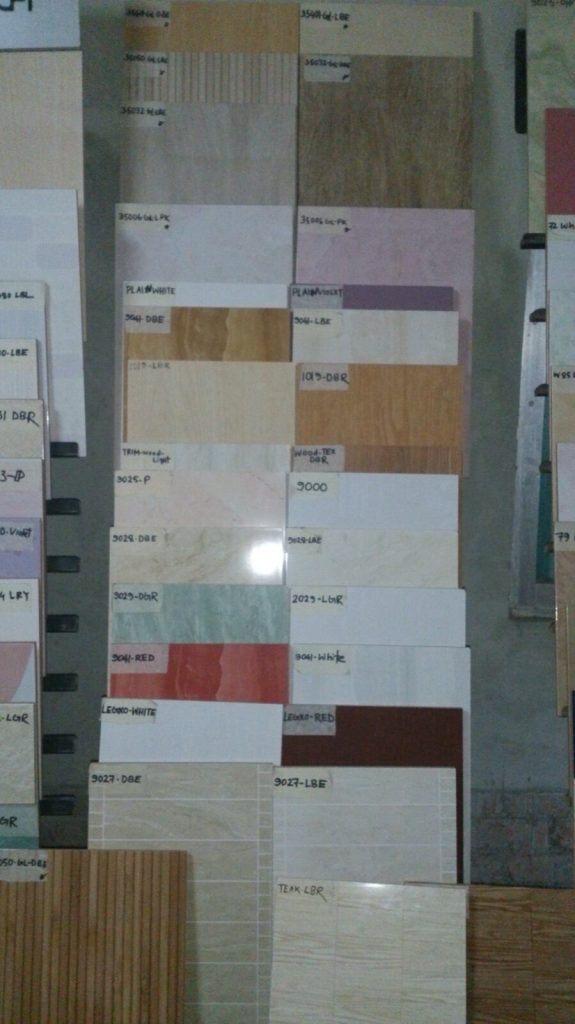
Cheap tiles can be a genuine bargain or an expensive mistake, and the price label tells you almost nothing about which one you are holding. As tilers working across Bromley and south east London, we fit budget tiles every month. Some look better on the wall than tiles costing three times as much. Others add a day of labour to the job because they are warped, mixed in shade or sized inconsistently. The difference is nearly always visible before you pay, if you know where to look.
This page covers the checks we run on any low-cost tile before we agree to fit it: what is printed on the box, what “seconds” and “clearance” actually mean, which tile types are safest to buy cheaply, and where a cheap tile ends up costing you more in labour than it saved at the till.
Why some cheap tiles are fine and others are not
A tile is cheap for one of four reasons, and only two of them are a problem.
- It is a plain, mass-produced design. White gloss wall tiles, plain metro tiles and basic matt floor tiles are made in huge volumes. They are cheap because they are simple, not because they are poor. These are usually the safest bargains.
- It is end of line or clearance stock. The range has been discontinued or the shop is clearing space. Several UK retailers state plainly that clearance stock is first quality; it is cheap because there is limited quantity left, not because anything is wrong with it.
- It is a second or B grade. The tile failed the factory’s visual inspection. Grading is set by each manufacturer rather than one UK-wide rule, but seconds typically have shade variation, small chips, surface blemishes or size and flatness that fall outside the first-quality tolerance.
- It is a low-specification tile sold for the wrong job. A soft wall tile marketed loosely enough that someone buys it for a hallway floor. The tile is fine; the use is wrong.
The first two are where the real savings are. The last two are where cheap tiles go wrong, and most problems we are called back to fix come from them.
Read the box: shade, calibre and batch
Every box of tiles from a reputable manufacturer carries a batch or shade code, and rectified or larger tiles usually carry a calibre (size) code as well. Tiles from different firings can differ slightly in colour and in exact size, and those differences only show once the tiles are on the wall.
- Check every box has the same shade and calibre code before you leave the shop or sign for a delivery. Mixed codes are the single most common cause of a “patchy” finished wall.
- Buy the full quantity in one go. With clearance stock this matters twice over, because once the batch has gone there is no more. Work out your area with our how many tiles do I need guide and add around 10% for cuts and breakages, more for diagonal or herringbone layouts.
- Keep two or three spare tiles after the job. If one cracks in five years, a matching cheap tile will almost certainly be impossible to find.
If a box has no batch or shade code at all, treat that as a warning sign rather than a detail.
Seconds, B grade and clearance: what you are actually buying
Because there is no single legal definition of a “second”, the label means whatever that factory or seller says it means. Ask before you buy, and get the answer in writing if the quantity is large. Points we would check:
- Returns and warranty. UK sellers commonly sell seconds and B grade stock with no warranty and no returns. If the tiles turn out to be unusable, the loss is yours.
- Size consistency. This is the defect that costs most in labour. On small wall tiles a millimetre of variation is hidden by the grout joint. On large format porcelain it becomes lippage (one tile edge standing proud of the next), which a tiler can only partly manage with a levelling system and extra time.
- Flatness. Lay three or four tiles face down on a flat surface, or face to face, and look for rocking. A bowed tile will not bed fully.
- Chips and surface marks. Small edge chips on a tile that will be cut anyway do not matter. Marks in the middle of a face tile do, and you will lose more tiles to sorting than you expect.
Our view after years of fitting them: seconds are a sensible buy for a utility room, a garage, a feature panel you can sort tile by tile, or a small splashback. They are a poor buy for a large open-plan floor or anywhere the light rakes across the surface.
Which cheap tiles are safest for floors
For walls almost any decent ceramic tile will do. Floors are less forgiving, and this is where the specification printed on the box earns its keep.
- Porcelain over ceramic for floors. Under BS EN 14411, porcelain falls in the lowest water absorption group (0.5% or less). That makes it denser and harder wearing, and a budget porcelain floor tile is usually a better bet than a budget ceramic one. Our porcelain tiles guide goes into more detail.
- Check the wear rating on glazed tiles. Glazed tiles are commonly graded on the PEI scale for surface abrasion, from PEI 0 (walls only) to PEI 5 (heavy traffic). For a domestic hallway or kitchen floor look for PEI 3 or higher. A cheap wall tile with no PEI rating should never go on a floor.
- Check slip resistance. A cheap polished tile can be lethal when wet. The Health and Safety Executive explains how slip resistance is measured, including the pendulum test value (PTV) bands, on its flooring slips guidance. For bathrooms and kitchens, a matt or lightly textured finish is the safer budget choice.
- Frost resistance outdoors. If cheap tiles are going outside, the box or data sheet must state that they are frost resistant. Ceramic wall tiles almost never are.
Where cheap tiles cost more than they save
Tile price is often the smaller part of a tiling bill. Labour, adhesive, grout, trims and preparation make up the rest, as our tiling cost per square metre breakdown shows. That changes the maths on budget tiles:
- Uneven tiles slow the fitter down. Sorting, back-buttering to correct thickness and adjusting lippage all add time. If your tiler charges by the day, poor tiles can wipe out the saving.
- Soft or brittle tiles break more during cutting. Plan on more waste, not less.
- Very cheap large format tiles are the biggest trap. Large tiles magnify any bow. Spending less on a 60 x 120cm tile with poor flatness is usually false economy; a smaller, well-made budget tile will look better.
- Cheap does not change the preparation. A wet room still needs tanking, a timber floor still needs suitable boarding, and a heated floor still needs the right adhesive. None of that gets cheaper because the tile did.
How to make a budget tile look expensive
Most of the “expensive look” comes from the fitting, not the tile. A plain white tile can look sharp or cheap depending on these choices:
- Grout colour and joint width. A tight, consistent joint in a well-chosen colour does more than any premium glaze. See our guide to choosing grout colour.
- Layout. Setting out from the centre so you avoid thin slivers at corners and around windows makes a wall look planned.
- Trims and edges. Neat metal or PVC trims on external corners, or properly finished mitres, lift a cheap tile instantly.
- Spend where the eye goes. Many clients use an inexpensive plain tile across most of a bathroom and put the money into one feature wall or niche.
Our buying checklist for cheap tiles
- Confirm the tile is suitable for the job: wall or floor, indoor or outdoor, wet area or dry.
- Check the box for shade, batch and calibre codes, and that they match across every box.
- Ask whether the stock is first quality, clearance or seconds, and what the returns policy is.
- Lay out a few tiles to check flatness, size and finish before committing.
- For floors, check porcelain or a stated wear rating, plus a slip resistance figure for wet areas.
- Buy the full quantity plus waste in one batch, and keep spares.
If you are in the Bromley area and want a second opinion on tiles before you buy, our tilers are happy to look at a sample and tell you honestly whether it will fit well. You can find out more on the Bromley Tilers homepage. The Tile Association, the UK trade body, also publishes consumer advice and a directory of members at tiles.org.uk.
Frequently asked questions
Are cheap tiles worse quality?
Not necessarily. Plain, mass-produced ceramic and porcelain tiles are cheap because they are simple to make in volume. The quality risk sits with seconds, unbranded stock with no batch codes, and tiles used for a job they were not made for.
What does “seconds” mean on tiles?
Seconds are tiles that failed the manufacturer’s first-quality inspection, usually for shade variation, chips, surface marks or size and flatness outside tolerance. There is no single UK definition, so ask the seller what the grade covers and whether returns are accepted.
Can I use cheap wall tiles on the floor?
No. Wall tiles are usually softer, more absorbent and often too slippery for floors. Use a tile rated for floors, ideally porcelain, with a wear rating suitable for the room.
How many extra cheap tiles should I buy?
Allow around 10% extra for a straight layout and more for diagonal or herringbone patterns. With clearance stock, buy enough in one batch and keep a few spares, because matching tiles later is rarely possible.
Do cheap tiles cost more to fit?
Good budget tiles cost the same to fit as expensive ones. Poor tiles with uneven sizes, bowing or mixed batches take longer to sort and lay, and some tilers will price that extra time into the job.
Are clearance tiles the same as seconds?
Not always. Clearance tiles are often first quality stock from a discontinued range or the end of a batch. Seconds are a lower grade. Check the label or ask the shop which one you are buying.
Related guides
- How to Tile a Bathroom Wall: A UK Step-by-Step Guide
- How Much Does Tiling Cost in the UK? A Realistic Price Guide
- How to Remove Old Wall Tiles Without Damaging the Wall
- Porcelain vs Ceramic Tiles: Which Is Right for Your Bathroom or Kitchen?
- How to Tank and Waterproof a Wet Room Before Tiling: A Bromley Homeowner’s Guide
- Do You Need to Seal Natural Stone Tiles Before Grouting? A Tiler Explains
- How to Tile a Bathroom Floor (Including Around the Toilet)
- How to Tile a Shower: Walls, Niche and Waterproofing
- Construction Trade News: June 2026
- Bathroom Tiling Guide: How to Plan, Prep and Finish a Lasting Job
- Tile Backer Board vs Plasterboard for Bathrooms
- Best Tiles for Small Bathrooms (and How to Make a Space Look Bigger)
- Wall and Floor Tiles for a Wet Room: What Actually Works
- Tiling vs Wall Panels for a Bathroom: Which Is Better?
- Do You Tile the Floor or Walls First in a Bathroom?
- Tiling and Bathroom Trade News: Mid-June 2026
- Kitchen Tiling: Splashbacks, Walls and Floors Explained
- How to Tile a Kitchen Splashback: Step-by-Step Bromley Guide
- How to Tile Around Kitchen Sockets, Switches and Worktops
- Kitchen Splashback Tile Ideas: 12 Looks That Work
- Tiling and Bathroom Trade News: Late June 2026
- How to Lay Metro Tiles in a Herringbone Pattern
- Tiled vs Glass Splashback (and Acrylic): Which Is Best?
- How High Should a Kitchen Splashback Be Tiled? UK Heights Guide
- Tiling and Bathroom Trade News: Early July 2026
- Types of Tiles: The Complete UK Buyer’s Guide
- Porcelain vs Natural Stone Tiles: Which Should You Choose?
- Natural Stone Tiles Explained: Marble, Travertine, Slate and Limestone
- Tiling and Bathroom Trade News: Mid-July 2026
- Mosaic Tiles: Where to Use Them and How They’re Fixed
- Tile Slip Ratings Explained: R Ratings and PTV for UK Floors
- Matt vs Gloss Tiles: Which Finish Is Right for Your Room?
- Cost to Tile a Bathroom in the UK: 2026 Price Breakdown
- Polystyrene Ceiling Tiles: Are They Any Good?
- Cost to Tile a Kitchen in 2026: Floor and Splashback Prices
- Tiling and Bathroom Trade News: Mid-July 2026
- Tiling Cost Per Square Metre 2026: Labour and All-In Prices
- Tiler Day Rate UK: What Tilers Charge Per Day in 2026
- Cost to Regrout a Bathroom in 2026: UK Prices Explained
- Floor Tile Prices UK 2026: What You Will Pay Per Square Metre
- Is It Cheaper to Tile or Use Wall Panels? A UK Cost Comparison
- How to Tile: A Complete Beginner’s Guide (UK)
- How to Cut Tiles: Manual Cutter, Wet Saw and Nippers
- How to Cut Holes in Tiles for Pipes and Taps
- How to Grout Tiles (and Get Clean, Even Lines)
- Cork Flooring: Pros, Cons and Where It Works in UK Homes
- Tiling and Bathroom Trade News: Late July 2026
- How to Mix and Apply Tile Adhesive Correctly
- How to Set Out Tiles for a Perfect Layout
- How to Seal Grout and Tiles in a Bathroom (UK Guide)
- Can You Tile Over Tiles? When It Works and When It Doesn’t
- Tiling Tools List: What You Need for a Professional Finish
- How Much Tile Adhesive Do I Need? Coverage Per Square Metre
- Tiling Trade News: Topps App, Costs Up 6% (Aug 2026)
- Tile Problems: 9 Common Faults and How to Fix Each
- How to Fix Loose Tiles Without Removing Them
- Cracked Grout Repair: Why It Happens and How to Fix It
- Tiling Trade News: TTA Silica Warning, 2% Retentions
- How to Replace a Broken Tile Without Redoing the Wall
- Water Leaking Through Shower Tiles: 6 Causes and Fixes
- Remove Mouldy Silicone Sealant: A 24-Hour Reseal Job
- How to Clean Grout: What Works, and What Etches Stone
- Why Are My Floor Tiles Lifting? The 40m² Bay Rule
- Tiling Trade News: 3,841 Construction Firms Failed
- How to Lay Porcelain Paving: 1:80 Fall, 150mm Below DPC
- Tile Patterns: Why Big Tiles Need a One-Third Offset
- Grout Colour Ideas: How to Get the Shade You Chose
- Can You Paint Tiles? Yes on Walls, No in the Shower
- Decoupling Membrane for Tiles: When You Actually Need One
- Can You Tile Over a Wooden Floor? What Changed in 2024
- Tiling Cost 2026: £25 to £95 per m² Labour, UK Rates
- Tile Ideas: 7 Looks and the One Rule Each Needs
- Metro Tiles: Sizes, Bevels and the 1/3 Offset Rule
- Tile Feature Wall: The Weight Limit That Decides Yours
- Tiling Over Underfloor Heating: 14 Days Before Heat On
- How to Tile a Hallway Floor: Set Out From the Door
- Wood Effect Tiles and Marble Effect: 5 Specs to Check
- Tile Levelling Systems: The 3mm Rule That Decides It
- Tiling Trade News: Repair Work Up 1.7%, Headlam Fails
- Floor Levelling Compound: How Deep and How Long to Dry
- How to Find a Good Tiler: 9 Checks Before You Book
- Tiling Quote: The 10 Lines a Proper One Must Show
- Tile Trim: Sizes, Profiles and the One-Size-Up Rule
- Tile Spacers: 2mm or 3mm, and When to Pull Them Out
- Tiling the Fireplace: 125mm Hearths, Adhesive and Tiles
- Tiling Trade News: Shaws Sinks Reprice on 1 November
- Porcelain vs Stone Paving: Grip, Sealing and Upkeep
- Tiling a Large Floor: Movement Joints Every 10 Metres
- DIY Tiling vs Professional: 6 Jobs to Never Do Yourself
- Terracotta Tiles: Seal Before Grouting, Wait 7 Days
- Tile Drill Bits: Which Bit Won’t Crack Porcelain
- Tiling Corners With Trim: Which Profile, and When to Mitre
- Travertine Tiles: Filled or Unfilled, and How to Seal Them
- Slate Tiles: Calibrated or Riven, and How to Lay Them
- Zellige Tiles: Order 15% Extra and Fix Them Edge to Edge
- Terrazzo Tiles: Real 20mm vs Porcelain, Seal Before Grouting
- Tiling Trade News: 36% Now Add a Bathroom Accent Wall
- Split Face Tiles: Will Your Wall Take 27kg per m²?
- Tile Sealer: Which Tiles Need It and Which Type to Buy
- How to Remove Grout Haze: Which Cleaner for Which Grout
- Efflorescence on Tiles: Why It Comes Back and How to Stop It
- Tile Primer: Which Surfaces Need It and How Much to Dilute
- Epoxy Grout: Where It’s Worth It and How to Apply It
- How to Tile Stairs: Keep Every Riser the Same Height
- Shower Niche: Sizes, Height and Which Wall Can Take One
- How Many Tiles Do I Need? Add 10% to 20% by Layout
- How to Tile a Window Sill: Sill Last, Silicone at the Frame
- Tiling Trade News: Victorian Plumbing Tile Sales Up 76%
- How to Tile Around a Toilet: Lift the Pan or Cut Round It
- Tile to Carpet Transition: Pick the Strip by the Height Gap
- Tile Skirting: Leave a 6mm Gap and Seal, Never Grout
- Tile Backer Board: Cement or Foam, Which Thickness, Fixings
- Quarry Tiles: Seal Them or Not, and How to Clean Them
- Rapid Set Tile Adhesive vs Standard: 30 Mins or 24 Hours
- Can You Tile Onto Plaster? Yes, Up to 20kg per m²
- How to Tile a Balcony: 1.5-2% Fall, Drain Mat, 150mm Upstand
- Electric Tile Cutter: When You Need One and Which Disc
- Victorian Floor Tiles: Sizes, Repairs and When to Replace
- Marble Tiles: White Rapid-Set Adhesive, Seal Before Grouting
- Tiling on Anhydrite Screed: 0.5% Moisture, Sand, Then Prime
- Tiling Trade News: Domus Buyout After Headlam Collapse
- How High to Tile a Bathroom: 1.2m Line vs Floor to Ceiling
- Can You Tile Over Paint? Strip Emulsion, Key Gloss First
- Hollow Sounding Tiles: When to Leave Them, When to Lift
- Tile Movement Joints: Where They Go and the 10m Rule
- Tiling Trade News: Home Improvement Work to Fall 8%
- Outdoor Wall Tiles: 0.5% Absorption and a 100% Adhesive Bed
- Living Room Floor Tiles: Porcelain, Heating and the 3mm Rule
- Pink Tiles: Shades, Grout and Slip Ratings Before You Buy