


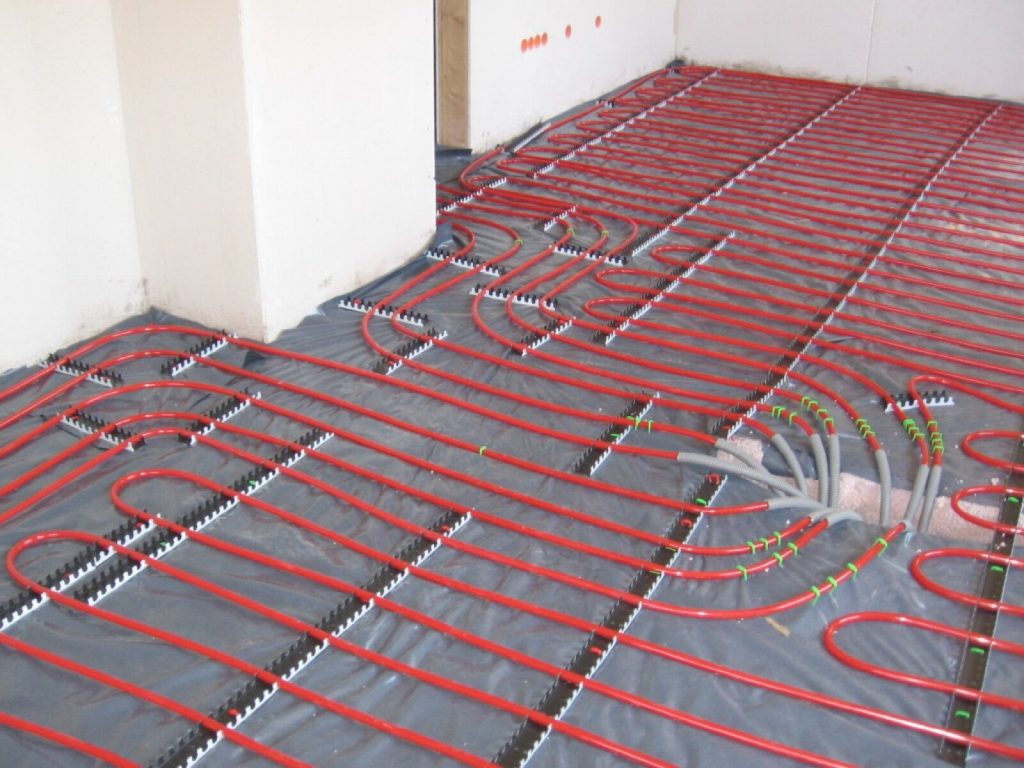
Tiling over underfloor heating is not a harder job than tiling a cold floor, but it is a longer one, and almost every failure we get called to has the same cause: someone tiled before the heating was commissioned, or turned the heat back on too soon afterwards. British Standard 5385-3 sets out a sequence that takes weeks, not days. Skip a step and the floor cracks, usually along a grout line, usually within the first winter.
Here is the sequence the standard and the adhesive manufacturers actually specify, for wet systems and electric mats, plus the movement joint rule that catches small bathrooms out.
Why heated floors crack
A tiled floor over heating expands and contracts every time the system cycles. Tiles, adhesive, grout and screed all move at different rates, and the stress has to go somewhere. If the screed was still shrinking when you tiled, or the floor has no joint to move against, the weakest line in the assembly gives way. That is nearly always the grout, then the bond between adhesive and screed.
Everything below is aimed at one thing: get all the shrinkage and the first big thermal cycle out of the way before the tiles go down, then give the adhesive and grout time to gain strength before the floor is heated again.
Commission the heating before you tile, not after
For a traditional cement and sand screed with wet pipes in it, the published sequence is:

- Let the screed dry for at least three weeks where it contains Portland cement. BS 5385-3 puts the minimum age at 21 days.
- Then heat it slowly, at a maximum of 5C per day, up to the maximum operating water temperature the heating manufacturer allows, which is commonly 45C.
- Hold it at that temperature for three days.
- Turn it off and let the screed cool back to room temperature, roughly 24 hours.
Anhydrite and calcium sulfate screeds run to a different clock: a minimum of seven days drying before commissioning, then the same 5C a day ramp, held at working temperature for at least a week. If the screed is being force dried, the temperature should not go above 55C. Anhydrite also needs its laitance dealt with before tiling, so check with the screed manufacturer.
The point of all this is that the screed does its thermal move while there is nothing rigid stuck on top of it.
Tile with the heating off
When tiling starts, the system must be off, or in cold weather turned down to below 15C. If site conditions are cool, keep the screed and the room at about 15C or just above by adjusting the heat input rather than switching the underfloor system back on.
That is the step people cheat on in January. A warm screed pulls water out of the adhesive far too quickly, the adhesive never gains full strength, and the bond fails months later when the floor starts cycling properly.
Electric mats and cables: encapsulate first
Electric under-tile heating is a different job. The cables or mats are normally fixed to an insulation or tile backer board, and they should then be encapsulated in a self-levelling compound before any tiling starts. There are three reasons for that, and all three are worth knowing:
- A notched trowel dragged over a bare cable will damage it.
- Combing adhesive around cables leaves voids and air gaps between the heating and the tile, which create weak spots under load and can damage the heating element.
- Bedding tiles over cables in adhesive alone pushes you past the maximum bed thickness the adhesive is designed for.
One exception worth flagging: foil-backed and aluminium-backed heating systems are not universally compatible with levelling compounds, and at least one major manufacturer advises against using theirs over foil-backed systems. Ask the heating manufacturer what it will accept before you buy the compound.
Uncoupling membrane: optional for ceramic, not for stone
An uncoupling or decoupling membrane sits between the tile bed and the substrate and neutralises the sideways stress that a heated screed generates. It stops that movement being transferred into the tiles, which is precisely the failure mode we are trying to design out.
The trade guidance is clear on the distinction. Over a heated floor, an uncoupling mat should be considered for ceramic and porcelain, and it should always be used for natural stone. Stone is less tolerant of movement and far more expensive to replace, so the maths is easy.
What a membrane will not do is fix a bouncy floor. Uncoupling mats neutralise lateral stress only, and they do nothing for vertical deflection. If the substrate flexes underfoot, that is a structural problem to solve first, as we cover in our guide to when you actually need a decoupling membrane.
Movement joints: the bit small bathrooms get wrong
Movement control joints go at every perimeter of the screed and around every upstand or anything that penetrates it. They are usually formed as the screed is laid, with 10mm strips of expanded polystyrene set against the wall, and they must run the full depth of the screed. A joint that stops halfway down is not a joint.
Where there is underfloor heating, intermediate joints are needed as well. The tiling is divided into bays no larger than 40 square metres with no side longer than 8 metres, and the intermediate joints must pass through the full thickness of the tile and bed.
Here is the trap. The Tile Association’s general rule is that floors less than two metres between walls normally need no movement joints at all, and that is the rule most fitters carry in their heads. The exception, written into the same guidance, is where there is under-tile heating. A 1.8m wide heated bathroom floor still needs its perimeter joint. Leaving it out because the room is small is one of the most common causes of tiles lifting and tenting.
Adhesive and grout: flexible, cement based, solid bed
Use a cement-based adhesive rated as flexible or deformable, and a flexible grout to match. Every major manufacturer publishes a list of which of its products are approved for heated floors, and those lists exist because the standard products are not suitable. Do not substitute on price.
Fix in a solid bed. Voids under a tile on a heated floor become hot spots and hollow points, and a hollow tile on a heated floor will eventually crack or debond. Back-butter large format tiles rather than relying on notched adhesive alone.
After tiling: 14 days minimum, 28 ideally
This is the step homeowners hate. Once the tiling and grouting are finished, the floor must be left cold. With flexible adhesives and grouts the minimum is 14 days before the heating goes on at all, and the trade guidance is that 28 days is better. Then the floor is brought back up to operating temperature at a maximum of 5C per day, exactly as it was commissioned.
If a fitter finishes on a Friday and tells you to run the heating over the weekend, they are wrong, and the adhesive manufacturer’s warranty will say so.
How hot can the floor actually get?
British Standards give a maximum floor surface temperature of 27C to 29C, and domestic underfloor heating systems generally operate below 30C. That is a ceiling on the finished surface, not on the water in the pipes, which typically runs up to 45C.
Two related figures for a wet system in screed: the screed should be at least 65mm thick over the pipes in a house, or 75mm in a commercial setting, and for anhydrite screeds there should be a minimum of 25mm of cover over the heating pipes. If your screed is thinner than that, the whole design needs checking before anyone tiles.
Frequently asked questions
How long after tiling can I turn underfloor heating on?
At least 14 days with flexible adhesives and grouts, and ideally 28 days. When you do turn it on, increase the temperature by no more than 5C per day until it reaches its working temperature.
Do I need to commission underfloor heating before tiling?
Yes. BS 5385-3 requires a cement and sand screed to be at least 21 days old, then heated at 5C per day to the maximum water temperature the heating manufacturer allows, held for three days, then cooled to room temperature before tiling begins.
What adhesive should I use over underfloor heating?
A cement-based flexible or deformable adhesive with a matching flexible grout, applied in a solid bed. Manufacturers publish which of their products are approved for heated floors, and standard non-flexible adhesives are not on those lists.
Do I need a decoupling membrane over underfloor heating?
For ceramic and porcelain it should be considered. For natural stone over a heated floor it should always be used. A membrane handles lateral movement only, so it cannot compensate for a floor that deflects vertically.
Can you tile straight over electric underfloor heating mats?
No. Encapsulate the cables or mats in a self-levelling compound first. Tiling directly over them risks damaging the cable with the trowel, leaves voids under the tiles, and exceeds the adhesive’s maximum bed thickness.
What is the maximum temperature for a tiled heated floor?
British Standards advise a maximum floor surface temperature of 27C to 29C. Domestic systems generally operate below 30C at the surface, with water temperatures of up to about 45C in the pipes.
Does a small heated bathroom need movement joints?
Yes. The usual rule that floors under two metres between walls need no movement joints carries an explicit exception for under-tile heating. The perimeter joint still goes in.
Getting it specified properly
Almost none of this is visible once the floor is finished, which is why it gets skipped. If you are having a heated floor tiled in Bromley, Beckenham, Orpington or nearby, ask your fitter three questions before work starts: when was the screed laid, has the heating been commissioned and cooled, and how long will the floor stay cold afterwards. The answers tell you everything about whether the job will last. For advice on a specific floor, see Bromley Tilers.
Sources
BAL Technical Note TN 04.24, Ceramic and Natural Stone Floor Tiling to Heated Sub-floors, the ARDEX help centre on tiling to heated screeds, and The Tile Association’s Tile It Right. All read on 6 September 2026.
Related guides
- How to Tile a Bathroom Wall: A UK Step-by-Step Guide
- How Much Does Tiling Cost in the UK? A Realistic Price Guide
- How to Remove Old Wall Tiles Without Damaging the Wall
- Porcelain vs Ceramic Tiles: Which Is Right for Your Bathroom or Kitchen?
- How to Tank and Waterproof a Wet Room Before Tiling: A Bromley Homeowner’s Guide
- Do You Need to Seal Natural Stone Tiles Before Grouting? A Tiler Explains
- How to Tile a Bathroom Floor (Including Around the Toilet)
- How to Tile a Shower: Walls, Niche and Waterproofing
- Bathroom Tiling Guide: How to Plan, Prep and Finish a Lasting Job
- Tile Backer Board vs Plasterboard for Bathrooms
- Best Tiles for Small Bathrooms (and How to Make a Space Look Bigger)
- Wall and Floor Tiles for a Wet Room: What Actually Works
- Tiling vs Wall Panels for a Bathroom: Which Is Better?
- Do You Tile the Floor or Walls First in a Bathroom?
- Kitchen Tiling: Splashbacks, Walls and Floors Explained
- How to Tile a Kitchen Splashback: Step-by-Step Bromley Guide
- How to Tile Around Kitchen Sockets, Switches and Worktops
- Kitchen Splashback Tile Ideas: 12 Looks That Work
- How to Lay Metro Tiles in a Herringbone Pattern
- Tiled vs Glass Splashback (and Acrylic): Which Is Best?
- How High Should a Kitchen Splashback Be Tiled? UK Heights Guide
- Types of Tiles: The Complete UK Buyer’s Guide
- Porcelain vs Natural Stone Tiles: Which Should You Choose?
- Natural Stone Tiles Explained: Marble, Travertine, Slate and Limestone
- Mosaic Tiles: Where to Use Them and How They’re Fixed
- Tile Slip Ratings Explained: R Ratings and PTV for UK Floors
- Matt vs Gloss Tiles: Which Finish Is Right for Your Room?
- Cost to Tile a Bathroom in the UK: 2026 Price Breakdown
- Polystyrene Ceiling Tiles: Are They Any Good?
- Cost to Tile a Kitchen in 2026: Floor and Splashback Prices
- Tiling Cost Per Square Metre 2026: Labour and All-In Prices
- Tiler Day Rate UK: What Tilers Charge Per Day in 2026
- Cost to Regrout a Bathroom in 2026: UK Prices Explained
- Floor Tile Prices UK 2026: What You Will Pay Per Square Metre
- Is It Cheaper to Tile or Use Wall Panels? A UK Cost Comparison
- How to Tile: A Complete Beginner’s Guide (UK)
- How to Cut Tiles: Manual Cutter, Wet Saw and Nippers
- How to Cut Holes in Tiles for Pipes and Taps
- How to Grout Tiles (and Get Clean, Even Lines)
- Cork Flooring: Pros, Cons and Where It Works in UK Homes
- How to Mix and Apply Tile Adhesive Correctly
- How to Set Out Tiles for a Perfect Layout
- How to Seal Grout and Tiles in a Bathroom (UK Guide)
- Can You Tile Over Tiles? When It Works and When It Doesn’t
- Tiling Tools List: What You Need for a Professional Finish
- How Much Tile Adhesive Do I Need? Coverage Per Square Metre
- Tile Problems: 9 Common Faults and How to Fix Each
- How to Fix Loose Tiles Without Removing Them
- Cracked Grout Repair: Why It Happens and How to Fix It
- How to Replace a Broken Tile Without Redoing the Wall
- Water Leaking Through Shower Tiles: 6 Causes and Fixes
- Remove Mouldy Silicone Sealant: A 24-Hour Reseal Job
- How to Clean Grout: What Works, and What Etches Stone
- Why Are My Floor Tiles Lifting? The 40m² Bay Rule
- How to Lay Porcelain Paving: 1:80 Fall, 150mm Below DPC
- Tile Patterns: Why Big Tiles Need a One-Third Offset
- Grout Colour Ideas: How to Get the Shade You Chose
- Can You Paint Tiles? Yes on Walls, No in the Shower
- Decoupling Membrane for Tiles: When You Actually Need One
- Can You Tile Over a Wooden Floor? What Changed in 2024
- Tiling Cost 2026: £25 to £95 per m² Labour, UK Rates
- Tile Ideas: 7 Looks and the One Rule Each Needs
- Metro Tiles: Sizes, Bevels and the 1/3 Offset Rule
- Tile Feature Wall: The Weight Limit That Decides Yours
- How to Tile a Hallway Floor: Set Out From the Door
- Wood Effect Tiles and Marble Effect: 5 Specs to Check
- Tile Levelling Systems: The 3mm Rule That Decides It
- Floor Levelling Compound: How Deep and How Long to Dry
- How to Find a Good Tiler: 9 Checks Before You Book
- Tiling Quote: The 10 Lines a Proper One Must Show
- Tile Trim: Sizes, Profiles and the One-Size-Up Rule
- Tile Spacers: 2mm or 3mm, and When to Pull Them Out
- Tiling the Fireplace: 125mm Hearths, Adhesive and Tiles
- Porcelain vs Stone Paving: Grip, Sealing and Upkeep
- Tiling a Large Floor: Movement Joints Every 10 Metres
- DIY Tiling vs Professional: 6 Jobs to Never Do Yourself
- Terracotta Tiles: Seal Before Grouting, Wait 7 Days
- Tile Drill Bits: Which Bit Won’t Crack Porcelain
- Tiling Corners With Trim: Which Profile, and When to Mitre
- Travertine Tiles: Filled or Unfilled, and How to Seal Them
- Slate Tiles: Calibrated or Riven, and How to Lay Them
- Zellige Tiles: Order 15% Extra and Fix Them Edge to Edge
- Terrazzo Tiles: Real 20mm vs Porcelain, Seal Before Grouting
- Split Face Tiles: Will Your Wall Take 27kg per m²?
- Tile Sealer: Which Tiles Need It and Which Type to Buy
- How to Remove Grout Haze: Which Cleaner for Which Grout
- Efflorescence on Tiles: Why It Comes Back and How to Stop It
- Tile Primer: Which Surfaces Need It and How Much to Dilute
- Epoxy Grout: Where It’s Worth It and How to Apply It
- How to Tile Stairs: Keep Every Riser the Same Height
- Shower Niche: Sizes, Height and Which Wall Can Take One
- How Many Tiles Do I Need? Add 10% to 20% by Layout
- How to Tile a Window Sill: Sill Last, Silicone at the Frame
- How to Tile Around a Toilet: Lift the Pan or Cut Round It