


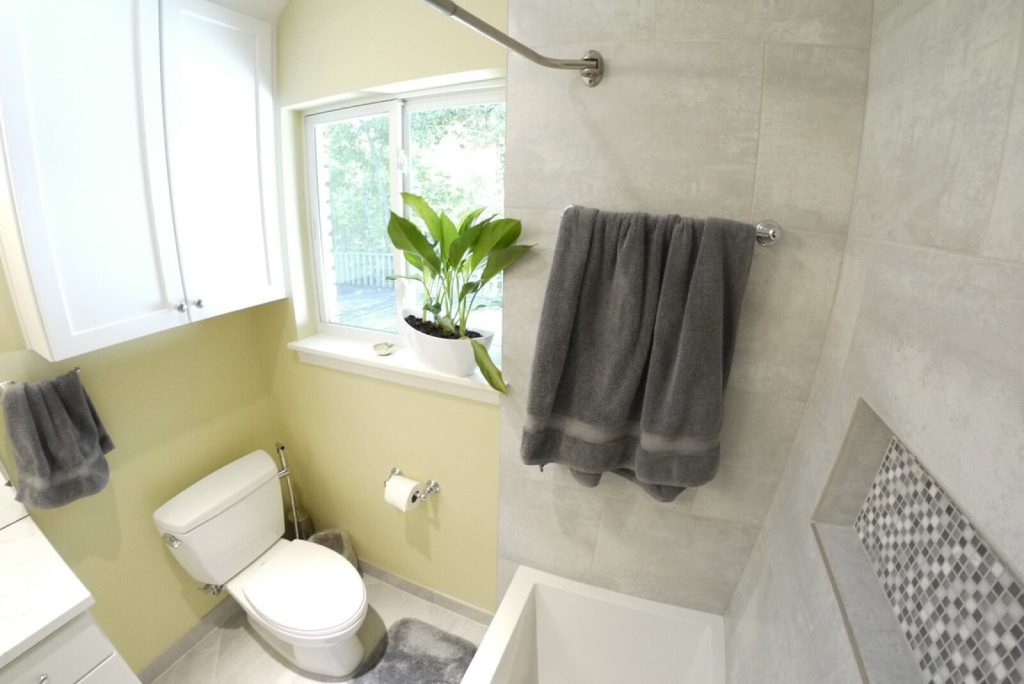
A shower niche is the recessed shelf set into a tiled shower wall, and it is one of the few bathroom details you cannot move once the tiles are on. Get the size, height and wall wrong and you live with a box that cuts tiles in half, sits behind the shower head’s spray, or turns into the leak that ruins a ceiling. This page covers the three decisions that come before any tiling: which wall can take a niche, how big it should be, and where it goes. For the step-by-step tanking and tiling of the niche itself, see our how to tile a shower page.
Which wall can take a shower niche
A niche is a hole in a wall, so the wall decides how deep it can be. Before you look at any tile, find out what you are cutting into.
Stud partition walls
Most niches go into stud walls, because the void between the studs is already there. In a timber partition built from 63mm CLS studs, the void is 63mm deep before you add board; with 89mm CLS it is 89mm. Metal stud walls vary in the same way depending on the stud size. Measure your actual stud depth through a socket box or a small inspection hole rather than assuming.
The other limit is width. Studs normally sit at 400mm or 600mm centres, so the clear gap between them is a little under that. A niche that fits between two existing studs is simple. A wider niche means cutting a stud and fitting horizontal noggins above and below the opening to carry the load across, which is still routine in a non-loadbearing partition but needs doing properly so the board around the opening does not flex and crack the grout.
Masonry walls
Solid brick and block walls can take a niche, but cutting one is slower, noisier and riskier. Three cases need care:
- External walls. Cutting a recess into the inner leaf of a cavity wall reduces the thickness exactly where you want insulation and warmth. A cold patch behind a wet shelf is a condensation and mould risk, so most tilers avoid external walls for niches.
- Loadbearing walls. A recess near a lintel, beam bearing or chimney breast can weaken the wall. If you are not sure whether a wall carries load, ask a structural engineer before cutting.
- Party walls. In a semi or terrace, the wall you share with next door is a party wall. Under section 2 of the Party Wall etc. Act 1996, cutting into a party structure is notifiable work, so a niche in that wall means serving notice on your neighbour first. Many people put the niche on another wall for exactly this reason.
Pipes, cables and the mixer
The shower valve wall usually has hot and cold supplies running up or across it, and electric cables can run vertically or horizontally from switches and the extractor. Scan with a pipe and cable detector before you mark out, and never cut a niche directly above a concealed valve, where the riser pipes almost always run.
Shower niche sizes that work with your tiles
The best size for a shower niche is the one that lands on grout lines. Pick the tile first, then size the niche to it, because the reverse almost always produces thin slivers of cut tile around the opening.
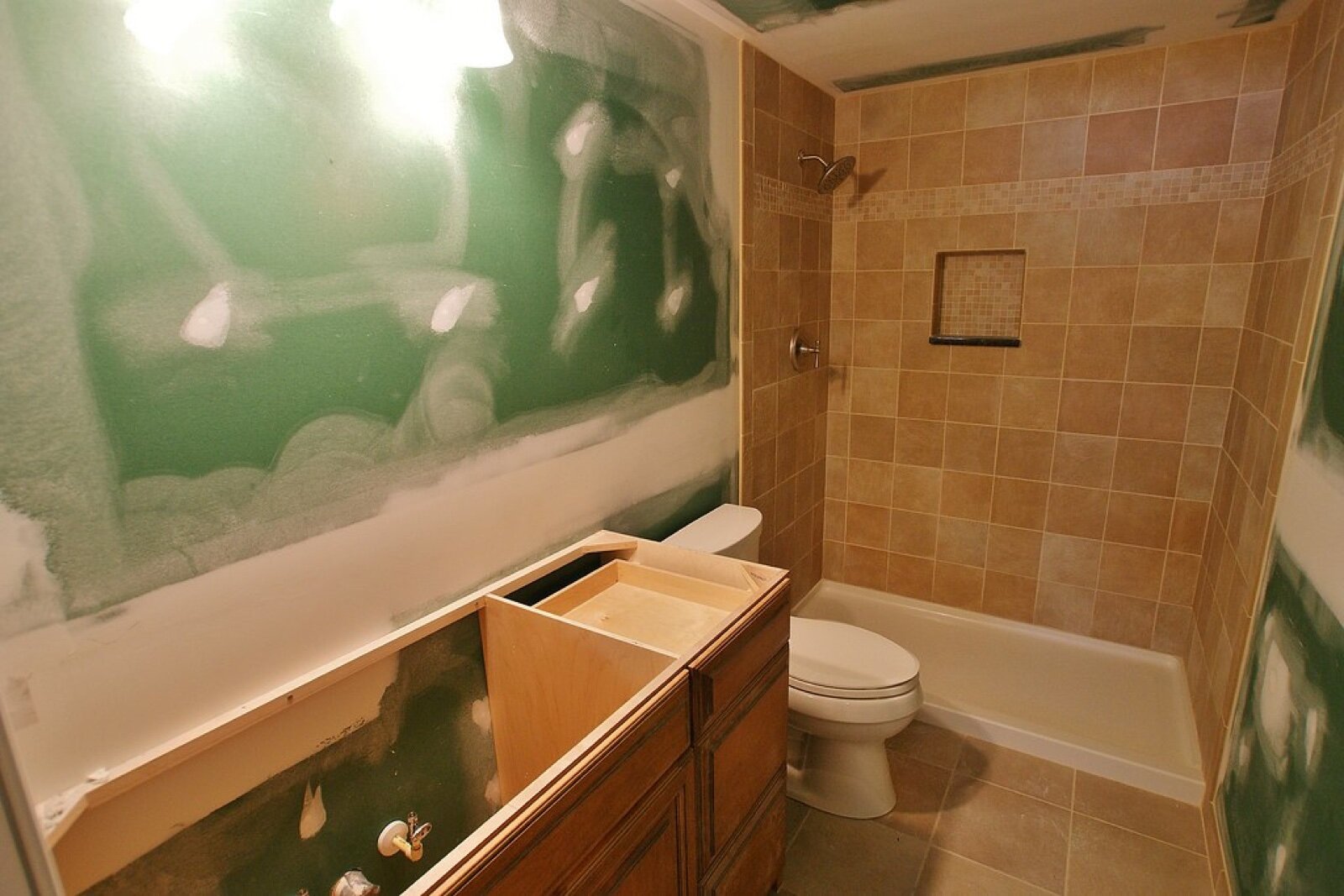
Work it out like this:
- Width. Make the finished opening a whole number of tiles plus their grout joints. With 300mm wide tiles and 2mm joints, a one-tile opening is about 300mm wide and a two-tile opening about 602mm. That second figure is too wide for a single stud bay at 600mm centres, so it would need a header.
- Height. Line the top and bottom of the opening up with horizontal grout lines in your set-out. A common approach is one tile course tall for a single shelf, or two courses with a shelf across the middle.
- Allow for the linings. The rough opening you cut has to be bigger than the finished niche, because the back, sides, top and base are each lined with board, then adhesive, then tile. With a 10mm tile on a few millimetres of adhesive, every lined face takes roughly 12mm to 15mm out of the opening. Do the sum for both sides and for top and bottom, not just once.
Depth is where people get caught out. Measure the bottles you actually use; a niche that is shallower than your shampoo bottle means you will be knocking it off the shelf every morning. If your wall only gives you a shallow void, a wider, lower niche that holds bottles side by side often works better than a tall one.
Where to put a shower niche
A niche can be the right size and still be in the wrong place. These are the checks a good tiler runs before cutting.
Keep it out of the main spray
If the niche faces the shower head, water fires straight into it every time you shower, so it never dries and the shelf collects soap residue. The best wall is usually the one the spray does not hit directly, often the wall that also holds the valve, or a side wall within easy reach of where you stand.
Set the height for the people using it
There is no regulation height for a niche. Set it so the shelf is easy to reach without bending, roughly between waist and chest height for the main users, and remember a second, lower niche or shelf is useful in a family bathroom where children shower too. In a shower over a bath, keep the niche above the bath rim so it is not hidden behind the screen.
Line it up with the tile set-out
Decide the niche position during setting out, not after the first rows are up. The sides should sit on vertical grout lines and the top and base on horizontal ones. If you are using large tiles, it also helps to centre the niche on a tile or on a joint deliberately, so it looks planned rather than squeezed in.
Built niche or prefabricated insert
You can build a niche from tile backer board on site, or fit a factory-made insert that is already waterproof and simply needs tiling.
Building one from backer board
A built niche can be any size, which makes it the better choice when you are sizing to an unusual tile. You line the opening with cement or foam backer board, give the base a slight fall towards the front so water runs out, then tank every face and tape every internal corner. The extra corners are why niches leak more often than flat wall: each one is a joint that has to be detailed by hand.
Prefabricated niches
Prefabricated inserts cut out the corner detailing because the joints are sealed at the factory. As one example, the wedi Sanwell niche comes in two interior sizes, 234 x 434mm and 334 x 634mm. The version with a 10mm frame has an interior depth of 100mm and an overall thickness of 112.5mm, while the 12.5mm frame version has a 70mm interior depth and is 82.5mm thick overall. That difference matters: the deeper one will not fit inside a 63mm or 89mm stud void without packing the wall out, so check the overall thickness against your wall before you order.
The catch with any insert is that its size is fixed. Unless the internal dimensions happen to suit your tile, you will be cutting tiles to fit it, so check the insert against your set-out before choosing tiles, not after.
Finishing the edges and the shelf
The front edges of a niche are on show, so the finish is worth deciding early.
- Mitred edges. Cutting the tile edges at 45 degrees so they meet at a sharp corner gives the cleanest look, but it needs a good wet saw and a tile whose body colour is close to its face, or the cut edge shows.
- Tile trim. A metal or PVC trim covers the cut edge and protects it from chips. It is quicker and more forgiving, and choosing the right tile trim profile and size keeps it neat.
- A solid shelf. Some people use a single piece of stone, quartz or a matching porcelain slab for the base, which avoids a grout line where water sits. Whatever you use, keep the slight fall towards the front.
Inside the niche, finish the internal corners with a mould-resistant silicone rather than grout, as you would at the other internal corners of the shower. Grout in a corner tends to crack as the wall moves slightly, and a crack in a niche corner is a direct route for water.
Frequently asked questions
How deep should a shower niche be?
Deep enough to hold the bottles you use, which you should measure rather than guess. In practice the wall limits it: a timber stud wall built with 63mm studs gives a much shallower void than one built with 89mm studs, once board, adhesive and tile are allowed for.
What height should a shower niche be?
There is no rule. Most people set the shelf between waist and chest height for the main users, out of the direct spray, and aligned with a horizontal grout line in the tile set-out.
Can you put a shower niche in an external wall?
You can, but it is usually a poor idea. Cutting into the inner leaf of an external wall reduces insulation where the niche is, creating a cold, wet spot that encourages condensation and mould. An internal partition is a better choice.
Do shower niches leak?
They leak more often than flat wall because they add several internal corners and a horizontal shelf. A properly tanked niche with taped corners and a base that falls towards the front, or a factory-sealed insert, is reliable.
Can I add a niche to an existing tiled shower?
Rarely without retiling. Cutting into a finished, tanked wall breaks the waterproofing and almost never lines up with the existing grout lines, so a niche is best planned when the shower is stripped back.
Is a shower niche a DIY job?
Cutting the opening in a stud wall is within reach of a confident DIYer. The waterproofing of the corners and the sizing to the tile set-out are where most problems start, which is why many people leave the niche to a tiler. For help with a shower in Bromley or south east London, contact Bromley Tilers.
Related guides
- How to Tile a Bathroom Wall: A UK Step-by-Step Guide
- How Much Does Tiling Cost in the UK? A Realistic Price Guide
- How to Remove Old Wall Tiles Without Damaging the Wall
- Porcelain vs Ceramic Tiles: Which Is Right for Your Bathroom or Kitchen?
- How to Tank and Waterproof a Wet Room Before Tiling: A Bromley Homeowner’s Guide
- Do You Need to Seal Natural Stone Tiles Before Grouting? A Tiler Explains
- How to Tile a Bathroom Floor (Including Around the Toilet)
- How to Tile a Shower: Walls, Niche and Waterproofing
- Bathroom Tiling Guide: How to Plan, Prep and Finish a Lasting Job
- Tile Backer Board vs Plasterboard for Bathrooms
- Best Tiles for Small Bathrooms (and How to Make a Space Look Bigger)
- Wall and Floor Tiles for a Wet Room: What Actually Works
- Tiling vs Wall Panels for a Bathroom: Which Is Better?
- Do You Tile the Floor or Walls First in a Bathroom?
- Kitchen Tiling: Splashbacks, Walls and Floors Explained
- How to Tile a Kitchen Splashback: Step-by-Step Bromley Guide
- How to Tile Around Kitchen Sockets, Switches and Worktops
- Kitchen Splashback Tile Ideas: 12 Looks That Work
- How to Lay Metro Tiles in a Herringbone Pattern
- Tiled vs Glass Splashback (and Acrylic): Which Is Best?
- How High Should a Kitchen Splashback Be Tiled? UK Heights Guide
- Types of Tiles: The Complete UK Buyer’s Guide
- Porcelain vs Natural Stone Tiles: Which Should You Choose?
- Natural Stone Tiles Explained: Marble, Travertine, Slate and Limestone
- Mosaic Tiles: Where to Use Them and How They’re Fixed
- Tile Slip Ratings Explained: R Ratings and PTV for UK Floors
- Matt vs Gloss Tiles: Which Finish Is Right for Your Room?
- Cost to Tile a Bathroom in the UK: 2026 Price Breakdown
- Polystyrene Ceiling Tiles: Are They Any Good?
- Cost to Tile a Kitchen in 2026: Floor and Splashback Prices
- Tiling Cost Per Square Metre 2026: Labour and All-In Prices
- Tiler Day Rate UK: What Tilers Charge Per Day in 2026
- Cost to Regrout a Bathroom in 2026: UK Prices Explained
- Floor Tile Prices UK 2026: What You Will Pay Per Square Metre
- Is It Cheaper to Tile or Use Wall Panels? A UK Cost Comparison
- How to Tile: A Complete Beginner’s Guide (UK)
- How to Cut Tiles: Manual Cutter, Wet Saw and Nippers
- How to Cut Holes in Tiles for Pipes and Taps
- How to Grout Tiles (and Get Clean, Even Lines)
- Cork Flooring: Pros, Cons and Where It Works in UK Homes
- How to Mix and Apply Tile Adhesive Correctly
- How to Set Out Tiles for a Perfect Layout
- How to Seal Grout and Tiles in a Bathroom (UK Guide)
- Can You Tile Over Tiles? When It Works and When It Doesn’t
- Tiling Tools List: What You Need for a Professional Finish
- How Much Tile Adhesive Do I Need? Coverage Per Square Metre
- Tile Problems: 9 Common Faults and How to Fix Each
- How to Fix Loose Tiles Without Removing Them
- Cracked Grout Repair: Why It Happens and How to Fix It
- How to Replace a Broken Tile Without Redoing the Wall
- Water Leaking Through Shower Tiles: 6 Causes and Fixes
- Remove Mouldy Silicone Sealant: A 24-Hour Reseal Job
- How to Clean Grout: What Works, and What Etches Stone
- Why Are My Floor Tiles Lifting? The 40m² Bay Rule
- How to Lay Porcelain Paving: 1:80 Fall, 150mm Below DPC
- Tile Patterns: Why Big Tiles Need a One-Third Offset
- Grout Colour Ideas: How to Get the Shade You Chose
- Can You Paint Tiles? Yes on Walls, No in the Shower
- Decoupling Membrane for Tiles: When You Actually Need One
- Can You Tile Over a Wooden Floor? What Changed in 2024
- Tiling Cost 2026: £25 to £95 per m² Labour, UK Rates
- Tile Ideas: 7 Looks and the One Rule Each Needs
- Metro Tiles: Sizes, Bevels and the 1/3 Offset Rule
- Tile Feature Wall: The Weight Limit That Decides Yours
- Tiling Over Underfloor Heating: 14 Days Before Heat On
- How to Tile a Hallway Floor: Set Out From the Door
- Wood Effect Tiles and Marble Effect: 5 Specs to Check
- Tile Levelling Systems: The 3mm Rule That Decides It
- Floor Levelling Compound: How Deep and How Long to Dry
- How to Find a Good Tiler: 9 Checks Before You Book
- Tiling Quote: The 10 Lines a Proper One Must Show
- Tile Trim: Sizes, Profiles and the One-Size-Up Rule
- Tile Spacers: 2mm or 3mm, and When to Pull Them Out
- Tiling the Fireplace: 125mm Hearths, Adhesive and Tiles
- Porcelain vs Stone Paving: Grip, Sealing and Upkeep
- Tiling a Large Floor: Movement Joints Every 10 Metres
- DIY Tiling vs Professional: 6 Jobs to Never Do Yourself
- Terracotta Tiles: Seal Before Grouting, Wait 7 Days
- Tile Drill Bits: Which Bit Won’t Crack Porcelain
- Tiling Corners With Trim: Which Profile, and When to Mitre
- Travertine Tiles: Filled or Unfilled, and How to Seal Them
- Slate Tiles: Calibrated or Riven, and How to Lay Them
- Zellige Tiles: Order 15% Extra and Fix Them Edge to Edge
- Terrazzo Tiles: Real 20mm vs Porcelain, Seal Before Grouting
- Split Face Tiles: Will Your Wall Take 27kg per m²?
- Tile Sealer: Which Tiles Need It and Which Type to Buy
- How to Remove Grout Haze: Which Cleaner for Which Grout
- Efflorescence on Tiles: Why It Comes Back and How to Stop It
- Tile Primer: Which Surfaces Need It and How Much to Dilute
- Epoxy Grout: Where It’s Worth It and How to Apply It
- How to Tile Stairs: Keep Every Riser the Same Height
- How Many Tiles Do I Need? Add 10% to 20% by Layout
- How to Tile a Window Sill: Sill Last, Silicone at the Frame