



An electric tile cutter is the tool you reach for when a manual score-and-snap cutter stops giving you clean breaks: thick porcelain, natural stone, L-shaped notches round a door frame, 45-degree mitres on an external corner, or a strip narrower than about 10mm. For a bathroom of 300 x 600mm ceramic wall tiles a good manual cutter does most of the work faster and with less mess. The moment the floor tiles are 20mm outdoor porcelain or the design needs mitred edges, a water-cooled diamond saw is the right machine.
This page sets out where that line falls, the four types of electric cutter you will see in a hire shop or a tiler’s van, which diamond disc goes with which tile, and how to cut without cracking the piece or filling your lungs with silica dust. It is written from the way we cut on jobs around Bromley and south east London, with the manufacturer figures checked against their own published specifications.
When you actually need an electric tile cutter
Rubi, the Spanish maker whose cutters most UK tilers have used at some point, puts the threshold plainly in its own tile cutter buying advice: when a tile is thicker than 12mm, it recommends an electric cutter with a water-cooled diamond disc. Below that, a manual cutter is usually quicker and quieter. Rubi’s heavier manual models do go further than that (its TX Max manual cutter is rated for tiles up to 21mm thick), but on dense porcelain a manual snap gets less predictable as thickness goes up.
Thickness is only one of the triggers. In practice you need a powered cutter for:
- Notches and L-cuts. A manual cutter can only score a straight line from edge to edge. Cutting a step out of a tile to fit round a door architrave, a boxed-in pipe or a bath panel needs a saw.
- Mitres. A 45-degree bevel on an external corner, instead of a trim, can only be done on a cutter with a tilting head or table. Manual cutters do not bevel.
- Thin slivers. Strips under about 10 to 15mm tend to shatter on a snapping cutter. A wet saw takes them off cleanly.
- Natural stone. Slate, limestone and travertine have natural planes and soft veins that do not snap reliably.
- Large format porcelain. Long cuts on 1200mm tiles need a cutter with a long enough rail, and very thick slabs need a saw.
If none of those apply, buy or borrow a decent manual cutter and keep the saw for the awkward pieces. Most tilers carry both.
The four types of electric tile cutter
Tabletop wet saw (fixed blade, sliding tray)
The classic DIY machine: a motor and blade fixed over a small table, with a water tray underneath. The disc dips into the water and carries it to the cut. You push the tile into the blade on a sliding tray or across the table. They are cheap and compact, but the cutting length is limited by the table, and pushing a large tile through by hand makes a dead straight cut harder.
Bridge or rail saw (sliding head)
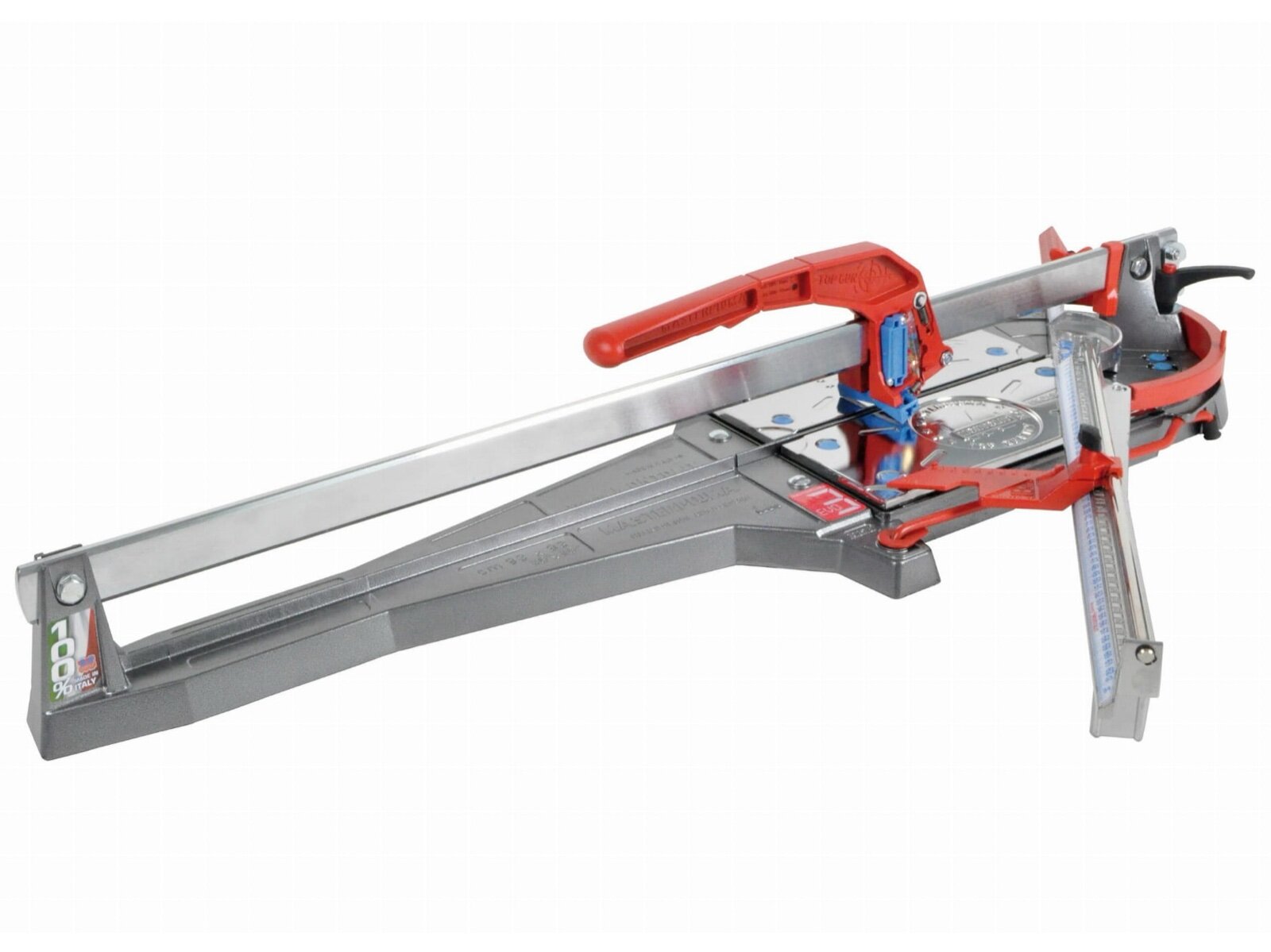
Here the tile stays still on a long bed and the motor and blade run along a rail above it. This is what you want for large format porcelain and long rips. Rubi’s DL-125, for example, is listed for tiles up to 50mm thick with a maximum cutting length of 135cm, and its TC-125 G2 rail cutter accepts both 125mm and 115mm discs, handles tiles of 20 to 25mm thickness and runs a cutting length of 320cm. The TC-125 G2 can also be set up to cut dry with a vacuum attached or wet with a hose feed.
Angle grinder with a diamond disc
Not a tile cutter as such, but almost every tiler uses one for notches, curves round a toilet pan and trimming a tile already on the wall. It is the most dangerous of the four: no guard on the tile side, a lot of dust if used dry, and kickback if the disc binds.
Diamond core bits
For round holes (pipes, shower valves, waste outlets) a diamond core bit in a drill is cleaner than any saw. Keep the bit wet and start at an angle to stop it skating across glazed porcelain.
Which diamond disc for which tile
The disc matters more than the motor. There are three common rim types:
- Continuous rim. A solid diamond edge with no gaps. It cuts slowest but leaves the cleanest edge with the least chipping, which is what you want on glazed ceramic and porcelain where the cut edge may show.
- Turbo rim. A serrated continuous rim. Faster than a plain continuous disc, slightly rougher edge. A good all-round choice for porcelain and stone.
- Segmented rim. Separate teeth with gaps between them. Fast and cool running, but chips glazes badly. Keep it for concrete, brick and paving, not finished tiles.
Also check depth of cut against your tile. Disc diameter sets how deep it can go: 115mm and 125mm discs are standard on grinders and smaller rail saws, while tabletop saws often run 180mm to 250mm discs. One UK trade supplier’s 115mm wet and dry porcelain disc, for example, lists a maximum cutting depth of 25mm but warns that it may not be suitable for 20mm porcelain. So for outdoor 20mm paving porcelain, check the disc’s own rating rather than assuming a 115mm disc will do.
Electric tile cutter vs manual cutter: quick comparison
- Straight cuts on ceramic up to about 8mm: manual is faster, cleaner and silent.
- Straight cuts on porcelain up to 12mm: a quality manual cutter with a sharp tungsten scoring wheel copes. Rubi’s TZ manual cutter, for instance, is sold for porcelain when fitted with its tungsten scoring wheel.
- Porcelain or stone over 12mm: electric, water-cooled.
- Notches, L-cuts, mitres, thin strips: electric.
- Holes: diamond core bit.
How to use an electric tile cutter without chipping the tile
- Check the water first. On a tray saw, fill to the level the maker marks so the disc runs through water. On a pump-fed or hose-fed saw, run it before the first cut and check water is reaching both sides of the blade. A dry disc overheats, glazes over and chips the tile.
- Mark on masking tape. A strip of tape on glazed tile takes a pencil line you can see and reduces chipping along the top edge.
- Cut glaze side up on a tabletop or rail saw, so the disc enters through the face.
- Let the blade reach full speed before it touches the tile, then feed slowly and steadily. Forcing it is the most common cause of chipped edges and wandering cuts.
- Ease off for the last 20mm or so. Thick porcelain often breaks away at the end of the cut. Slowing down, or cutting in from both ends, stops a corner snapping off.
- For notches, make the two straight cuts on the saw just to the corner of the notch, then finish the inside corner with a grinder or by nibbling with the blade. Overcutting past the corner weakens the tile and leaves a visible kerf.
- For mitres, cut slightly shy of a full 45 degrees so the glazed faces meet and the bodies leave a small gap at the back for adhesive or silicone.
- Dress a glazed disc. If cuts slow down and the disc starts to burn, run it through a dressing stone or a soft brick a few times to expose fresh diamond.
Silica dust: why wet cutting is the rule
Ceramic, porcelain and natural stone all contain crystalline silica. Breathing in the fine dust from cutting them over years causes silicosis and other lung disease, and it is the reason the Health and Safety Executive treats tile cutting as serious work. Its guidance on cutting tiles states that dry cutting quickly produces very high peak exposure levels of silica dust, and sets out the controls: a saw with water suppression, a supply of spare water within reach, and respiratory protection with an assigned protection factor of 20, such as an FFP3 disposable mask or a half mask with a P3 filter.
In a house that means:
- Cut outside or in a garage with the door open, never in the room you are tiling.
- Use a water-fed saw for every cut you can. If you have to use a grinder dry for a notch, use one with on-tool extraction or a vacuum shroud, and keep the cut short.
- Wear a properly fitting FFP3 mask even with water. A dust mask from a multipack is not the same thing.
- Do not sweep up dried slurry. Wet it down or vacuum it with an M-class or H-class extractor.
- Plug the saw into an RCD. Water and mains power at ground level is the other real risk with these machines.
Buy or hire?
For a single bathroom with standard ceramic tiles, a manual cutter plus a hired wet saw for a day covers it. For a large porcelain floor, a kitchen with lots of notches round units, or outdoor 20mm porcelain, a rail saw with a long enough bed earns its keep, and hiring one for the full job is usually cheaper than buying a tabletop saw that cannot do the long cuts anyway. Whatever you choose, budget for a decent continuous or turbo rim disc: the cheap disc that comes in the box is often the weak link.
If the cutting list has turned into more mitres and notches than you want to tackle, our team at Bromley Tilers cut on site with water-fed saws and can quote for the whole job.
Frequently asked questions
Do I need an electric tile cutter for porcelain?
Not always. Porcelain up to about 10 to 12mm can be cut straight on a good manual cutter with a sharp tungsten wheel. Rubi recommends an electric water-cooled cutter once tiles are thicker than 12mm, and you need one at any thickness for notches, mitres and thin strips.
Can an electric tile cutter cut 20mm outdoor porcelain?
Yes, if the disc and machine are rated for it. Check the cutting depth on the disc itself: some 115mm discs list a 25mm maximum depth but are not recommended for 20mm porcelain. A rail saw or a larger tabletop saw with a 180mm to 250mm disc is the safer choice.
Can you use an electric tile cutter dry?
Some rail cutters, such as Rubi’s TC-125 G2, can cut dry with a vacuum attached. Dry cutting without extraction produces very high peaks of silica dust according to HSE, so wet cutting is the default, with an FFP3 mask either way.
Why does my wet saw chip the tile?
Usually a segmented or worn disc, too little water, or feeding the tile too fast. Switch to a continuous rim disc, check water reaches the blade, put masking tape on the cut line and slow down, especially at the end of the cut.
What size disc does a tile cutter use?
Angle grinders and smaller rail saws commonly take 115mm or 125mm discs; tabletop wet saws often take 180mm to 250mm. A bigger disc cuts deeper. Always match the disc’s bore and maximum speed to the machine.
Related guides
- How to Tile a Bathroom Wall: A UK Step-by-Step Guide
- How Much Does Tiling Cost in the UK? A Realistic Price Guide
- How to Remove Old Wall Tiles Without Damaging the Wall
- Porcelain vs Ceramic Tiles: Which Is Right for Your Bathroom or Kitchen?
- How to Tank and Waterproof a Wet Room Before Tiling: A Bromley Homeowner’s Guide
- Do You Need to Seal Natural Stone Tiles Before Grouting? A Tiler Explains
- How to Tile a Bathroom Floor (Including Around the Toilet)
- How to Tile a Shower: Walls, Niche and Waterproofing
- Construction Trade News: June 2026
- Bathroom Tiling Guide: How to Plan, Prep and Finish a Lasting Job
- Tile Backer Board vs Plasterboard for Bathrooms
- Best Tiles for Small Bathrooms (and How to Make a Space Look Bigger)
- Wall and Floor Tiles for a Wet Room: What Actually Works
- Tiling vs Wall Panels for a Bathroom: Which Is Better?
- Do You Tile the Floor or Walls First in a Bathroom?
- Tiling and Bathroom Trade News: Mid-June 2026
- Kitchen Tiling: Splashbacks, Walls and Floors Explained
- How to Tile a Kitchen Splashback: Step-by-Step Bromley Guide
- How to Tile Around Kitchen Sockets, Switches and Worktops
- Kitchen Splashback Tile Ideas: 12 Looks That Work
- Tiling and Bathroom Trade News: Late June 2026
- How to Lay Metro Tiles in a Herringbone Pattern
- Tiled vs Glass Splashback (and Acrylic): Which Is Best?
- How High Should a Kitchen Splashback Be Tiled? UK Heights Guide
- Tiling and Bathroom Trade News: Early July 2026
- Types of Tiles: The Complete UK Buyer’s Guide
- Porcelain vs Natural Stone Tiles: Which Should You Choose?
- Natural Stone Tiles Explained: Marble, Travertine, Slate and Limestone
- Tiling and Bathroom Trade News: Mid-July 2026
- Mosaic Tiles: Where to Use Them and How They’re Fixed
- Tile Slip Ratings Explained: R Ratings and PTV for UK Floors
- Matt vs Gloss Tiles: Which Finish Is Right for Your Room?
- Cost to Tile a Bathroom in the UK: 2026 Price Breakdown
- Polystyrene Ceiling Tiles: Are They Any Good?
- Cost to Tile a Kitchen in 2026: Floor and Splashback Prices
- Tiling and Bathroom Trade News: Mid-July 2026
- Tiling Cost Per Square Metre 2026: Labour and All-In Prices
- Tiler Day Rate UK: What Tilers Charge Per Day in 2026
- Cost to Regrout a Bathroom in 2026: UK Prices Explained
- Floor Tile Prices UK 2026: What You Will Pay Per Square Metre
- Is It Cheaper to Tile or Use Wall Panels? A UK Cost Comparison
- How to Tile: A Complete Beginner’s Guide (UK)
- How to Cut Tiles: Manual Cutter, Wet Saw and Nippers
- How to Cut Holes in Tiles for Pipes and Taps
- How to Grout Tiles (and Get Clean, Even Lines)
- Cork Flooring: Pros, Cons and Where It Works in UK Homes
- Tiling and Bathroom Trade News: Late July 2026
- How to Mix and Apply Tile Adhesive Correctly
- How to Set Out Tiles for a Perfect Layout
- How to Seal Grout and Tiles in a Bathroom (UK Guide)
- Can You Tile Over Tiles? When It Works and When It Doesn’t
- Tiling Tools List: What You Need for a Professional Finish
- How Much Tile Adhesive Do I Need? Coverage Per Square Metre
- Tiling Trade News: Topps App, Costs Up 6% (Aug 2026)
- Tile Problems: 9 Common Faults and How to Fix Each
- How to Fix Loose Tiles Without Removing Them
- Cracked Grout Repair: Why It Happens and How to Fix It
- Tiling Trade News: TTA Silica Warning, 2% Retentions
- How to Replace a Broken Tile Without Redoing the Wall
- Water Leaking Through Shower Tiles: 6 Causes and Fixes
- Remove Mouldy Silicone Sealant: A 24-Hour Reseal Job
- How to Clean Grout: What Works, and What Etches Stone
- Why Are My Floor Tiles Lifting? The 40m² Bay Rule
- Tiling Trade News: 3,841 Construction Firms Failed
- How to Lay Porcelain Paving: 1:80 Fall, 150mm Below DPC
- Tile Patterns: Why Big Tiles Need a One-Third Offset
- Grout Colour Ideas: How to Get the Shade You Chose
- Can You Paint Tiles? Yes on Walls, No in the Shower
- Decoupling Membrane for Tiles: When You Actually Need One
- Can You Tile Over a Wooden Floor? What Changed in 2024
- Tiling Cost 2026: £25 to £95 per m² Labour, UK Rates
- Tile Ideas: 7 Looks and the One Rule Each Needs
- Metro Tiles: Sizes, Bevels and the 1/3 Offset Rule
- Tile Feature Wall: The Weight Limit That Decides Yours
- Tiling Over Underfloor Heating: 14 Days Before Heat On
- How to Tile a Hallway Floor: Set Out From the Door
- Wood Effect Tiles and Marble Effect: 5 Specs to Check
- Tile Levelling Systems: The 3mm Rule That Decides It
- Tiling Trade News: Repair Work Up 1.7%, Headlam Fails
- Floor Levelling Compound: How Deep and How Long to Dry
- How to Find a Good Tiler: 9 Checks Before You Book
- Tiling Quote: The 10 Lines a Proper One Must Show
- Tile Trim: Sizes, Profiles and the One-Size-Up Rule
- Tile Spacers: 2mm or 3mm, and When to Pull Them Out
- Tiling the Fireplace: 125mm Hearths, Adhesive and Tiles
- Tiling Trade News: Shaws Sinks Reprice on 1 November
- Porcelain vs Stone Paving: Grip, Sealing and Upkeep
- Tiling a Large Floor: Movement Joints Every 10 Metres
- DIY Tiling vs Professional: 6 Jobs to Never Do Yourself
- Terracotta Tiles: Seal Before Grouting, Wait 7 Days
- Tile Drill Bits: Which Bit Won’t Crack Porcelain
- Tiling Corners With Trim: Which Profile, and When to Mitre
- Travertine Tiles: Filled or Unfilled, and How to Seal Them
- Slate Tiles: Calibrated or Riven, and How to Lay Them
- Zellige Tiles: Order 15% Extra and Fix Them Edge to Edge
- Terrazzo Tiles: Real 20mm vs Porcelain, Seal Before Grouting
- Tiling Trade News: 36% Now Add a Bathroom Accent Wall
- Split Face Tiles: Will Your Wall Take 27kg per m²?
- Tile Sealer: Which Tiles Need It and Which Type to Buy
- How to Remove Grout Haze: Which Cleaner for Which Grout
- Efflorescence on Tiles: Why It Comes Back and How to Stop It
- Tile Primer: Which Surfaces Need It and How Much to Dilute
- Epoxy Grout: Where It’s Worth It and How to Apply It
- How to Tile Stairs: Keep Every Riser the Same Height
- Shower Niche: Sizes, Height and Which Wall Can Take One
- How Many Tiles Do I Need? Add 10% to 20% by Layout
- How to Tile a Window Sill: Sill Last, Silicone at the Frame
- Tiling Trade News: Victorian Plumbing Tile Sales Up 76%
- How to Tile Around a Toilet: Lift the Pan or Cut Round It
- Tile to Carpet Transition: Pick the Strip by the Height Gap
- Tile Skirting: Leave a 6mm Gap and Seal, Never Grout
- Tile Backer Board: Cement or Foam, Which Thickness, Fixings
- Quarry Tiles: Seal Them or Not, and How to Clean Them
- Rapid Set Tile Adhesive vs Standard: 30 Mins or 24 Hours
- Can You Tile Onto Plaster? Yes, Up to 20kg per m²
- How to Tile a Balcony: 1.5-2% Fall, Drain Mat, 150mm Upstand
- Victorian Floor Tiles: Sizes, Repairs and When to Replace
- Marble Tiles: White Rapid-Set Adhesive, Seal Before Grouting
- Tiling on Anhydrite Screed: 0.5% Moisture, Sand, Then Prime
- Tiling Trade News: Domus Buyout After Headlam Collapse
- How High to Tile a Bathroom: 1.2m Line vs Floor to Ceiling
- Can You Tile Over Paint? Strip Emulsion, Key Gloss First
- Hollow Sounding Tiles: When to Leave Them, When to Lift
- Tile Movement Joints: Where They Go and the 10m Rule