


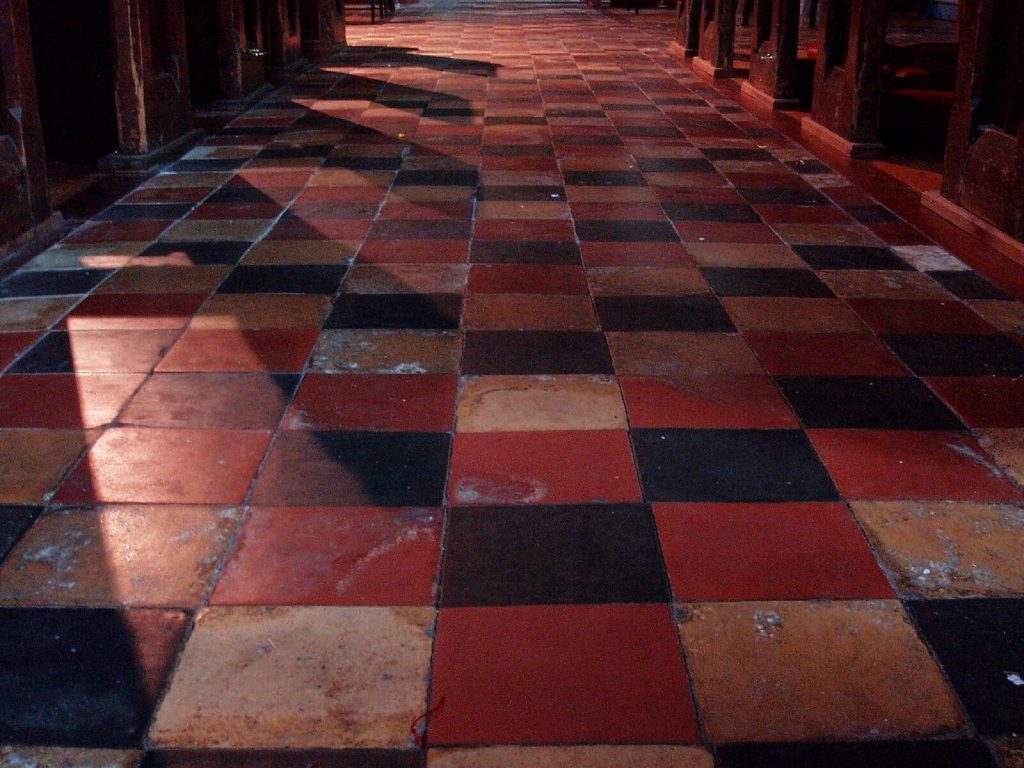
Quarry tiles are the plain, unglazed clay floor tiles you find in Victorian sculleries, Edwardian porches, church aisles and old pub kitchens. They are fired from natural clay rather than pressed from porcelain dust, so they are thick, hard and slightly absorbent, and they behave differently from the ceramic and porcelain tiles most people buy today. Across Bromley, Beckenham and Penge we lift, relay and restore them often, and the same handful of questions come up every time: should they be sealed, why do they turn white, and can a cracked one be matched?
This page answers those questions using the manufacturers’ own fixing and cleaning guidance, plus what we see on real floors around Bromley Tilers‘ patch of south east London.
What quarry tiles actually are
The name has nothing to do with stone quarries. A quarry tile is a fired clay tile, made in much the same way as a brick, and usually left unglazed so the colour runs right through the body. The traditional British colours are red, brown and blue-black, and old floors often mix them in a chequerboard or a border pattern.
Ketley, whose factory in Brierley Hill in the West Midlands has been making clay products for more than 200 years, makes its quarry tiles from Etruria Marl clay. Its laying guide says the fired tile is dense, hard wearing and resistant to acids, alkalis, oils, grease and fats, which is why quarry tiles were the standard floor for commercial kitchens for most of the last century. Ketley’s tiles are 18mm thick, which makes a quarry floor noticeably heavier than most modern tiled floors.
Slip resistance is the other reason they last in kitchens and porches. Ketley reports its quarry tiles test at R11 in shod conditions and Category C barefoot, the top barefoot rating. If you want to compare that with a porcelain tile you are considering, our page on tile slip ratings explains what R and PTV numbers mean.
Quarry tiles versus terracotta, encaustic and porcelain
- Terracotta is also fired clay, but usually fired at a lower temperature, so it is softer and much more absorbent. It almost always needs sealing indoors. Quarry tiles are denser.
- Encaustic and geometric tiles (the patterned Victorian hallway floors) have the pattern inlaid in different coloured clays. They are often mistaken for quarry tiles when worn, but they need gentler cleaning.
- Porcelain “quarry effect” tiles are printed to look like clay. They are cheaper, lighter and need no sealing, but they lack the through-body colour, so chips show white or grey.
Do quarry tiles need sealing?
New quarry tiles generally do not. Ketley’s guide says plainly that sealers are not necessary but can be used indoors in certain situations. The fired clay is hard enough to shrug off normal foot traffic, and an unsealed floor keeps its matt, natural look.
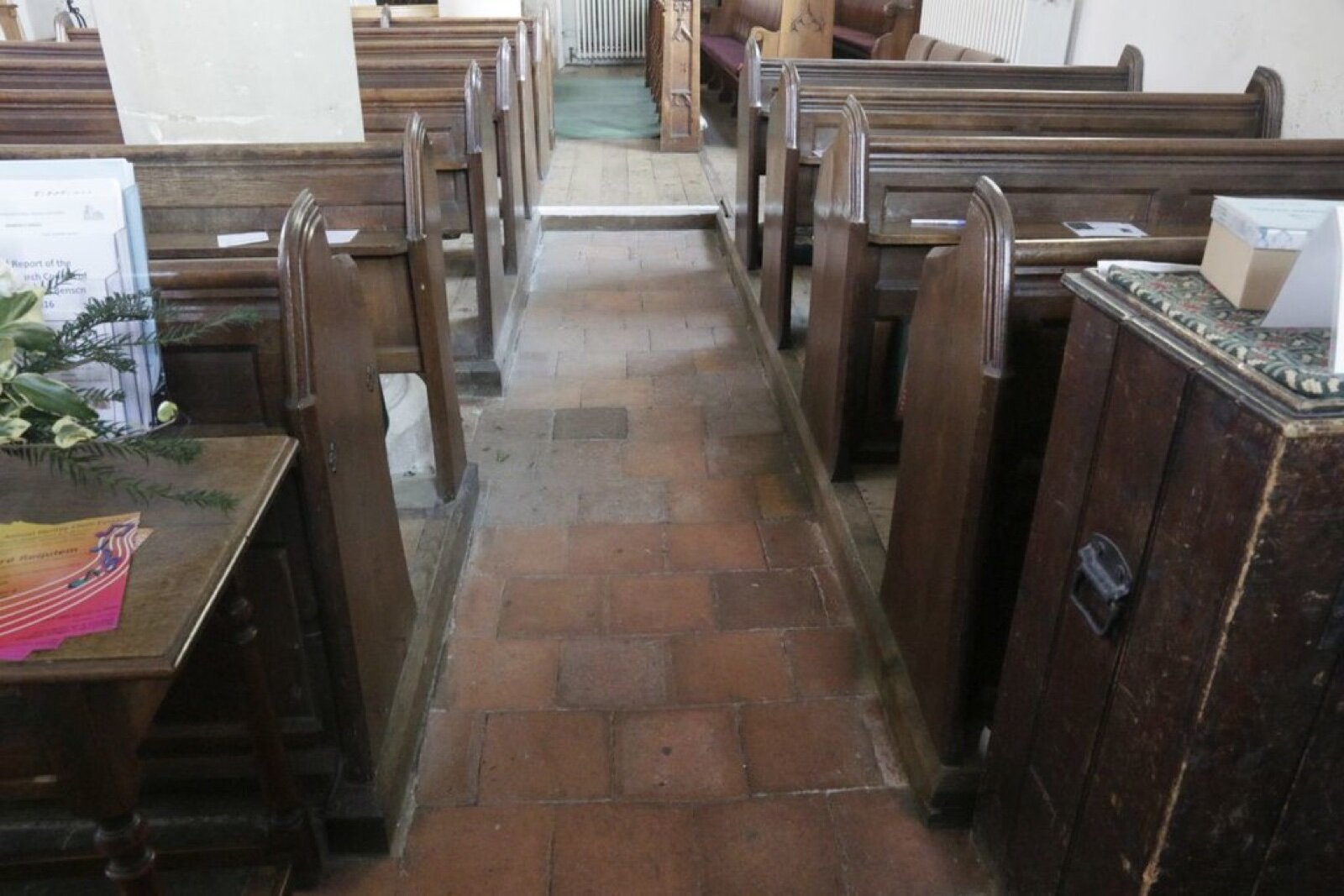
Where a sealer earns its place is in a domestic kitchen where oil and food are dropped, a utility room, or a floor you want to be easier to mop. In that case use an impregnating sealer made for quarry tiles, which soaks into the clay without leaving a surface film, rather than a varnish-style coating that sits on top and wears patchily in walkways.
The old-floor exception: let it breathe
Old quarry floors are a different case. Many Victorian and Edwardian floors in Bromley’s older streets were laid straight onto a lime or sand bed over earth, with no damp proof membrane. Moisture from the ground rises into the tiles and evaporates from the surface, and the floor copes with that because nothing traps it.
Seal one of those floors with a film-forming coating, or lay a rubber-backed mat or vinyl over it, and the moisture has nowhere to go. It builds up under the coating, lifts it, and pushes salts out through the grout joints. If your floor has no membrane, either leave it unsealed or use a sealer whose maker states it is suitable for floors without a damp proof course, and check with the maker first. If the floor sits in a listed building or a conservation area, speak to the council before you change the floor build-up.
Why quarry tiles go white: efflorescence
A white powdery bloom on quarry tiles is almost always efflorescence: soluble salts carried up from the bed or screed by moisture and left on the surface as the water evaporates. On a new floor it usually appears in the first weeks while the screed and grout dry out. On an old floor it points to damp coming up from below.
What to do about it:
- New floor: brush the dry salts off and wipe with clean water. Do not seal over it. It normally fades as the bed dries.
- Old floor: brush and wipe the same way, but also look for the moisture source. A blocked air brick, a raised path outside, or a membrane laid over half the floor can all push damp into the tiles.
- Do not keep scrubbing with strong detergents. Ketley warns that strong detergents can cause scumming on quarry tiles.
How to clean quarry tiles
Day to day, quarry tiles need very little. Ketley’s guidance is to sweep, then wash with warm water and a suitable non-soapy, neutral, sulphate-free detergent, and then rinse with clean water. Its most useful tip is easy to miss: always dampen the tiles with clean water before applying any cleaning product. A dry clay tile draws the cleaner into its body; a damp one keeps the treatment on the surface where it does its work.
For a newly laid floor with cement or grout residue, Ketley suggests a cement residue cleaner such as Lithofin KF Cement Residue Cleaner. These are acidic, so follow the safety instructions, keep them off neighbouring stone, and test a small patch first.
Restoring an old, grimy quarry floor
- Find out what is on it. Many old floors carry layers of red polish, wax or old sealer. Water beading on the surface is a sign of a coating.
- Strip coatings with a stripper made for them, working in small areas with a scrubbing pad, then rinse well.
- Deep clean with a heavy-duty tile cleaner, again dampening the floor first.
- Let it dry fully, which can take a week or more on an old floor in winter, and watch for efflorescence before deciding whether to seal.
- Repoint failed joints before sealing, not after.
Laying quarry tiles: the numbers that matter
Quarry tiles are laid more like paving than like a thin porcelain floor. Ketley’s laying guide gives these figures:
- Joint width: 6 to 10mm.
- Bed thickness: about 6mm for cement-based adhesive, 15 to 25mm for a cement mortar bed, and up to 70mm for a semi-dry bed.
- Screed timing: where a screed is used, the concrete base should be at least 4 weeks old and the screed left to mature for at least 2 weeks before fixing.
- Grouting: wait 12 hours after laying before grouting, except on a semi-dry bed, where the tiles should be grouted within 4 hours.
- Grout mix: a 1:1 cement to fine sand mix for joints under 6mm, and 1:3 for wider joints. Too wet a mix dries fast and cracks out of the joint.
- Full bed, no voids: the tiles must sit on a rigid bed with nothing hollow underneath, so the load goes straight through to the base.
Ketley’s guide also says a suitable damp proof membrane should be built into new floors and that movement joints should be designed in. That is right for new work. It is the old floors without a membrane that need the breathing approach above.
The weight is worth planning for on a suspended timber floor. An 18mm clay tile on a mortar bed is heavy, and a bouncy joist floor will crack the joints. On timber we usually recommend a thinner tile and an adhesive bed over a properly fixed board, or a different tile altogether.
Replacing a cracked or missing quarry tile
Single tiles crack on old floors where the bed has hollowed out or something heavy has been dropped. Cutting out the broken one is the easy part, and our guide to replacing a broken tile covers the method. Matching it is harder.
- Size: old British quarry tiles were not standardised and ran from roughly 6 to 12 inches square. Measure yours in millimetres and inches before you shop.
- Thickness: old tiles are often thicker than new ones. A thinner replacement can be packed up on a deeper adhesive bed.
- Colour: a new tile looks brighter than a hundred-year-old neighbour. Reclamation yards are often the best source, and a tile taken from under a kitchen unit or from inside a cupboard is a perfect match.
Frequently asked questions
Are quarry tiles slippery when wet?
Less than most tiles. Unglazed quarry tiles have a slightly textured clay surface, and Ketley reports its tiles at R11 shod and Category C barefoot. Grease, polish or a glossy sealer will make any floor slippery, so keep the surface clean and avoid shiny coatings.
Can you paint quarry tiles?
You can, with a floor paint made for tiles, but it wears in walkways and is hard to remove later. On an old floor without a membrane, paint traps moisture in the same way a film sealer does and tends to blister.
What colour grout goes with red quarry tiles?
Traditional floors used a plain cement and sand grout, which reads as mid grey. A warm grey or a sandy buff grout suits red tiles and hides dirt better than white.
Can you lay quarry tiles outside?
Ketley sells its tiles for external terraces as well as indoors, and says the bedding-to-base method suits external use. Outside, check the tile is frost resistant, build in a fall so water runs off, and allow for movement joints.
How do I get rid of the white marks on my quarry tiles?
White marks are usually efflorescence. Brush off the dry salt, wipe with clean water and let the floor dry. If the marks keep coming back on an old floor, look for a damp source rather than reaching for stronger cleaners.
Should I lift an old quarry tile floor to put in a damp proof membrane?
Only if there is a real damp problem the floor cannot manage, and only after checking whether building regulations or listed building rules apply. Many old floors work well as they are once coatings are removed and air bricks are cleared.
Related guides
- How to Tile a Bathroom Wall: A UK Step-by-Step Guide
- How Much Does Tiling Cost in the UK? A Realistic Price Guide
- How to Remove Old Wall Tiles Without Damaging the Wall
- Porcelain vs Ceramic Tiles: Which Is Right for Your Bathroom or Kitchen?
- How to Tank and Waterproof a Wet Room Before Tiling: A Bromley Homeowner’s Guide
- Do You Need to Seal Natural Stone Tiles Before Grouting? A Tiler Explains
- How to Tile a Bathroom Floor (Including Around the Toilet)
- How to Tile a Shower: Walls, Niche and Waterproofing
- Construction Trade News: June 2026
- Bathroom Tiling Guide: How to Plan, Prep and Finish a Lasting Job
- Tile Backer Board vs Plasterboard for Bathrooms
- Best Tiles for Small Bathrooms (and How to Make a Space Look Bigger)
- Wall and Floor Tiles for a Wet Room: What Actually Works
- Tiling vs Wall Panels for a Bathroom: Which Is Better?
- Do You Tile the Floor or Walls First in a Bathroom?
- Tiling and Bathroom Trade News: Mid-June 2026
- Kitchen Tiling: Splashbacks, Walls and Floors Explained
- How to Tile a Kitchen Splashback: Step-by-Step Bromley Guide
- How to Tile Around Kitchen Sockets, Switches and Worktops
- Kitchen Splashback Tile Ideas: 12 Looks That Work
- Tiling and Bathroom Trade News: Late June 2026
- How to Lay Metro Tiles in a Herringbone Pattern
- Tiled vs Glass Splashback (and Acrylic): Which Is Best?
- How High Should a Kitchen Splashback Be Tiled? UK Heights Guide
- Tiling and Bathroom Trade News: Early July 2026
- Types of Tiles: The Complete UK Buyer’s Guide
- Porcelain vs Natural Stone Tiles: Which Should You Choose?
- Natural Stone Tiles Explained: Marble, Travertine, Slate and Limestone
- Tiling and Bathroom Trade News: Mid-July 2026
- Mosaic Tiles: Where to Use Them and How They’re Fixed
- Tile Slip Ratings Explained: R Ratings and PTV for UK Floors
- Matt vs Gloss Tiles: Which Finish Is Right for Your Room?
- Cost to Tile a Bathroom in the UK: 2026 Price Breakdown
- Polystyrene Ceiling Tiles: Are They Any Good?
- Cost to Tile a Kitchen in 2026: Floor and Splashback Prices
- Tiling and Bathroom Trade News: Mid-July 2026
- Tiling Cost Per Square Metre 2026: Labour and All-In Prices
- Tiler Day Rate UK: What Tilers Charge Per Day in 2026
- Cost to Regrout a Bathroom in 2026: UK Prices Explained
- Floor Tile Prices UK 2026: What You Will Pay Per Square Metre
- Is It Cheaper to Tile or Use Wall Panels? A UK Cost Comparison
- How to Tile: A Complete Beginner’s Guide (UK)
- How to Cut Tiles: Manual Cutter, Wet Saw and Nippers
- How to Cut Holes in Tiles for Pipes and Taps
- How to Grout Tiles (and Get Clean, Even Lines)
- Cork Flooring: Pros, Cons and Where It Works in UK Homes
- Tiling and Bathroom Trade News: Late July 2026
- How to Mix and Apply Tile Adhesive Correctly
- How to Set Out Tiles for a Perfect Layout
- How to Seal Grout and Tiles in a Bathroom (UK Guide)
- Can You Tile Over Tiles? When It Works and When It Doesn’t
- Tiling Tools List: What You Need for a Professional Finish
- How Much Tile Adhesive Do I Need? Coverage Per Square Metre
- Tiling Trade News: Topps App, Costs Up 6% (Aug 2026)
- Tile Problems: 9 Common Faults and How to Fix Each
- How to Fix Loose Tiles Without Removing Them
- Cracked Grout Repair: Why It Happens and How to Fix It
- Tiling Trade News: TTA Silica Warning, 2% Retentions
- How to Replace a Broken Tile Without Redoing the Wall
- Water Leaking Through Shower Tiles: 6 Causes and Fixes
- Remove Mouldy Silicone Sealant: A 24-Hour Reseal Job
- How to Clean Grout: What Works, and What Etches Stone
- Why Are My Floor Tiles Lifting? The 40m² Bay Rule
- Tiling Trade News: 3,841 Construction Firms Failed
- How to Lay Porcelain Paving: 1:80 Fall, 150mm Below DPC
- Tile Patterns: Why Big Tiles Need a One-Third Offset
- Grout Colour Ideas: How to Get the Shade You Chose
- Can You Paint Tiles? Yes on Walls, No in the Shower
- Decoupling Membrane for Tiles: When You Actually Need One
- Can You Tile Over a Wooden Floor? What Changed in 2024
- Tiling Cost 2026: £25 to £95 per m² Labour, UK Rates
- Tile Ideas: 7 Looks and the One Rule Each Needs
- Metro Tiles: Sizes, Bevels and the 1/3 Offset Rule
- Tile Feature Wall: The Weight Limit That Decides Yours
- Tiling Over Underfloor Heating: 14 Days Before Heat On
- How to Tile a Hallway Floor: Set Out From the Door
- Wood Effect Tiles and Marble Effect: 5 Specs to Check
- Tile Levelling Systems: The 3mm Rule That Decides It
- Tiling Trade News: Repair Work Up 1.7%, Headlam Fails
- Floor Levelling Compound: How Deep and How Long to Dry
- How to Find a Good Tiler: 9 Checks Before You Book
- Tiling Quote: The 10 Lines a Proper One Must Show
- Tile Trim: Sizes, Profiles and the One-Size-Up Rule
- Tile Spacers: 2mm or 3mm, and When to Pull Them Out
- Tiling the Fireplace: 125mm Hearths, Adhesive and Tiles
- Tiling Trade News: Shaws Sinks Reprice on 1 November
- Porcelain vs Stone Paving: Grip, Sealing and Upkeep
- Tiling a Large Floor: Movement Joints Every 10 Metres
- DIY Tiling vs Professional: 6 Jobs to Never Do Yourself
- Terracotta Tiles: Seal Before Grouting, Wait 7 Days
- Tile Drill Bits: Which Bit Won’t Crack Porcelain
- Tiling Corners With Trim: Which Profile, and When to Mitre
- Travertine Tiles: Filled or Unfilled, and How to Seal Them
- Slate Tiles: Calibrated or Riven, and How to Lay Them
- Zellige Tiles: Order 15% Extra and Fix Them Edge to Edge
- Terrazzo Tiles: Real 20mm vs Porcelain, Seal Before Grouting
- Tiling Trade News: 36% Now Add a Bathroom Accent Wall
- Split Face Tiles: Will Your Wall Take 27kg per m²?
- Tile Sealer: Which Tiles Need It and Which Type to Buy
- How to Remove Grout Haze: Which Cleaner for Which Grout
- Efflorescence on Tiles: Why It Comes Back and How to Stop It
- Tile Primer: Which Surfaces Need It and How Much to Dilute
- Epoxy Grout: Where It’s Worth It and How to Apply It
- How to Tile Stairs: Keep Every Riser the Same Height
- Shower Niche: Sizes, Height and Which Wall Can Take One
- How Many Tiles Do I Need? Add 10% to 20% by Layout
- How to Tile a Window Sill: Sill Last, Silicone at the Frame
- Tiling Trade News: Victorian Plumbing Tile Sales Up 76%
- How to Tile Around a Toilet: Lift the Pan or Cut Round It
- Tile to Carpet Transition: Pick the Strip by the Height Gap
- Tile Skirting: Leave a 6mm Gap and Seal, Never Grout
- Tile Backer Board: Cement or Foam, Which Thickness, Fixings
- Rapid Set Tile Adhesive vs Standard: 30 Mins or 24 Hours