



Zellige tiles are the handmade, glossy, slightly wonky glazed tiles that have become the go-to finish for kitchen splashbacks and shower walls over the last few years. Their appeal is exactly the thing that makes them awkward to fit: every tile is a different size, thickness and shade, with chipped edges, pits and fine crackle in the glaze. Laid well, a zellige wall shimmers. Laid like a box of porcelain metro tiles, it looks like a botched job.
We get asked to fit zellige in Bromley kitchens and bathrooms often enough now that it is worth setting out what you are actually buying, how much to order, how a tiler should fix it, and where it does and does not belong.
What zellige tiles actually are
Zellige (also spelt zellij) is a Moroccan craft with a long history, most closely associated with the city of Fez. Traditionally, local clay is mixed with water, shaped into squares and left to dry in the sun, fired, glazed by hand and fired again. For the geometric mosaics you see in Moroccan mosques and palaces, craftsmen then chip each glazed square into small shapes with a sharpened hammer and assemble them face down into patterns. The history of zellij goes back many centuries, and the method has changed remarkably little.
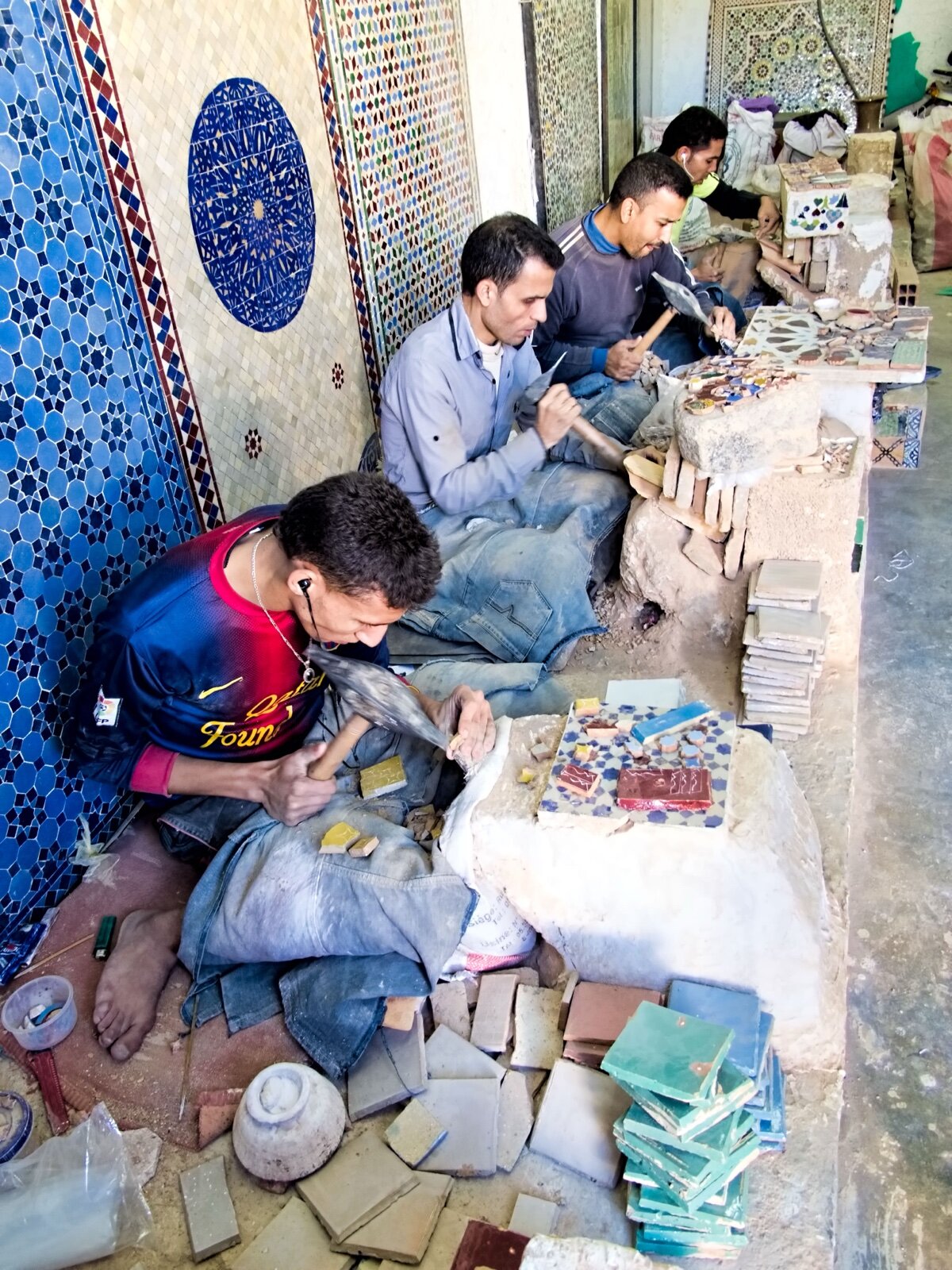
What most UK homes buy is the plain version: single-colour glazed squares, usually around 10cm by 10cm, or long thin rectangles, sold in a range of greens, blues, whites, terracottas and neutrals. Floor versions are often called bejmat, which are thicker and carry a thinner glaze than wall zellige.
Because each tile is made by hand, you should expect:
- Size variation. Tiles from the same box can differ noticeably in width and squareness.
- Thickness variation. One UK supplier quotes up to 1.5mm difference between tiles, which is a lot when you are trying to get a flat wall.
- Surface character. Pinholes, dimples, bubbles, chipped corners and crazing (a network of hairline cracks in the glaze) are normal. Suppliers describe them as part of the product, not defects.
- Shade variation. The glaze pools and thins differently on every tile, so one colour covers a spread of tones.
Zellige or zellige-effect?
Spanish and Italian factories now make ceramic and porcelain tiles that imitate the look: a wavy, glossy glaze and a spread of shades, but with consistent size and thickness. They fit like any other wall tile, need no sealing, and cost less to install. If you love the look but do not want the variation, chips or the extra labour, zellige-effect is a sensible choice and there is no shame in it. If you want the real depth and irregularity that only a hand-glazed clay tile gives, buy the genuine article and accept what comes with it.
How much zellige to order
With standard porcelain we usually allow 10% for cuts and breakages. With genuine zellige, allow more. Suppliers commonly recommend ordering 15% to 20% extra, and some advise that 10% to 15% of any batch will have more obvious flaws that you may want to keep for cuts or out of sight.
That extra is not waste in the usual sense. It gives the tiler room to reject tiles that are badly chipped, far off size, or a shade that sits wrong on a prominent wall. Ordering short and topping up later is a bad idea: a second batch from a different firing can be a noticeably different colour.
Blend every box before you start
The single most important step with zellige happens before any adhesive is mixed. Open all the boxes and mix the tiles together, ideally laying a run out on the floor to see how the shades sit next to each other. Installing one box at a time gives you visible bands of lighter and darker colour across the wall. It is the most common problem we see on DIY zellige jobs.
Fixing zellige: adhesive, joints and grout
Zellige is fixed with the same family of materials as other ceramic tiles, but the method is different because the tiles are not flat or uniform.
Preparation
The wall needs to be flat, sound and, in a shower, properly waterproofed first. Tanking goes on before any tile, as we cover in our guide to tanking a wet room before tiling. On timber stud walls in wet areas, use a cement or foam backer board rather than plasterboard; our backer board comparison explains why.
Some suppliers suggest dipping each tile in clean water for a minute or two before fixing. The clay body is thirsty, and a bone-dry tile can pull water out of the adhesive too quickly.
Adhesive
Use a good-quality flexible cement-based adhesive, and many suppliers specify a white one so that it does not shadow through pale glazes. Because thicknesses vary, a tiler will usually back-butter each tile as well as combing adhesive onto the wall, then adjust each piece so the faces sit in a reasonable plane. You are aiming for a surface that looks handmade, not one where individual tiles stick out and catch the light badly.
Joints
Traditionally zellige is laid tight, edge to edge, with joints of 1mm or less where the tiles allow. Because the edges are irregular, standard cross spacers do not work; tilers use small wedges instead, pushing them in to take up the variation. Some installers prefer a slightly wider 2mm to 3mm joint, which is easier to grout and hides more of the size variation. Either is fine. Pick one approach and keep to it across the wall.
Grout
With joints this fine, you need a smooth, unsanded grout mixed on the runny side so it flows into narrow gaps and fills the chips and pits at the edges. Grout colour matters more than usual: grout close to the tile colour makes the wall read as one soft surface, while a contrasting grout picks out every irregular edge.
Clean off quickly and gently. Grout left to cure on the textured glaze and in the pinholes is very hard to remove later, and heavy sponging drags grout out of the narrow joints. Change the sponge water often so you are not spreading a haze back over the tiles.
Do zellige tiles need sealing?
This is where the advice online contradicts itself, and the answer depends on the tile.
- Unglazed or natural zellige (bare terracotta, no glaze) is porous and does need sealing. The usual advice is a penetrating sealer before grouting, so grout does not stain the face, and another coat after grouting.
- Glazed zellige is generally sold as not needing a sealer on the face. The catch is that the chips, pinholes and crazing expose bare clay in places, and grout pigment or cooking oil can find its way in. On a splashback behind a hob, or with a strongly contrasting grout, we tend to apply a penetrating sealer before grouting anyway, as cheap insurance. Always check the specific supplier’s instructions, because some finishes do not want to be sealed at all.
Do not over-apply sealer. Excess left on a glossy glaze dries into a patchy film. Our general guide to sealing grout and tiles covers application.
Where zellige works, and where it does not
Kitchen splashbacks. The classic use. A small area, big visual impact, and easy to wipe down. Keep a sealed edge detail behind the hob.
Shower walls and bathroom feature walls. Glazed zellige is used in showers all the time, provided the substrate behind it is properly waterproofed. The tile itself is not the waterproof layer. Expect the grout lines to need a little more attention than on large porcelain.
Floors. Wall zellige is too thin and too glossy for most floors. Bejmat or floor-rated handmade tiles can go down in lightly used rooms, but the glaze will wear with heavy traffic, and a gloss surface is slippery when wet. In a busy kitchen or a hallway, we would steer you towards porcelain.
Outdoors and underfloor heating. Check frost resistance with the supplier before using any handmade clay tile outside, and note that at least one UK supplier warns of a small cracking risk with high underfloor heating temperatures.
What makes zellige more expensive to install
Zellige tiles cost more per square metre than most porcelain, and the labour is higher too. It is slower to fit because of the blending, sorting, back-buttering and tile-by-tile adjustment. Cutting is also fiddlier: the brittle glaze chips easily on a manual cutter, so a wet diamond saw with a fine blade gives cleaner cuts, and drilling for sockets needs care (see our notes on tile drill bits).
When you get quotes, ask the tiler whether they have fitted handmade tiles before and whether they price by the day or by the square metre. A tiler who has never laid zellige will often price it like metro tiles and then find the job takes twice as long. It is better to have that conversation before work starts.
Living with a zellige wall
Day to day, glazed zellige needs nothing more than a damp cloth and a mild pH-neutral cleaner. Avoid acidic or abrasive cleaners on the grout and on any unglazed areas, and reseal unglazed tiles periodically in wet areas; suppliers suggest every one to three years depending on use. Chips appearing over time are part of the character. If a tile cracks badly, it can be cut out and replaced from your spare stock, which is one more reason to keep a box back from the original batch.
If you are planning a splashback or shower wall in zellige and want a straight answer on whether it suits the room, Bromley Tilers can look at the space and tell you honestly whether real zellige or a zellige-effect tile is the better fit.
Frequently asked questions
Are zellige tiles waterproof enough for a shower?
Glazed zellige is widely used on shower walls. The waterproofing comes from tanking or a waterproof board behind the tiles, not from the tiles, so the substrate must be done properly first. Unglazed zellige needs sealing in wet areas.
What size are zellige tiles?
The most common size is around 10cm by 10cm, with rectangles and smaller squares also made. Because they are handmade, the real size varies from tile to tile, so do not expect the dimension on the box to be exact.
Why do zellige tiles have cracks in the glaze?
Fine hairline cracking in the glaze, called crazing, happens as the glaze and clay cool at different rates in the kiln. On genuine zellige it is normal and expected, and suppliers do not treat it as a fault.
Can you use spacers with zellige tiles?
Standard cross spacers do not suit irregular edges. Tilers use wedges instead and set tiles edge to edge or with a joint of up to about 3mm, keeping the same approach across the whole wall.
How much extra zellige should I buy?
Order 15% to 20% more than the measured area. It covers cuts, breakages and the tiles you will want to reject or hide, and it saves you from a second batch that does not match.
Related guides
- How to Tile a Bathroom Wall: A UK Step-by-Step Guide
- How Much Does Tiling Cost in the UK? A Realistic Price Guide
- How to Remove Old Wall Tiles Without Damaging the Wall
- Porcelain vs Ceramic Tiles: Which Is Right for Your Bathroom or Kitchen?
- How to Tank and Waterproof a Wet Room Before Tiling: A Bromley Homeowner’s Guide
- Do You Need to Seal Natural Stone Tiles Before Grouting? A Tiler Explains
- How to Tile a Bathroom Floor (Including Around the Toilet)
- How to Tile a Shower: Walls, Niche and Waterproofing
- Construction Trade News: June 2026
- Bathroom Tiling Guide: How to Plan, Prep and Finish a Lasting Job
- Tile Backer Board vs Plasterboard for Bathrooms
- Best Tiles for Small Bathrooms (and How to Make a Space Look Bigger)
- Wall and Floor Tiles for a Wet Room: What Actually Works
- Tiling vs Wall Panels for a Bathroom: Which Is Better?
- Do You Tile the Floor or Walls First in a Bathroom?
- Tiling and Bathroom Trade News: Mid-June 2026
- Kitchen Tiling: Splashbacks, Walls and Floors Explained
- How to Tile a Kitchen Splashback: Step-by-Step Bromley Guide
- How to Tile Around Kitchen Sockets, Switches and Worktops
- Kitchen Splashback Tile Ideas: 12 Looks That Work
- Tiling and Bathroom Trade News: Late June 2026
- How to Lay Metro Tiles in a Herringbone Pattern
- Tiled vs Glass Splashback (and Acrylic): Which Is Best?
- How High Should a Kitchen Splashback Be Tiled? UK Heights Guide
- Tiling and Bathroom Trade News: Early July 2026
- Types of Tiles: The Complete UK Buyer’s Guide
- Porcelain vs Natural Stone Tiles: Which Should You Choose?
- Natural Stone Tiles Explained: Marble, Travertine, Slate and Limestone
- Tiling and Bathroom Trade News: Mid-July 2026
- Mosaic Tiles: Where to Use Them and How They’re Fixed
- Tile Slip Ratings Explained: R Ratings and PTV for UK Floors
- Matt vs Gloss Tiles: Which Finish Is Right for Your Room?
- Cost to Tile a Bathroom in the UK: 2026 Price Breakdown
- Polystyrene Ceiling Tiles: Are They Any Good?
- Cost to Tile a Kitchen in 2026: Floor and Splashback Prices
- Tiling and Bathroom Trade News: Mid-July 2026
- Tiling Cost Per Square Metre 2026: Labour and All-In Prices
- Tiler Day Rate UK: What Tilers Charge Per Day in 2026
- Cost to Regrout a Bathroom in 2026: UK Prices Explained
- Floor Tile Prices UK 2026: What You Will Pay Per Square Metre
- Is It Cheaper to Tile or Use Wall Panels? A UK Cost Comparison
- How to Tile: A Complete Beginner’s Guide (UK)
- How to Cut Tiles: Manual Cutter, Wet Saw and Nippers
- How to Cut Holes in Tiles for Pipes and Taps
- How to Grout Tiles (and Get Clean, Even Lines)
- Cork Flooring: Pros, Cons and Where It Works in UK Homes
- Tiling and Bathroom Trade News: Late July 2026
- How to Mix and Apply Tile Adhesive Correctly
- How to Set Out Tiles for a Perfect Layout
- How to Seal Grout and Tiles in a Bathroom (UK Guide)
- Can You Tile Over Tiles? When It Works and When It Doesn’t
- Tiling Tools List: What You Need for a Professional Finish
- How Much Tile Adhesive Do I Need? Coverage Per Square Metre
- Tiling Trade News: Topps App, Costs Up 6% (Aug 2026)
- Tile Problems: 9 Common Faults and How to Fix Each
- How to Fix Loose Tiles Without Removing Them
- Cracked Grout Repair: Why It Happens and How to Fix It
- Tiling Trade News: TTA Silica Warning, 2% Retentions
- How to Replace a Broken Tile Without Redoing the Wall
- Water Leaking Through Shower Tiles: 6 Causes and Fixes
- Remove Mouldy Silicone Sealant: A 24-Hour Reseal Job
- How to Clean Grout: What Works, and What Etches Stone
- Why Are My Floor Tiles Lifting? The 40m² Bay Rule
- Tiling Trade News: 3,841 Construction Firms Failed
- How to Lay Porcelain Paving: 1:80 Fall, 150mm Below DPC
- Tile Patterns: Why Big Tiles Need a One-Third Offset
- Grout Colour Ideas: How to Get the Shade You Chose
- Can You Paint Tiles? Yes on Walls, No in the Shower
- Decoupling Membrane for Tiles: When You Actually Need One
- Can You Tile Over a Wooden Floor? What Changed in 2024
- Tiling Cost 2026: £25 to £95 per m² Labour, UK Rates
- Tile Ideas: 7 Looks and the One Rule Each Needs
- Metro Tiles: Sizes, Bevels and the 1/3 Offset Rule
- Tile Feature Wall: The Weight Limit That Decides Yours
- Tiling Over Underfloor Heating: 14 Days Before Heat On
- How to Tile a Hallway Floor: Set Out From the Door
- Wood Effect Tiles and Marble Effect: 5 Specs to Check
- Tile Levelling Systems: The 3mm Rule That Decides It
- Tiling Trade News: Repair Work Up 1.7%, Headlam Fails
- Floor Levelling Compound: How Deep and How Long to Dry
- How to Find a Good Tiler: 9 Checks Before You Book
- Tiling Quote: The 10 Lines a Proper One Must Show
- Tile Trim: Sizes, Profiles and the One-Size-Up Rule
- Tile Spacers: 2mm or 3mm, and When to Pull Them Out
- Tiling the Fireplace: 125mm Hearths, Adhesive and Tiles
- Tiling Trade News: Shaws Sinks Reprice on 1 November
- Porcelain vs Stone Paving: Grip, Sealing and Upkeep
- Tiling a Large Floor: Movement Joints Every 10 Metres
- DIY Tiling vs Professional: 6 Jobs to Never Do Yourself
- Terracotta Tiles: Seal Before Grouting, Wait 7 Days
- Tile Drill Bits: Which Bit Won’t Crack Porcelain
- Tiling Corners With Trim: Which Profile, and When to Mitre
- Travertine Tiles: Filled or Unfilled, and How to Seal Them
- Slate Tiles: Calibrated or Riven, and How to Lay Them
- Terrazzo Tiles: Real 20mm vs Porcelain, Seal Before Grouting