


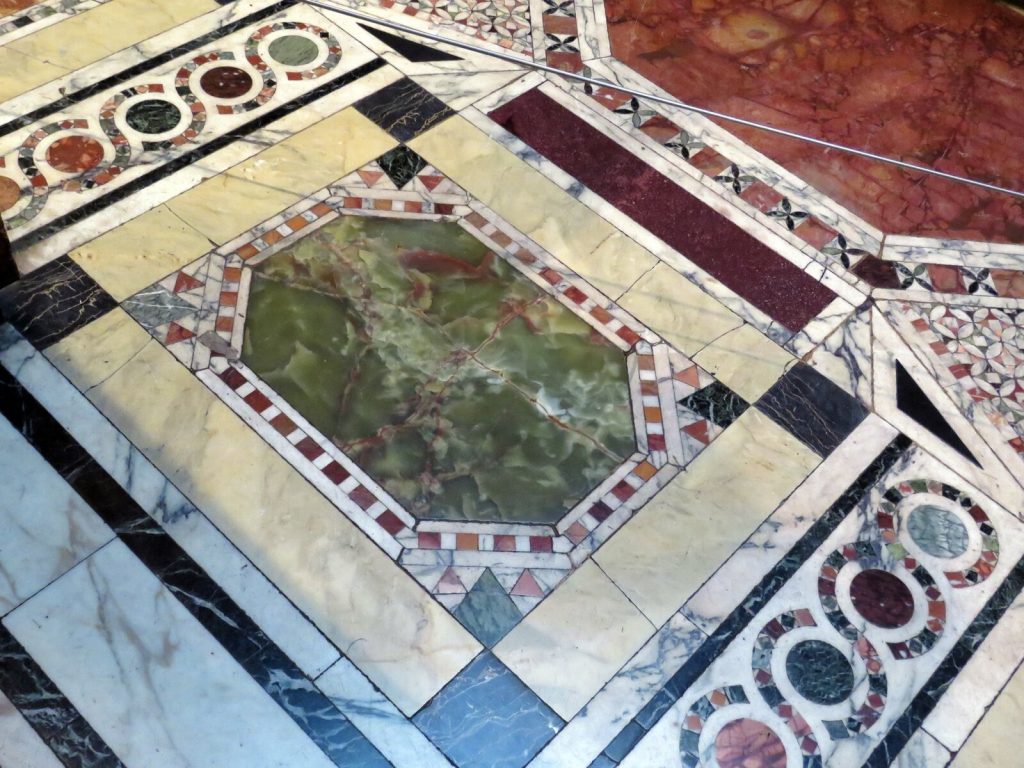
Marble tiles look like nothing else, but they behave like nothing else on a tiling job either. Marble is a calcite stone: soft compared with porcelain, sensitive to acids, and in many varieties sensitive to water from the adhesive underneath it. Most of the problems we see on marble floors and walls in Bromley and south east London go back to three choices made on fixing day: the adhesive, the finish, and whether the stone was sealed before grout went near it. This page covers all three, plus how to clean marble without dulling it.
What makes marble tiles different from porcelain
Porcelain is fired clay with almost no porosity. Marble is a natural metamorphic limestone, so every tile varies in colour and veining, it absorbs liquids unless sealed, and its surface reacts with acid. That last point matters more than most buyers expect. Lemon juice, vinegar, many limescale removers and acidic grout haze cleaners all eat into the calcite and leave a dull, rough patch called an etch mark. An etch is damage to the surface, not a stain sitting on it, so no cleaner lifts it: it has to be honed or polished out.
Marble is also heavier and more variable in thickness than most porcelain. Calibrated tiles are machined to a consistent thickness and are the sensible choice for floors and walls; uncalibrated stone needs a thicker, variable bed and takes far longer to lay flat.
Polished or honed marble: pick by room, not by showroom
Polished marble has a mirror shine that shows the veining at its best. It is also the finish that shows every etch mark, scratch and water spot, and it is slippery when wet. Honed marble is ground flat to a matt or satin finish. Etches and light scratches blend in, and it gives more grip underfoot.
- Bathroom and shower floors: honed, or a textured finish. A wet polished marble floor is a slip risk.
- Kitchen floors: honed. Spills of wine, juice and vinegar are a when, not an if.
- Hallways and living rooms: either, but polished needs mats at the door because grit scratches it.
- Bathroom walls and fireplace surrounds: polished works well; walls take no foot traffic and few acid spills.
Which adhesive for marble tiles
This is the decision that ruins most marble jobs. White and light marbles, and especially translucent ones, can show dark patches or shadowing where water from a slow-setting cement adhesive has soaked up into the stone. Grey adhesive can also show through pale, translucent tiles.
The adhesive makers are explicit about it. BAL’s data sheet for its standard CTF4 adhesive says natural stone such as limestone, marble, travertine and some granite may be susceptible to water staining, recommends a rapid-setting white adhesive in that case, and says not to use CTF4 for translucent or water sensitive stone (BAL CTF4 on NBS Source). Mapei gives the same reasoning: fast-setting adhesives hydrate quickly, so less residual water is left to migrate into moisture-sensitive stone, and reactive adhesives (epoxy or polyurethane) contain no water at all.
- Most white, cream and light marbles: a rapid-setting white cement-based adhesive. The colour stops grey showing through; the fast set cuts the water staining risk.
- Any stone the supplier describes as moisture sensitive: a reactive (epoxy or polyurethane) adhesive, because it puts no water into the stone at all. Ask the supplier before you buy; green marbles in particular are worth checking.
- Dark marbles such as Nero Marquina: staining shows less, but a rapid-set adhesive is still the safer choice.
If you are not sure how a stone will behave, do what Mapei recommends and run a trial: fix a spare tile on a board with the adhesive you plan to use and watch it for a day or two. The screed or substrate also has to be properly dry before marble goes down, because residual moisture in a new screed is one of the main causes of stains.
How to lay marble tiles
- Check the substrate. Floors must be rigid and flat; a bouncy timber floor will crack stone. Overboard suspended floors with a tile backer board. Walls must take the weight: see our page on tiling onto plaster for the weight limits.
- Dry lay and blend. Open several boxes and mix tiles across the area so one patch of dark veining does not cluster in a corner.
- Seal the face before fixing if the tiles are not factory sealed. Adhesive and grout that touch an unsealed face can stain it.
- Get full coverage. Use a notched trowel sized to the tile, back butter each tile, and aim for a solid bed with no voids, which are where cracks start under point loads.
- Keep adhesive out of the joints and wipe the faces clean as you go. Adhesive squeezed up through the joint and left to set is a common cause of edge staining.
- Use narrow joints on calibrated tiles to show the stone, but never butt tiles tight with no joint at all.
- Let it cure for the time on the adhesive bag before grouting.
Sealing and grouting marble
Seal before you grout. A coat of impregnating sealer on the face, allowed to dry fully, stops grout pigment soaking into the stone around the joints, and makes the grout haze far easier to remove. After grouting, give the whole floor a second coat. Our tile sealer page explains the difference between impregnating and topical sealers; for marble you want an impregnator, which keeps the natural look.
Two points that catch people out. A sealer slows staining from oils and liquids, but it does not stop acid etching, because the acid still reaches the calcite. And for grout haze, never reach for a standard acid-based grout residue remover on polished or honed marble: it will etch the surface. Use a cleaner labelled safe for marble, and read our guide on removing grout haze before you start.
Pick a grout colour close to the stone. A dark grout against white Carrara outlines every tile; a pale grey or white grout lets the veining run across the floor.
Cleaning and caring for marble tiles
- Daily: sweep or vacuum grit, then mop with warm water and a pH-neutral stone cleaner.
- Never use: vinegar, lemon, bleach, limescale removers or general bathroom sprays. Most are acidic or harsh enough to etch or dull marble.
- Spills: blot, do not wipe, and rinse with water straight away, especially wine, fruit juice and tomato.
- Showers: squeegee after use to cut limescale, which you otherwise cannot remove with the usual acid descalers.
- Reseal: when water stops beading on the surface and soaks in darker. Busy floors usually need it more often than walls.
Light etch marks on polished marble can sometimes be buffed out with a marble polishing powder. Deeper etches and dull traffic lanes need professional honing and repolishing, which is a restoration job, not a DIY one.
Is marble worth it over marble-effect porcelain?
Real marble gives depth and variation that printed porcelain does not quite match, and it can be honed and repolished when it wears, so a well-laid floor can last for decades. Marble-effect porcelain is cheaper to fix, does not etch, needs no sealing and is far more forgiving in a family kitchen or a busy en suite. As a rule of thumb: real marble where you want character and will look after it, porcelain where it will take abuse. We compare the two looks in our guide to wood and marble effect tiles.
Frequently asked questions
Can you use grey adhesive on marble tiles?
Not on white, light or translucent marble. Grey adhesive can show through the stone, and slow-setting adhesives can cause water staining. Use a rapid-setting white adhesive, or an epoxy for moisture-sensitive stone.
Do marble tiles need sealing?
Yes. Seal the face before grouting so grout pigment cannot stain it, then seal again after grouting. Sealing slows staining but does not prevent acid etching.
Are marble tiles good for bathroom floors?
Yes in a honed or textured finish, which gives more grip when wet. Polished marble is better kept to walls and dry areas.
Why has my new marble floor got dark patches?
Usually water from the adhesive or a damp screed migrating into the stone. Some patches fade as the floor dries out over weeks; others are permanent. Rapid-setting white adhesive and a dry substrate prevent it.
Can you use vinegar to clean marble tiles?
No. Vinegar is an acid and will etch the surface, leaving dull marks that need honing out. Use a pH-neutral stone cleaner.
How do you get etch marks out of marble?
Light etches on polished marble can be buffed with a marble polishing powder. Deep etches need professional honing and repolishing.
Planning a marble bathroom or hallway in Bromley or nearby? Bromley Tilers can advise on the stone, the adhesive and the finish before you buy.
Related guides
- How to Tile a Bathroom Wall: A UK Step-by-Step Guide
- How Much Does Tiling Cost in the UK? A Realistic Price Guide
- How to Remove Old Wall Tiles Without Damaging the Wall
- Porcelain vs Ceramic Tiles: Which Is Right for Your Bathroom or Kitchen?
- How to Tank and Waterproof a Wet Room Before Tiling: A Bromley Homeowner’s Guide
- Do You Need to Seal Natural Stone Tiles Before Grouting? A Tiler Explains
- How to Tile a Bathroom Floor (Including Around the Toilet)
- How to Tile a Shower: Walls, Niche and Waterproofing
- Construction Trade News: June 2026
- Bathroom Tiling Guide: How to Plan, Prep and Finish a Lasting Job
- Tile Backer Board vs Plasterboard for Bathrooms
- Best Tiles for Small Bathrooms (and How to Make a Space Look Bigger)
- Wall and Floor Tiles for a Wet Room: What Actually Works
- Tiling vs Wall Panels for a Bathroom: Which Is Better?
- Do You Tile the Floor or Walls First in a Bathroom?
- Tiling and Bathroom Trade News: Mid-June 2026
- Kitchen Tiling: Splashbacks, Walls and Floors Explained
- How to Tile a Kitchen Splashback: Step-by-Step Bromley Guide
- How to Tile Around Kitchen Sockets, Switches and Worktops
- Kitchen Splashback Tile Ideas: 12 Looks That Work
- Tiling and Bathroom Trade News: Late June 2026
- How to Lay Metro Tiles in a Herringbone Pattern
- Tiled vs Glass Splashback (and Acrylic): Which Is Best?
- How High Should a Kitchen Splashback Be Tiled? UK Heights Guide
- Tiling and Bathroom Trade News: Early July 2026
- Types of Tiles: The Complete UK Buyer’s Guide
- Porcelain vs Natural Stone Tiles: Which Should You Choose?
- Natural Stone Tiles Explained: Marble, Travertine, Slate and Limestone
- Tiling and Bathroom Trade News: Mid-July 2026
- Mosaic Tiles: Where to Use Them and How They’re Fixed
- Tile Slip Ratings Explained: R Ratings and PTV for UK Floors
- Matt vs Gloss Tiles: Which Finish Is Right for Your Room?
- Cost to Tile a Bathroom in the UK: 2026 Price Breakdown
- Polystyrene Ceiling Tiles: Are They Any Good?
- Cost to Tile a Kitchen in 2026: Floor and Splashback Prices
- Tiling and Bathroom Trade News: Mid-July 2026
- Tiling Cost Per Square Metre 2026: Labour and All-In Prices
- Tiler Day Rate UK: What Tilers Charge Per Day in 2026
- Cost to Regrout a Bathroom in 2026: UK Prices Explained
- Floor Tile Prices UK 2026: What You Will Pay Per Square Metre
- Is It Cheaper to Tile or Use Wall Panels? A UK Cost Comparison
- How to Tile: A Complete Beginner’s Guide (UK)
- How to Cut Tiles: Manual Cutter, Wet Saw and Nippers
- How to Cut Holes in Tiles for Pipes and Taps
- How to Grout Tiles (and Get Clean, Even Lines)
- Cork Flooring: Pros, Cons and Where It Works in UK Homes
- Tiling and Bathroom Trade News: Late July 2026
- How to Mix and Apply Tile Adhesive Correctly
- How to Set Out Tiles for a Perfect Layout
- How to Seal Grout and Tiles in a Bathroom (UK Guide)
- Can You Tile Over Tiles? When It Works and When It Doesn’t
- Tiling Tools List: What You Need for a Professional Finish
- How Much Tile Adhesive Do I Need? Coverage Per Square Metre
- Tiling Trade News: Topps App, Costs Up 6% (Aug 2026)
- Tile Problems: 9 Common Faults and How to Fix Each
- How to Fix Loose Tiles Without Removing Them
- Cracked Grout Repair: Why It Happens and How to Fix It
- Tiling Trade News: TTA Silica Warning, 2% Retentions
- How to Replace a Broken Tile Without Redoing the Wall
- Water Leaking Through Shower Tiles: 6 Causes and Fixes
- Remove Mouldy Silicone Sealant: A 24-Hour Reseal Job
- How to Clean Grout: What Works, and What Etches Stone
- Why Are My Floor Tiles Lifting? The 40m² Bay Rule
- Tiling Trade News: 3,841 Construction Firms Failed
- How to Lay Porcelain Paving: 1:80 Fall, 150mm Below DPC
- Tile Patterns: Why Big Tiles Need a One-Third Offset
- Grout Colour Ideas: How to Get the Shade You Chose
- Can You Paint Tiles? Yes on Walls, No in the Shower
- Decoupling Membrane for Tiles: When You Actually Need One
- Can You Tile Over a Wooden Floor? What Changed in 2024
- Tiling Cost 2026: £25 to £95 per m² Labour, UK Rates
- Tile Ideas: 7 Looks and the One Rule Each Needs
- Metro Tiles: Sizes, Bevels and the 1/3 Offset Rule
- Tile Feature Wall: The Weight Limit That Decides Yours
- Tiling Over Underfloor Heating: 14 Days Before Heat On
- How to Tile a Hallway Floor: Set Out From the Door
- Wood Effect Tiles and Marble Effect: 5 Specs to Check
- Tile Levelling Systems: The 3mm Rule That Decides It
- Tiling Trade News: Repair Work Up 1.7%, Headlam Fails
- Floor Levelling Compound: How Deep and How Long to Dry
- How to Find a Good Tiler: 9 Checks Before You Book
- Tiling Quote: The 10 Lines a Proper One Must Show
- Tile Trim: Sizes, Profiles and the One-Size-Up Rule
- Tile Spacers: 2mm or 3mm, and When to Pull Them Out
- Tiling the Fireplace: 125mm Hearths, Adhesive and Tiles
- Tiling Trade News: Shaws Sinks Reprice on 1 November
- Porcelain vs Stone Paving: Grip, Sealing and Upkeep
- Tiling a Large Floor: Movement Joints Every 10 Metres
- DIY Tiling vs Professional: 6 Jobs to Never Do Yourself
- Terracotta Tiles: Seal Before Grouting, Wait 7 Days
- Tile Drill Bits: Which Bit Won’t Crack Porcelain
- Tiling Corners With Trim: Which Profile, and When to Mitre
- Travertine Tiles: Filled or Unfilled, and How to Seal Them
- Slate Tiles: Calibrated or Riven, and How to Lay Them
- Zellige Tiles: Order 15% Extra and Fix Them Edge to Edge
- Terrazzo Tiles: Real 20mm vs Porcelain, Seal Before Grouting
- Tiling Trade News: 36% Now Add a Bathroom Accent Wall
- Split Face Tiles: Will Your Wall Take 27kg per m²?
- Tile Sealer: Which Tiles Need It and Which Type to Buy
- How to Remove Grout Haze: Which Cleaner for Which Grout
- Efflorescence on Tiles: Why It Comes Back and How to Stop It
- Tile Primer: Which Surfaces Need It and How Much to Dilute
- Epoxy Grout: Where It’s Worth It and How to Apply It
- How to Tile Stairs: Keep Every Riser the Same Height
- Shower Niche: Sizes, Height and Which Wall Can Take One
- How Many Tiles Do I Need? Add 10% to 20% by Layout
- How to Tile a Window Sill: Sill Last, Silicone at the Frame
- Tiling Trade News: Victorian Plumbing Tile Sales Up 76%
- How to Tile Around a Toilet: Lift the Pan or Cut Round It
- Tile to Carpet Transition: Pick the Strip by the Height Gap
- Tile Skirting: Leave a 6mm Gap and Seal, Never Grout
- Tile Backer Board: Cement or Foam, Which Thickness, Fixings
- Quarry Tiles: Seal Them or Not, and How to Clean Them
- Rapid Set Tile Adhesive vs Standard: 30 Mins or 24 Hours
- Can You Tile Onto Plaster? Yes, Up to 20kg per m²
- How to Tile a Balcony: 1.5-2% Fall, Drain Mat, 150mm Upstand
- Electric Tile Cutter: When You Need One and Which Disc
- Victorian Floor Tiles: Sizes, Repairs and When to Replace
- Tiling on Anhydrite Screed: 0.5% Moisture, Sand, Then Prime
- Tiling Trade News: Domus Buyout After Headlam Collapse
- How High to Tile a Bathroom: 1.2m Line vs Floor to Ceiling
- Can You Tile Over Paint? Strip Emulsion, Key Gloss First
- Hollow Sounding Tiles: When to Leave Them, When to Lift
- Tile Movement Joints: Where They Go and the 10m Rule