


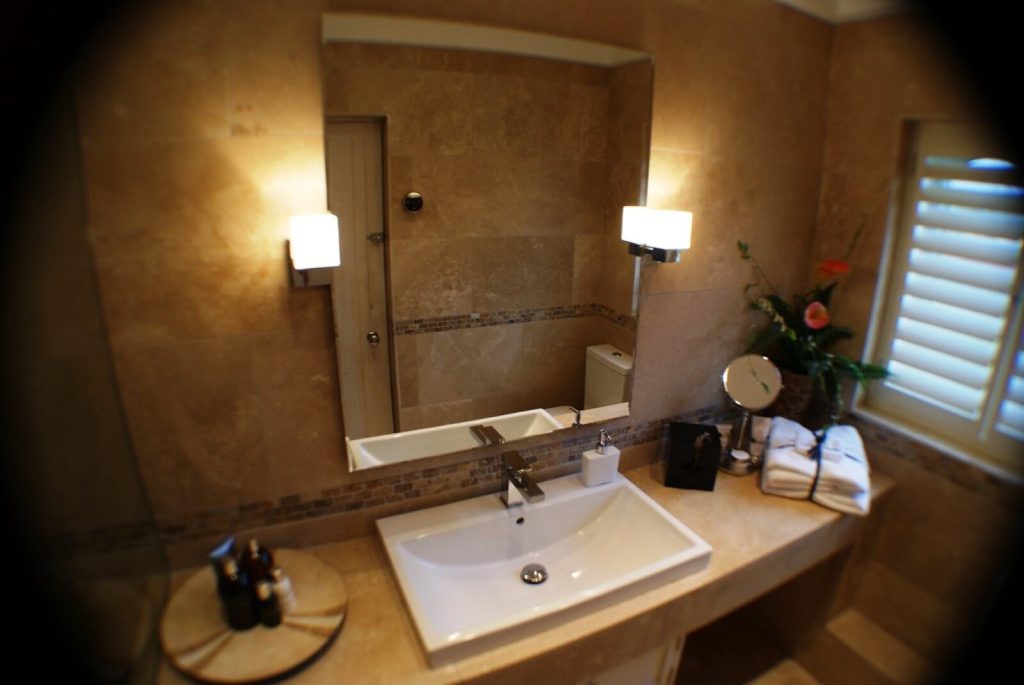
How to find a good tiler is mostly a question of knowing what to check before any money changes hands. Tiling is one of the few trades where bad work looks fine for about six months, then announces itself: hollow-sounding floor tiles, grout that darkens along one line, a shower tray edge that weeps into the joist below. By then the tiler has moved on and the fix costs more than the original job. The checks below take an evening and they are the ones that actually predict a good outcome in Bromley, Beckenham, Orpington and the rest of south east London.
Start with the standard the work should meet
There is a written British Standard for this trade, and a tiler who has never heard of it is telling you something. The BS 5385 series covers wall and floor tiling: Part 1 deals with ceramic, natural stone and mosaic wall tiling in normal internal conditions, Part 2 with external wall tiling, Part 3 with internal and external floor tiling, and Part 4 with tiling in specific conditions such as swimming pools and heavy-duty floors.
Part 3 is the one that changed most recently. BS 5385-3:2024 came into effect on 31 May 2024 and replaced both the 2014 edition of Part 3 and the 2009 edition of Part 5, pulling ceramic, mosaic, terrazzo and natural stone flooring into a single code of practice. The revision exists because floor tiles have got bigger and thicker, and the installation methods for stone and ceramic have converged. If you are laying 1200mm porcelain planks in a Bromley kitchen, the substrate flatness and bedding your tiler works to matters more than it did ten years ago.
You do not need to read the standard. You need a tiler who answers “BS 5385” without pausing when you ask what they work to.
Nine checks before you book a tiler
- A real business identity. A limited company number you can look up on Companies House, or a trading name with a fixed address. A mobile number and a Facebook page is not an identity.
- Public liability insurance, in writing. Ask for the certificate, check the expiry date and check the insured name matches the name on the quote. A tiler working in your bathroom is working next to your soil pipe and your electrics.
- Trade body membership you can verify. The Tile Association is the UK industry body for the wall and floor tile sector. It runs a Find a Tiler search that homeowners can use directly, publishes technical guidance, and offers a technical inspection service to customers who are unhappy with a finished job. That last point is the useful one: a dispute with a TTA member has somewhere to go.
- TrustMark registration, if the job is part of a bigger project. TrustMark is the government endorsed quality scheme. Registered businesses are vetted and monitored on technical competence, customer service and trading practices, are expected to provide financial protection if they cease trading and cannot put things right, and give you access to a dispute resolution process.
- Photographs of finished work, not just pretty tiles. Ask for corners, internal angles, window reveals and the junction between wall and tray. Anyone can photograph a flat wall.
- Two references from the last six months. Recent matters. A tiler who was excellent in 2021 may now be subcontracting to someone you have not met.
- A named person on site. Find out who is actually holding the trowel. Some quotes come from a company and the work comes from a rotating crew.
- A written method for the preparation, not just the tiling. Most tiling failures are substrate failures. See the questions further down.
- Willingness to walk away from a job they should not take. A tiler who says “that floor needs overboarding first and I do not do carpentry, get a joiner in” has just told you they are honest.
One thing that is not a red flag on its own: whether they charge VAT. A sole trader only has to register for VAT once total taxable turnover for the last 12 months goes over £90,000, so a good one-person tiling business may legitimately not charge it. Treat VAT as information about size, not quality.
What a good tiling quote actually contains
Weak quotes say “supply and fit tiles to bathroom, £2,400”. You cannot compare two of those, and you cannot hold anyone to one. A quote worth accepting names:
- the exact area in square metres, wall and floor separately;
- what happens to the existing surface: strip back to what, and who disposes of the waste;
- preparation by name, such as overboarding a timber floor, applying a decoupling membrane, or tanking a shower area, and whose materials those are;
- the adhesive and grout type, and who is buying them;
- whether tiles are supplied by you or by the tiler, and what the wastage allowance is;
- movement joints and where they go;
- sealant lines, silicone colour, and trims by name and finish;
- start date, working days on site, and payment stages.
Comparing a day rate against a price per square metre is the classic apples and oranges problem. Convert both to a total for the actual job before you decide, and ask each tiler how many days they expect to be on site. A quote that is cheap per metre but assumes twice the days is not cheap.
What a bad tiling job looks like
Knowing the failure modes makes the earlier questions land harder, because you will be able to say why you are asking.
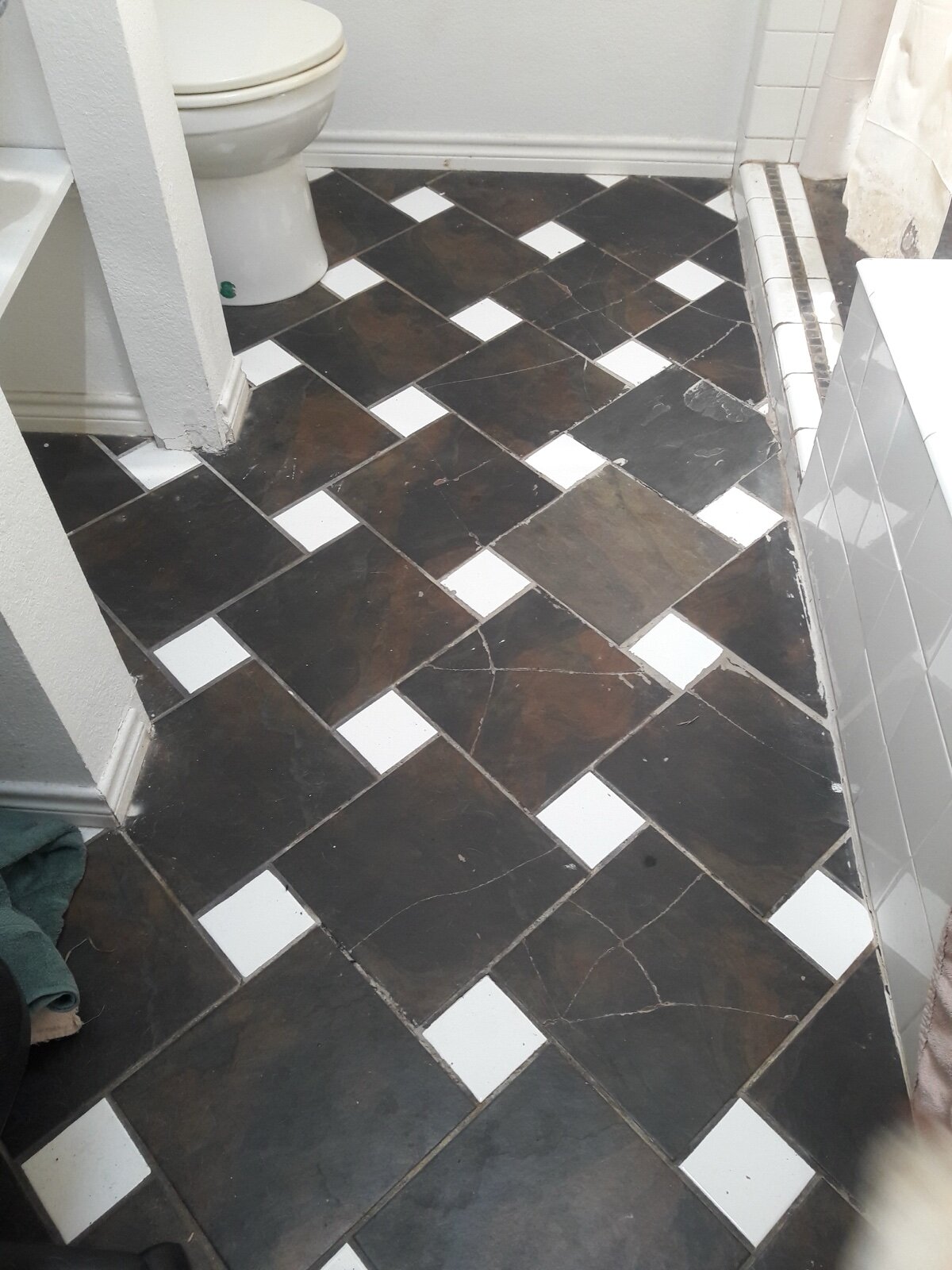
- Cracked tiles in a line. Usually movement underneath: a timber floor that deflects, or a screed crack telegraphing through because no movement joint or decoupling layer was used.
- Hollow tiles. Tap a few with a knuckle. A drummy sound means poor adhesive coverage, and large-format tiles laid without back-buttering are the usual cause.
- Grout going dark or crumbling along one joint. Water is getting behind the tiles. In a shower that usually means the wet area was never properly tanked, or plasterboard was tiled directly in a zone that needed a tile backer board.
- Silicone instead of a movement joint. Silicone at internal corners and at the tray or bath edge is correct. Silicone used to disguise a gap where a proper trim or joint should have gone is not.
- Lippage. Tile edges standing proud of each other. On a floor you feel it through socks; on a wall you see it in raking light. It comes from an out-of-flat substrate that nobody corrected.
- Cuts hidden in the most visible place. A good tiler sets out so that full tiles land at eye level and on the entrance wall, and the cuts go behind the door or under the vanity.
Ten questions to ask before you hand over a deposit
- What will you do to the substrate before you tile, and why that rather than something else?
- Is this floor going to need overboarding or a decoupling membrane?
- How will the shower area be waterproofed, and what product are you using?
- What adhesive are you using, and is it flexible enough for this substrate and tile size?
- Where will the movement joints go?
- Are you back-buttering the large-format tiles?
- How are you setting out, and where will the cuts fall?
- What trims are you using at external corners, and in what finish?
- What is the wastage allowance on my tile order, and who is responsible if we run short?
- If a tile cracks in six months, what happens?
You do not need to understand every answer in full. You are listening for whether the answers are specific and consistent, and whether the tiler is comfortable being asked.
Your rights if it goes wrong
Two pieces of law are worth knowing before you sign anything at your kitchen table. Under the Consumer Rights Act 2015, a service must be carried out with reasonable care and skill, which is the legal hook for defective tiling regardless of what the quote said.
Separately, the Consumer Contracts (Information, Cancellation and Additional Charges) Regulations 2013 give you a cancellation right on contracts agreed away from a trader’s business premises, which includes a quote you accept in your own home. Regulation 29 says you may cancel a distance or off-premises contract at any time in the cancellation period without giving a reason and without incurring any liability, and regulation 30 sets that period at 14 days after the day the contract is entered into for a service contract. A trader who does not tell you about that right extends it. This is the reason a reputable tiler hands you written cancellation information rather than treating it as an insult.
Practical corollary: keep deposits small and tied to materials. A tiler who wants half the labour cost up front, in cash, before any materials are ordered, is asking you to fund their cash flow with no security.
Frequently asked questions
How do I check a tiler is qualified?
There is no legal licence for tiling, so qualification is something you verify rather than assume. Ask whether they hold an NVQ or equivalent in wall and floor tiling, then check something independent: The Tile Association’s member search, a TrustMark registration, a verifiable insurance certificate and a Companies House record. Any one of those on its own proves little; three together is a reasonable picture.
Should I buy the tiles myself or let the tiler supply them?
Either works, but be clear who carries the risk. If you supply, you own the wastage problem and any delay caused by a short order or a batch shade difference. If the tiler supplies, you usually pay a margin but they carry that risk, and a single point of responsibility is worth something when a box arrives damaged.
Is a day rate or a price per square metre better?
Neither is inherently better, and the honest comparison is the total for your actual job. A day rate suits awkward work: small bathrooms, lots of cuts, mosaic, or a room where nobody knows what is under the old floor until it comes up. A price per square metre suits large, simple areas. Ask for both a total and an expected number of days, from every tiler you approach.
What deposit is reasonable for a tiling job?
A deposit that covers materials the tiler has to order for your job is normal. A large deposit against labour before any work starts is not. Stage the rest against visible progress, with the final payment after you have inspected the finished work in good light.
Do I need a tiler who is a member of a trade association?
It is not compulsory and there are excellent tilers who belong to nothing. What membership buys you is recourse: The Tile Association can carry out a technical inspection if you are unhappy, and TrustMark gives you a dispute resolution route and expects registered businesses to provide financial protection if they stop trading. If the job is large, that recourse is worth paying a little more for.
How long should a tiled bathroom last?
Properly prepared and correctly tiled, the tiling itself should outlast the suite. What fails first is almost always the sealant line and the grout in the wettest zone, which is maintenance rather than failure. If tiles are cracking or sounding hollow within a couple of years, that is a workmanship or substrate problem, not wear.
If you want the same checks applied to a specific room, the guides across Bromley Tilers cover preparation, costs and tile choice in more detail. The trade bodies referenced above are The Tile Association and TrustMark, and the cancellation right is set out in regulation 30 of the Consumer Contracts Regulations 2013.
Related guides
- How to Tile a Bathroom Wall: A UK Step-by-Step Guide
- How Much Does Tiling Cost in the UK? A Realistic Price Guide
- How to Remove Old Wall Tiles Without Damaging the Wall
- Porcelain vs Ceramic Tiles: Which Is Right for Your Bathroom or Kitchen?
- How to Tank and Waterproof a Wet Room Before Tiling: A Bromley Homeowner’s Guide
- Do You Need to Seal Natural Stone Tiles Before Grouting? A Tiler Explains
- How to Tile a Bathroom Floor (Including Around the Toilet)
- How to Tile a Shower: Walls, Niche and Waterproofing
- Construction Trade News: June 2026
- Bathroom Tiling Guide: How to Plan, Prep and Finish a Lasting Job
- Tile Backer Board vs Plasterboard for Bathrooms
- Best Tiles for Small Bathrooms (and How to Make a Space Look Bigger)
- Wall and Floor Tiles for a Wet Room: What Actually Works
- Tiling vs Wall Panels for a Bathroom: Which Is Better?
- Do You Tile the Floor or Walls First in a Bathroom?
- Tiling and Bathroom Trade News: Mid-June 2026
- Kitchen Tiling: Splashbacks, Walls and Floors Explained
- How to Tile a Kitchen Splashback: Step-by-Step Bromley Guide
- How to Tile Around Kitchen Sockets, Switches and Worktops
- Kitchen Splashback Tile Ideas: 12 Looks That Work
- Tiling and Bathroom Trade News: Late June 2026
- How to Lay Metro Tiles in a Herringbone Pattern
- Tiled vs Glass Splashback (and Acrylic): Which Is Best?
- How High Should a Kitchen Splashback Be Tiled? UK Heights Guide
- Tiling and Bathroom Trade News: Early July 2026
- Types of Tiles: The Complete UK Buyer’s Guide
- Porcelain vs Natural Stone Tiles: Which Should You Choose?
- Natural Stone Tiles Explained: Marble, Travertine, Slate and Limestone
- Tiling and Bathroom Trade News: Mid-July 2026
- Mosaic Tiles: Where to Use Them and How They’re Fixed
- Tile Slip Ratings Explained: R Ratings and PTV for UK Floors
- Matt vs Gloss Tiles: Which Finish Is Right for Your Room?
- Cost to Tile a Bathroom in the UK: 2026 Price Breakdown
- Polystyrene Ceiling Tiles: Are They Any Good?
- Cost to Tile a Kitchen in 2026: Floor and Splashback Prices
- Tiling and Bathroom Trade News: Mid-July 2026
- Tiling Cost Per Square Metre 2026: Labour and All-In Prices
- Tiler Day Rate UK: What Tilers Charge Per Day in 2026
- Cost to Regrout a Bathroom in 2026: UK Prices Explained
- Floor Tile Prices UK 2026: What You Will Pay Per Square Metre
- Is It Cheaper to Tile or Use Wall Panels? A UK Cost Comparison
- How to Tile: A Complete Beginner’s Guide (UK)
- How to Cut Tiles: Manual Cutter, Wet Saw and Nippers
- How to Cut Holes in Tiles for Pipes and Taps
- How to Grout Tiles (and Get Clean, Even Lines)
- Cork Flooring: Pros, Cons and Where It Works in UK Homes
- Tiling and Bathroom Trade News: Late July 2026
- How to Mix and Apply Tile Adhesive Correctly
- How to Set Out Tiles for a Perfect Layout
- How to Seal Grout and Tiles in a Bathroom (UK Guide)
- Can You Tile Over Tiles? When It Works and When It Doesn’t
- Tiling Tools List: What You Need for a Professional Finish
- How Much Tile Adhesive Do I Need? Coverage Per Square Metre
- Tiling Trade News: Topps App, Costs Up 6% (Aug 2026)
- Tile Problems: 9 Common Faults and How to Fix Each
- How to Fix Loose Tiles Without Removing Them
- Cracked Grout Repair: Why It Happens and How to Fix It
- Tiling Trade News: TTA Silica Warning, 2% Retentions
- How to Replace a Broken Tile Without Redoing the Wall
- Water Leaking Through Shower Tiles: 6 Causes and Fixes
- Remove Mouldy Silicone Sealant: A 24-Hour Reseal Job
- How to Clean Grout: What Works, and What Etches Stone
- Why Are My Floor Tiles Lifting? The 40m² Bay Rule
- Tiling Trade News: 3,841 Construction Firms Failed
- How to Lay Porcelain Paving: 1:80 Fall, 150mm Below DPC
- Tile Patterns: Why Big Tiles Need a One-Third Offset
- Grout Colour Ideas: How to Get the Shade You Chose
- Can You Paint Tiles? Yes on Walls, No in the Shower
- Decoupling Membrane for Tiles: When You Actually Need One
- Can You Tile Over a Wooden Floor? What Changed in 2024
- Tiling Cost 2026: £25 to £95 per m² Labour, UK Rates
- Tile Ideas: 7 Looks and the One Rule Each Needs
- Metro Tiles: Sizes, Bevels and the 1/3 Offset Rule
- Tile Feature Wall: The Weight Limit That Decides Yours
- Tiling Over Underfloor Heating: 14 Days Before Heat On
- How to Tile a Hallway Floor: Set Out From the Door
- Wood Effect Tiles and Marble Effect: 5 Specs to Check
- Tile Levelling Systems: The 3mm Rule That Decides It
- Tiling Trade News: Repair Work Up 1.7%, Headlam Fails
- Floor Levelling Compound: How Deep and How Long to Dry
- Tiling Quote: The 10 Lines a Proper One Must Show
- Tile Trim: Sizes, Profiles and the One-Size-Up Rule
- Tile Spacers: 2mm or 3mm, and When to Pull Them Out
- Tiling the Fireplace: 125mm Hearths, Adhesive and Tiles
- Tiling Trade News: Shaws Sinks Reprice on 1 November
- Porcelain vs Stone Paving: Grip, Sealing and Upkeep
- Tiling a Large Floor: Movement Joints Every 10 Metres