


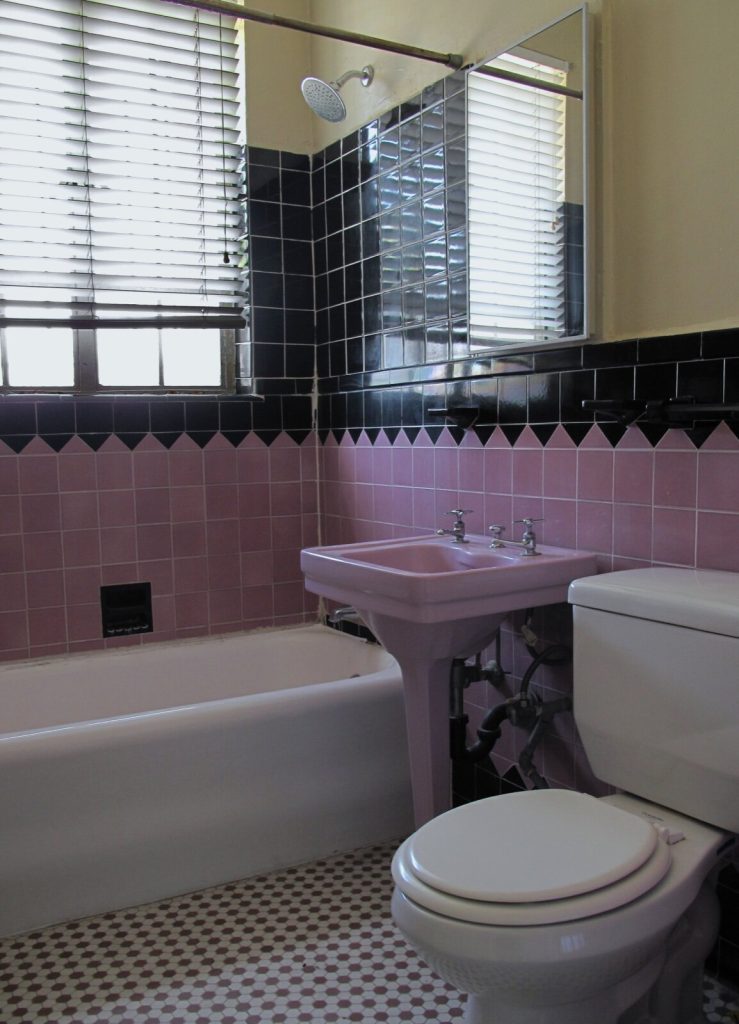
Pink tiles are back in British bathrooms and kitchens, but not in the flat sugared-almond shade of the old pink suites. Today’s pinks run from chalky plaster and blush to dusty rose, terracotta and deep raspberry, and they come as glossy handmade zellige, matt porcelain, terrazzo and patterned cement-look tiles. The colour is the easy part. What decides whether a pink room still looks good in five years is how the shade behaves in your light, what grout goes between the tiles, and whether the floor tile is safe when wet. This page works through all three, with layouts that suit the Victorian terraces and 1930s semis we tile around Bromley.
Pick the shade in your own light, not the showroom’s
Pink is the colour that shifts most between a showroom and a real bathroom. Showrooms use bright, even lighting. Your room has one window, a particular aspect and whatever bulbs you fit.
- North-facing rooms get cooler, bluer daylight. Soft pinks can turn grey or slightly lilac, so lean towards warmer pinks with a hint of peach or terracotta in them.
- South and west-facing rooms get warm light that intensifies pink. A blush that looks restrained on a sample board can read as candy pink by late afternoon, so go a shade paler than you think.
- Artificial light matters as much as daylight in a bathroom you mostly use morning and evening. Warm white bulbs (around 2700K) push pink towards peach; cooler bulbs (4000K and above) make it look pinker and colder.
Get at least two real tile samples, not a printed swatch, and prop them against the actual wall for a full day. Look at them first thing in the morning and again at night with the lights on. If you are torn between two shades, the paler one is usually the safer bet across a whole wall.
Pink tile types compared
The material changes the look of the colour as much as the shade does.

Glazed ceramic wall tiles
The most common and most affordable route for walls and splashbacks. A gloss glaze bounces light around a small bathroom; a satin or matt glaze gives a softer, more plaster-like pink. Ceramic wall tiles are not made for floors, so do not use them underfoot.
Porcelain
Porcelain is denser than ceramic and absorbs very little water (the BS EN 14411 BIa group is 0.5% or less), which makes it the right choice for floors, showers and anywhere that gets soaked. Pink porcelain usually comes in matt or textured finishes, including terrazzo-effect tiles with pink and white chips and stone-look tiles with pink veining.
Zellige
Zellige are handmade Moroccan tiles: a terracotta body, hand glazed, with an uneven surface and shade variation from tile to tile. That variation is the point, because it gives a pink wall depth and movement that a factory tile cannot match. The trade-offs are cost, a slower fit, wider and less regular grout lines and edges that chip more easily. Most zellige suppliers recommend sealing before grouting, and you should follow your supplier’s instructions exactly.
Cement and encaustic-look tiles
Patterned tiles with pink in the design, often geometric or floral, work well as a floor in a small bathroom or as a splashback panel. True cement tiles are porous and need sealing; porcelain copies give the look with less maintenance.
Terracotta
Unglazed terracotta has a natural pinkish-orange tone. It is not a pastel pink, but it pairs well with blush walls and suits period kitchens and garden rooms. It needs sealing and resealing over time.
Pink bathroom tile ideas that work
A pink bathroom does not have to mean pink everything. These layouts are the ones that tend to age well:
- Half-height pink, plain above. Tile to around 1.2m in pink and paint the wall above in a soft white or a paler tint of the same pink. It keeps the room light and costs less than full-height tiling. Our guide on how high to tile a bathroom covers the heights that look right around baths, basins and showers.
- Pink in the shower, neutral elsewhere. Keep the bold colour to the shower enclosure or recess, where it reads as a feature, and use white or warm grey on the remaining walls.
- Pink floor, white walls. A patterned or terrazzo pink floor with plain white metro or square wall tiles is a classic that suits Victorian and Edwardian houses.
- Pink with green. Pink tiles with sage or olive paint, or a band of green tiles, is a combination that feels fresh rather than sugary. Our green tile ideas page has more on greens.
- Pink with black. Black borders, a black and white floor or black taps give pink a crisp, slightly 1930s look and stop it feeling twee.
- Blush with brushed brass or nickel. Warm metal taps and fittings flatter pink; chrome can make soft pinks look cold.
What colour grout goes with pink tiles?
Grout covers a surprising amount of a tiled wall, especially with small or handmade tiles, so it changes how the pink reads.
- White or off-white makes a crisp grid and shows off the shape of the tile. It suits metro and square layouts but shows staining sooner on floors.
- Matching or tinted grout lets the colour flow across the wall so you see a block of pink rather than a grid. Grout ranges are wide now: Kerakoll’s Fugabella Color, for example, runs to 50 shades, including a pink-beige (number 39) sold as a blush. Always check a cured sample against your tile, because wet grout dries noticeably lighter.
- Grey often makes soft pink look dull or dirty. Use it with care.
- Darker or contrasting grout works on floors, where it hides wear, and on patterned tiles, where a dark line can sharpen the design.
Use matching coloured silicone at internal corners and where tiles meet the bath or tray, so the joints do not stand out as a white line. For more on the decision, see choosing grout colour.
Pink floor tiles and slip resistance
A glossy pink tile can look lovely on a wall and be a hazard on a bathroom floor. The Health and Safety Executive measures slip resistance with the pendulum test, which gives a Pendulum Test Value (PTV). HSE classes 0 to 24 as high slip potential, 25 to 35 as moderate and 36 and above as low. Its guidance on flooring explains how to read those figures.
For a bathroom or shower floor, ask the supplier for the wet PTV, not just a description such as “anti-slip”. Some suppliers quote R ratings instead (R9 to R13), which come from a different, German ramp test and are not directly comparable. Matt and textured porcelain will nearly always outperform glazed gloss tiles when wet. Small mosaic tiles on a shower floor help too, because the extra grout lines add grip.
Pink kitchen tiles
In a kitchen, pink works best as a splashback, where a strip of tiles between worktop and wall cupboards adds colour without taking over. Glazed ceramic or zellige suit splashbacks well; keep porcelain for the floor. Pink tiles look good with white, green and wood-effect cabinets. If you want ideas for the layout itself, see our kitchen splashback tile ideas.
Buying and fitting pink tiles
- Check the batch and shade codes. Factory tiles are fired in batches, and pinks vary between them more than whites do. Buy enough for the whole job from one batch, with spares for cuts and future repairs.
- Blend handmade tiles. With zellige and other handmade tiles, open several boxes and mix them as you go, so you do not end up with a light patch and a dark patch.
- Dry lay first. Lay out a section on the floor before fixing, to check the colour spread and pattern.
- Prepare the wall properly. A pink tile shows every lump in the wall, especially in gloss. Old plaster, painted walls and old tiles all need the right preparation before tiling.
Frequently asked questions
Are pink bathroom tiles going out of fashion?
Very sugary pinks date quickly, but warm, muted pinks such as blush, plaster and dusty rose sit close to neutral and age much better. Limiting the strongest colour to a feature area, such as a shower or a floor, also makes it easier to live with.
What colour grout should I use with pink tiles?
White shows off the tile pattern, a matching blush grout lets the colour run across the wall, and darker grout works on floors where it hides wear. Avoid mid-grey with soft pinks, because it can make them look dull.
Do pink tiles go with grey?
Yes, if the grey is warm. Warm greys and greiges flatter pink; cold blue-greys can make it look chilly. Test both together in your own light before committing.
What colour paint goes with pink tiles?
A soft white, a paler tint of the tile’s own pink, or a muted green such as sage are the safest choices. Bright white can make blush tiles look slightly dirty by contrast.
Can I tile over old pink bathroom tiles?
Often, yes, if the old tiles are firmly bonded, flat and the wall can take the extra weight. Our guide to tiling over existing tiles explains the checks. If you want to keep them for now, painting over tiles is a cheaper short-term fix.
Are pink tiles suitable for a shower floor?
Only if the tile is rated for wet floors. Ask for the wet Pendulum Test Value; HSE treats 36 and above as low slip potential. Matt porcelain or small mosaics are the usual choice.
Planning a pink bathroom or kitchen in Bromley, Beckenham or Orpington? Bromley Tilers can help you choose tiles and grout that suit your room and fit them properly.
Related guides
- How to Tile a Bathroom Wall: A UK Step-by-Step Guide
- How Much Does Tiling Cost in the UK? A Realistic Price Guide
- How to Remove Old Wall Tiles Without Damaging the Wall
- Porcelain vs Ceramic Tiles: Which Is Right for Your Bathroom or Kitchen?
- How to Tank and Waterproof a Wet Room Before Tiling: A Bromley Homeowner’s Guide
- Do You Need to Seal Natural Stone Tiles Before Grouting? A Tiler Explains
- How to Tile a Bathroom Floor (Including Around the Toilet)
- How to Tile a Shower: Walls, Niche and Waterproofing
- Construction Trade News: June 2026
- Bathroom Tiling Guide: How to Plan, Prep and Finish a Lasting Job
- Tile Backer Board vs Plasterboard for Bathrooms
- Best Tiles for Small Bathrooms (and How to Make a Space Look Bigger)
- Wall and Floor Tiles for a Wet Room: What Actually Works
- Tiling vs Wall Panels for a Bathroom: Which Is Better?
- Do You Tile the Floor or Walls First in a Bathroom?
- Tiling and Bathroom Trade News: Mid-June 2026
- Kitchen Tiling: Splashbacks, Walls and Floors Explained
- How to Tile a Kitchen Splashback: Step-by-Step Bromley Guide
- How to Tile Around Kitchen Sockets, Switches and Worktops
- Kitchen Splashback Tile Ideas: 12 Looks That Work
- Tiling and Bathroom Trade News: Late June 2026
- How to Lay Metro Tiles in a Herringbone Pattern
- Tiled vs Glass Splashback (and Acrylic): Which Is Best?
- How High Should a Kitchen Splashback Be Tiled? UK Heights Guide
- Tiling and Bathroom Trade News: Early July 2026
- Types of Tiles: The Complete UK Buyer’s Guide
- Porcelain vs Natural Stone Tiles: Which Should You Choose?
- Natural Stone Tiles Explained: Marble, Travertine, Slate and Limestone
- Tiling and Bathroom Trade News: Mid-July 2026
- Mosaic Tiles: Where to Use Them and How They’re Fixed
- Tile Slip Ratings Explained: R Ratings and PTV for UK Floors
- Matt vs Gloss Tiles: Which Finish Is Right for Your Room?
- Cost to Tile a Bathroom in the UK: 2026 Price Breakdown
- Polystyrene Ceiling Tiles: Are They Any Good?
- Cost to Tile a Kitchen in 2026: Floor and Splashback Prices
- Tiling and Bathroom Trade News: Mid-July 2026
- Tiling Cost Per Square Metre 2026: Labour and All-In Prices
- Tiler Day Rate UK: What Tilers Charge Per Day in 2026
- Cost to Regrout a Bathroom in 2026: UK Prices Explained
- Floor Tile Prices UK 2026: What You Will Pay Per Square Metre
- Is It Cheaper to Tile or Use Wall Panels? A UK Cost Comparison
- How to Tile: A Complete Beginner’s Guide (UK)
- How to Cut Tiles: Manual Cutter, Wet Saw and Nippers
- How to Cut Holes in Tiles for Pipes and Taps
- How to Grout Tiles (and Get Clean, Even Lines)
- Cork Flooring: Pros, Cons and Where It Works in UK Homes
- Tiling and Bathroom Trade News: Late July 2026
- How to Mix and Apply Tile Adhesive Correctly
- How to Set Out Tiles for a Perfect Layout
- How to Seal Grout and Tiles in a Bathroom (UK Guide)
- Can You Tile Over Tiles? When It Works and When It Doesn’t
- Tiling Tools List: What You Need for a Professional Finish
- How Much Tile Adhesive Do I Need? Coverage Per Square Metre
- Tiling Trade News: Topps App, Costs Up 6% (Aug 2026)
- Tile Problems: 9 Common Faults and How to Fix Each
- How to Fix Loose Tiles Without Removing Them
- Cracked Grout Repair: Why It Happens and How to Fix It
- Tiling Trade News: TTA Silica Warning, 2% Retentions
- How to Replace a Broken Tile Without Redoing the Wall
- Water Leaking Through Shower Tiles: 6 Causes and Fixes
- Remove Mouldy Silicone Sealant: A 24-Hour Reseal Job
- How to Clean Grout: What Works, and What Etches Stone
- Why Are My Floor Tiles Lifting? The 40m² Bay Rule
- Tiling Trade News: 3,841 Construction Firms Failed
- How to Lay Porcelain Paving: 1:80 Fall, 150mm Below DPC
- Tile Patterns: Why Big Tiles Need a One-Third Offset
- Grout Colour Ideas: How to Get the Shade You Chose
- Can You Paint Tiles? Yes on Walls, No in the Shower
- Decoupling Membrane for Tiles: When You Actually Need One
- Can You Tile Over a Wooden Floor? What Changed in 2024
- Tiling Cost 2026: £25 to £95 per m² Labour, UK Rates
- Tile Ideas: 7 Looks and the One Rule Each Needs
- Metro Tiles: Sizes, Bevels and the 1/3 Offset Rule
- Tile Feature Wall: The Weight Limit That Decides Yours
- Tiling Over Underfloor Heating: 14 Days Before Heat On
- How to Tile a Hallway Floor: Set Out From the Door
- Wood Effect Tiles and Marble Effect: 5 Specs to Check
- Tile Levelling Systems: The 3mm Rule That Decides It
- Tiling Trade News: Repair Work Up 1.7%, Headlam Fails
- Floor Levelling Compound: How Deep and How Long to Dry
- How to Find a Good Tiler: 9 Checks Before You Book
- Tiling Quote: The 10 Lines a Proper One Must Show
- Tile Trim: Sizes, Profiles and the One-Size-Up Rule
- Tile Spacers: 2mm or 3mm, and When to Pull Them Out
- Tiling the Fireplace: 125mm Hearths, Adhesive and Tiles
- Tiling Trade News: Shaws Sinks Reprice on 1 November
- Porcelain vs Stone Paving: Grip, Sealing and Upkeep
- Tiling a Large Floor: Movement Joints Every 10 Metres
- DIY Tiling vs Professional: 6 Jobs to Never Do Yourself
- Terracotta Tiles: Seal Before Grouting, Wait 7 Days
- Tile Drill Bits: Which Bit Won’t Crack Porcelain
- Tiling Corners With Trim: Which Profile, and When to Mitre
- Travertine Tiles: Filled or Unfilled, and How to Seal Them
- Slate Tiles: Calibrated or Riven, and How to Lay Them
- Zellige Tiles: Order 15% Extra and Fix Them Edge to Edge
- Terrazzo Tiles: Real 20mm vs Porcelain, Seal Before Grouting
- Tiling Trade News: 36% Now Add a Bathroom Accent Wall
- Split Face Tiles: Will Your Wall Take 27kg per m²?
- Tile Sealer: Which Tiles Need It and Which Type to Buy
- How to Remove Grout Haze: Which Cleaner for Which Grout
- Efflorescence on Tiles: Why It Comes Back and How to Stop It
- Tile Primer: Which Surfaces Need It and How Much to Dilute
- Epoxy Grout: Where It’s Worth It and How to Apply It
- How to Tile Stairs: Keep Every Riser the Same Height
- Shower Niche: Sizes, Height and Which Wall Can Take One
- How Many Tiles Do I Need? Add 10% to 20% by Layout
- How to Tile a Window Sill: Sill Last, Silicone at the Frame
- Tiling Trade News: Victorian Plumbing Tile Sales Up 76%
- How to Tile Around a Toilet: Lift the Pan or Cut Round It
- Tile to Carpet Transition: Pick the Strip by the Height Gap
- Tile Skirting: Leave a 6mm Gap and Seal, Never Grout
- Tile Backer Board: Cement or Foam, Which Thickness, Fixings
- Quarry Tiles: Seal Them or Not, and How to Clean Them
- Rapid Set Tile Adhesive vs Standard: 30 Mins or 24 Hours
- Can You Tile Onto Plaster? Yes, Up to 20kg per m²
- How to Tile a Balcony: 1.5-2% Fall, Drain Mat, 150mm Upstand
- Electric Tile Cutter: When You Need One and Which Disc
- Victorian Floor Tiles: Sizes, Repairs and When to Replace
- Marble Tiles: White Rapid-Set Adhesive, Seal Before Grouting
- Tiling on Anhydrite Screed: 0.5% Moisture, Sand, Then Prime
- Tiling Trade News: Domus Buyout After Headlam Collapse
- How High to Tile a Bathroom: 1.2m Line vs Floor to Ceiling
- Can You Tile Over Paint? Strip Emulsion, Key Gloss First
- Hollow Sounding Tiles: When to Leave Them, When to Lift
- Tile Movement Joints: Where They Go and the 10m Rule
- Tiling Trade News: Home Improvement Work to Fall 8%
- Outdoor Wall Tiles: 0.5% Absorption and a 100% Adhesive Bed
- Living Room Floor Tiles: Porcelain, Heating and the 3mm Rule
- Cheap Tiles: 7 Checks Before You Buy From a Clearance Pile