


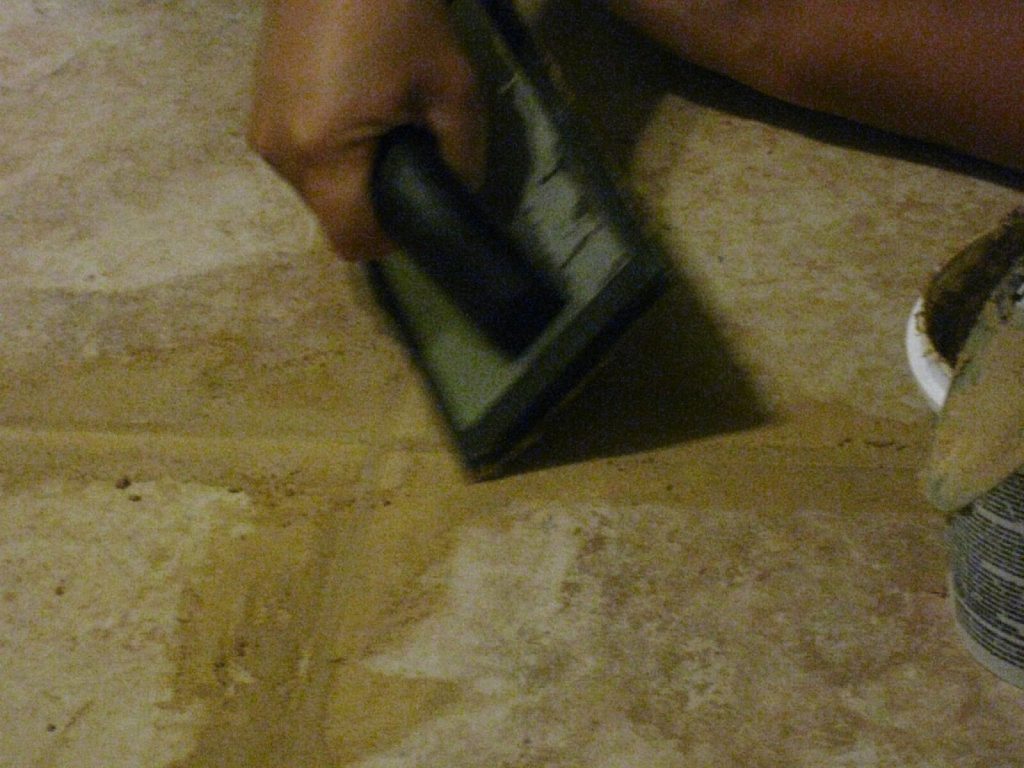
How long does grout take to dry? For the cement grouts most UK tilers use, the honest answer has three parts: about 3 hours before you can walk on a floor carefully, about 24 hours before the tiles are ready for normal use, and up to 2 weeks before you should run a shower over freshly grouted walls. Those figures come from the manufacturers’ own data sheets, and the gap between them is where most grout problems start.
This page sets out what each stage means, what the data sheets for two common grouts actually say, and what slows grout down in a cold or damp room. If you are still at the adhesive stage, read how long after tiling you can grout first, because grouting too early causes as much trouble as using the room too soon.
Grout drying times at a glance
“Dry” covers three different points, and data sheets quote them separately:
- Set (surface firm): the grout has hardened in the joint and will not smear if brushed. For a typical rapid-setting cement grout this is 2 to 3 hours at 20°C.
- Light foot traffic: you can walk across a grouted floor with care, in socks or soft shoes, without dragging furniture. Around 3 hours for rapid grouts.
- Ready for use or service: the grout can take normal wear, cleaning and splashes. Commonly 24 hours, with longer waits for anything that sits under water.
Full strength takes much longer. Grout strength figures on data sheets are measured after 28 days, which tells you the material keeps curing for weeks after it looks finished. Nothing needs to stop for 28 days, but heavy loads, harsh cleaners and constant soaking are best held back for the first fortnight.
What two common grout data sheets say
Product data sheets are the only reliable source, because drying times vary between brands and even between grouts from the same maker. Two widely sold cement grouts show the pattern.
Mapei Ultracolor Plus
Mapei’s technical data sheet, with figures measured at +23°C and 50% relative humidity, gives:
- Set to light foot traffic: approximately 3 hours.
- Ready for use: 24 hours, or 48 hours for basins and swimming pools.
- Application temperature range: +5°C to +35°C.
- Joint widths from 2 to 20mm, classified CG2WA under EN 13888 (an improved cement grout with reduced water absorption and high abrasion resistance).
The same sheet lists how long to wait after tiling before grouting: 4 to 8 hours on walls fixed with normal adhesive, and 24 hours on floors fixed with normal adhesive, cut to 1 to 2 hours and 3 to 4 hours respectively with fast-setting adhesive.
BAL Micromax2
BAL’s data sheet for Micromax2, a wall and floor grout for joints of 1 to 20mm, gives a set time of 2 to 3 hours at 20°C and says to wait a minimum of 3 hours before subjecting the tiles to normal service conditions. It also carries the line that matters most for bathrooms: do not use the shower for at least 2 weeks after completion of grouting, citing BS 5385 Part 4. BAL also says not to use it below 5°C.
Two brands, two slightly different sets of numbers, and one shared message: hours for the surface, weeks for full water exposure. If your grout is a different product, find its data sheet on the manufacturer’s site or the retailer listing before you plan the job.
Why showers need the longest wait
A shower is the hardest test grout faces. Water hits it at pressure, sits on it, runs behind it and keeps it damp for hours a day. Cement grout that has only set on the surface is still curing underneath, and constant soaking in that period can weaken it, wash out pigment and leave the joint more porous than it should be. That is why the shower wait in BAL’s guidance is weeks rather than hours.
In practice this means planning the order of work. If the shower is your only one, a short wait still beats a regrout in six months. Where you need to shower sooner, ask your tiler about the specific product they are using: some rapid and epoxy grouts are designed for quicker return to wet service, and their data sheets say so in writing. Do not assume.
Silicone at the tray and corners is a separate product with its own cure time, covered in how long bathroom silicone takes to dry. If you are tiling a shower from scratch, the full sequence is in how to tile a shower.
What slows grout down
Data sheet times assume a warm, dry room: 20°C or 23°C and around 50% humidity. A Bromley bathroom in November is rarely that. The main things that stretch drying times:
- Cold. Cement chemistry slows as temperature drops. Both data sheets above set 5°C as the floor for application, and anything close to that will take noticeably longer than the printed figures. Keep the heating on, but do not aim a heater at the grout, which can dry the surface too fast and cause cracking.
- Humidity and poor ventilation. A sealed room with wet adhesive, wet grout and a bucket of water in it stays damp. Open a window or run the extractor once the grout has set.
- Wide or deep joints. A 10mm floor joint holds far more material than a 2mm wall joint and takes longer to firm up through its depth.
- Too much water in the mix. Extra water makes grout easier to spread and weaker once cured, with more shrinkage and a higher chance of powdery or cracked joints. Mix to the ratio printed on the bag.
- Heavy sponging. Washing the joints with a wet sponge too early pulls cement out of the surface. Wait until the grout has started to firm (BAL suggests about 15 minutes at 20°C before cleaning) and use a well-wrung sponge.
Hot conditions cause the opposite problem. BAL’s sheet says that above 25°C, porous tiles should have their joints dampened with clean water before grouting, so the tile body does not suck water out of the grout before it can cure.
When can you seal, clean and use the room?
A simple timeline for a cement-grouted bathroom, assuming normal room temperature and a rapid-setting grout like the two above:
- 15 to 30 minutes: first clean of excess grout from the tile faces with a damp sponge, once the joints have firmed.
- A few hours: polish off the remaining haze with a dry cloth. If you miss it, see how to remove grout haze.
- 3 hours: careful light foot traffic on floors.
- 24 hours: normal use of floors and splashbacks, wiping with plain water only.
- 2 weeks: showers back in use, following BAL’s guidance; check your own grout’s data sheet.
Sealing is product-specific. Most cement grouts must be fully dry before a penetrating sealer goes on, and the sealer’s instructions will state the wait. Many modern grouts with water-repellent additives do not need sealing at all for normal domestic use. Our page on how to seal grout and tiles explains when a sealer helps and when it is wasted money.
Epoxy grout follows different rules
Epoxy grout does not dry by losing water. It cures through a chemical reaction between resin and hardener, so humidity matters less and temperature matters more. It is popular for showers, kitchen worktops and pale grout colours because it resists staining and water once cured. Its working time is short, its clean-up is harder and its cure times are set by the product, so read the data sheet before you start. The pros and cons are in our epoxy grout page.
Frequently asked questions
How long does grout take to dry before you can walk on it?
For rapid cement grouts, around 3 hours for light foot traffic. Mapei gives approximately 3 hours for Ultracolor Plus, and BAL says to wait at least 3 hours before normal service for Micromax2. Stay off it for longer in a cold room.
How long after grouting can I use the shower?
BAL’s Micromax2 data sheet says at least 2 weeks after grouting is complete, citing BS 5385 Part 4. Some products state shorter times, so go by the data sheet for the grout you actually used.
Can I speed up grout drying with a heater or dehumidifier?
Gentle background heat and ventilation help. A heater pointed straight at the joints can dry the surface too quickly and cause cracking or a powdery finish. Keep the room warm and airy rather than hot.
Why is my grout still dark after a day?
Grout lightens as it dries, and a joint that stays dark usually still holds water. Cold, poor ventilation, a wet mix or deep joints are the usual causes. Give it more time before deciding the colour is wrong.
Does grout need to be sealed?
Not always. Many modern cement grouts include water-repellent additives, and epoxy grout is not sealed. Where a sealer is recommended, apply it only once the grout is fully dry, following the sealer’s instructions.
If you would rather have the job done once and properly, Bromley Tilers grout and regrout bathrooms and kitchens across Bromley and south east London.
Related guides
- How to Tile a Bathroom Wall: A UK Step-by-Step Guide
- How Much Does Tiling Cost in the UK? A Realistic Price Guide
- How to Remove Old Wall Tiles Without Damaging the Wall
- Porcelain vs Ceramic Tiles: Which Is Right for Your Bathroom or Kitchen?
- How to Tank and Waterproof a Wet Room Before Tiling: A Bromley Homeowner’s Guide
- Do You Need to Seal Natural Stone Tiles Before Grouting? A Tiler Explains
- How to Tile a Bathroom Floor (Including Around the Toilet)
- How to Tile a Shower: Walls, Niche and Waterproofing
- Construction Trade News: June 2026
- Bathroom Tiling Guide: How to Plan, Prep and Finish a Lasting Job
- Tile Backer Board vs Plasterboard for Bathrooms
- Best Tiles for Small Bathrooms (and How to Make a Space Look Bigger)
- Wall and Floor Tiles for a Wet Room: What Actually Works
- Tiling vs Wall Panels for a Bathroom: Which Is Better?
- Do You Tile the Floor or Walls First in a Bathroom?
- Tiling and Bathroom Trade News: Mid-June 2026
- Kitchen Tiling: Splashbacks, Walls and Floors Explained
- How to Tile a Kitchen Splashback: Step-by-Step Bromley Guide
- How to Tile Around Kitchen Sockets, Switches and Worktops
- Kitchen Splashback Tile Ideas: 12 Looks That Work
- Tiling and Bathroom Trade News: Late June 2026
- How to Lay Metro Tiles in a Herringbone Pattern
- Tiled vs Glass Splashback (and Acrylic): Which Is Best?
- How High Should a Kitchen Splashback Be Tiled? UK Heights Guide
- Tiling and Bathroom Trade News: Early July 2026
- Types of Tiles: The Complete UK Buyer’s Guide
- Porcelain vs Natural Stone Tiles: Which Should You Choose?
- Natural Stone Tiles Explained: Marble, Travertine, Slate and Limestone
- Tiling and Bathroom Trade News: Mid-July 2026
- Mosaic Tiles: Where to Use Them and How They’re Fixed
- Tile Slip Ratings Explained: R Ratings and PTV for UK Floors
- Matt vs Gloss Tiles: Which Finish Is Right for Your Room?
- Cost to Tile a Bathroom in the UK: 2026 Price Breakdown
- Polystyrene Ceiling Tiles: Are They Any Good?
- Cost to Tile a Kitchen in 2026: Floor and Splashback Prices
- Tiling and Bathroom Trade News: Mid-July 2026
- Tiling Cost Per Square Metre 2026: Labour and All-In Prices
- Tiler Day Rate UK: What Tilers Charge Per Day in 2026
- Cost to Regrout a Bathroom in 2026: UK Prices Explained
- Floor Tile Prices UK 2026: What You Will Pay Per Square Metre
- Is It Cheaper to Tile or Use Wall Panels? A UK Cost Comparison
- How to Tile: A Complete Beginner’s Guide (UK)
- How to Cut Tiles: Manual Cutter, Wet Saw and Nippers
- How to Cut Holes in Tiles for Pipes and Taps
- How to Grout Tiles (and Get Clean, Even Lines)
- Cork Flooring: Pros, Cons and Where It Works in UK Homes
- Tiling and Bathroom Trade News: Late July 2026
- How to Mix and Apply Tile Adhesive Correctly
- How to Set Out Tiles for a Perfect Layout
- How to Seal Grout and Tiles in a Bathroom (UK Guide)
- Can You Tile Over Tiles? When It Works and When It Doesn’t
- Tiling Tools List: What You Need for a Professional Finish
- How Much Tile Adhesive Do I Need? Coverage Per Square Metre
- Tiling Trade News: Topps App, Costs Up 6% (Aug 2026)
- Tile Problems: 9 Common Faults and How to Fix Each
- How to Fix Loose Tiles Without Removing Them
- Cracked Grout Repair: Why It Happens and How to Fix It
- Tiling Trade News: TTA Silica Warning, 2% Retentions
- How to Replace a Broken Tile Without Redoing the Wall
- Water Leaking Through Shower Tiles: 6 Causes and Fixes
- Remove Mouldy Silicone Sealant: A 24-Hour Reseal Job
- How to Clean Grout: What Works, and What Etches Stone
- Why Are My Floor Tiles Lifting? The 40m² Bay Rule
- Tiling Trade News: 3,841 Construction Firms Failed
- How to Lay Porcelain Paving: 1:80 Fall, 150mm Below DPC
- Tile Patterns: Why Big Tiles Need a One-Third Offset
- Grout Colour Ideas: How to Get the Shade You Chose
- Can You Paint Tiles? Yes on Walls, No in the Shower
- Decoupling Membrane for Tiles: When You Actually Need One
- Can You Tile Over a Wooden Floor? What Changed in 2024
- Tiling Cost 2026: £25 to £95 per m² Labour, UK Rates
- Tile Ideas: 7 Looks and the One Rule Each Needs
- Metro Tiles: Sizes, Bevels and the 1/3 Offset Rule
- Tile Feature Wall: The Weight Limit That Decides Yours
- Tiling Over Underfloor Heating: 14 Days Before Heat On
- How to Tile a Hallway Floor: Set Out From the Door
- Wood Effect Tiles and Marble Effect: 5 Specs to Check
- Tile Levelling Systems: The 3mm Rule That Decides It
- Tiling Trade News: Repair Work Up 1.7%, Headlam Fails
- Floor Levelling Compound: How Deep and How Long to Dry
- How to Find a Good Tiler: 9 Checks Before You Book
- Tiling Quote: The 10 Lines a Proper One Must Show
- Tile Trim: Sizes, Profiles and the One-Size-Up Rule
- Tile Spacers: 2mm or 3mm, and When to Pull Them Out
- Tiling the Fireplace: 125mm Hearths, Adhesive and Tiles
- Tiling Trade News: Shaws Sinks Reprice on 1 November
- Porcelain vs Stone Paving: Grip, Sealing and Upkeep
- Tiling a Large Floor: Movement Joints Every 10 Metres
- DIY Tiling vs Professional: 6 Jobs to Never Do Yourself
- Terracotta Tiles: Seal Before Grouting, Wait 7 Days
- Tile Drill Bits: Which Bit Won’t Crack Porcelain
- Tiling Corners With Trim: Which Profile, and When to Mitre
- Travertine Tiles: Filled or Unfilled, and How to Seal Them
- Slate Tiles: Calibrated or Riven, and How to Lay Them
- Zellige Tiles: Order 15% Extra and Fix Them Edge to Edge
- Terrazzo Tiles: Real 20mm vs Porcelain, Seal Before Grouting
- Tiling Trade News: 36% Now Add a Bathroom Accent Wall
- Split Face Tiles: Will Your Wall Take 27kg per m²?
- Tile Sealer: Which Tiles Need It and Which Type to Buy
- How to Remove Grout Haze: Which Cleaner for Which Grout
- Efflorescence on Tiles: Why It Comes Back and How to Stop It
- Tile Primer: Which Surfaces Need It and How Much to Dilute
- Epoxy Grout: Where It’s Worth It and How to Apply It
- How to Tile Stairs: Keep Every Riser the Same Height
- Shower Niche: Sizes, Height and Which Wall Can Take One
- How Many Tiles Do I Need? Add 10% to 20% by Layout
- How to Tile a Window Sill: Sill Last, Silicone at the Frame
- Tiling Trade News: Victorian Plumbing Tile Sales Up 76%
- How to Tile Around a Toilet: Lift the Pan or Cut Round It
- Tile to Carpet Transition: Pick the Strip by the Height Gap
- Tile Skirting: Leave a 6mm Gap and Seal, Never Grout
- Tile Backer Board: Cement or Foam, Which Thickness, Fixings
- Quarry Tiles: Seal Them or Not, and How to Clean Them
- Rapid Set Tile Adhesive vs Standard: 30 Mins or 24 Hours
- Can You Tile Onto Plaster? Yes, Up to 20kg per m²
- How to Tile a Balcony: 1.5-2% Fall, Drain Mat, 150mm Upstand
- Electric Tile Cutter: When You Need One and Which Disc
- Victorian Floor Tiles: Sizes, Repairs and When to Replace
- Marble Tiles: White Rapid-Set Adhesive, Seal Before Grouting
- Tiling on Anhydrite Screed: 0.5% Moisture, Sand, Then Prime
- Tiling Trade News: Domus Buyout After Headlam Collapse
- How High to Tile a Bathroom: 1.2m Line vs Floor to Ceiling
- Can You Tile Over Paint? Strip Emulsion, Key Gloss First
- Hollow Sounding Tiles: When to Leave Them, When to Lift
- Tile Movement Joints: Where They Go and the 10m Rule
- Tiling Trade News: Home Improvement Work to Fall 8%
- Outdoor Wall Tiles: 0.5% Absorption and a 100% Adhesive Bed
- Living Room Floor Tiles: Porcelain, Heating and the 3mm Rule
- Pink Tiles: Shades, Grout and Slip Ratings Before You Buy
- Cheap Tiles: 7 Checks Before You Buy From a Clearance Pile