


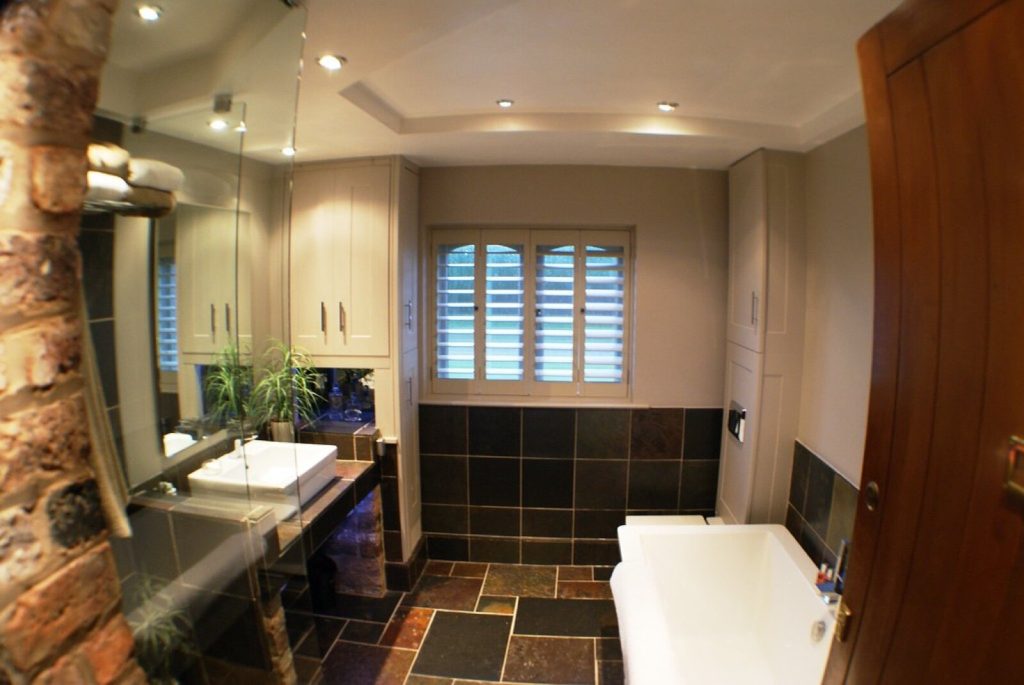
Deciding whether it is cheaper to tile or use panels comes down to more than the price on the shelf. For most UK bathrooms, wall panels work out cheaper to fit than tiles because there is far less labour involved, but tiles can be the better long-term value once you factor in how long each finish lasts. This guide breaks down the real cost of both, from materials and labour to the hidden extras people forget, so you can see which one actually saves you money on your project.
At Bromley Tilers we fit both, and the honest answer is that the cheapest option depends on the size of the room, the finish you want and how long you plan to stay in the house. Here is how the numbers stack up.
Tiling costs: materials plus a lot of labour
Tiling is a two-part cost. The tiles themselves span a wide range: budget ceramics start at a few pounds per square metre, mid-range porcelain sits higher, and natural stone or large-format porcelain runs to the top of the scale. On materials alone you can spend anywhere from roughly £5 to £60 per square metre before you add adhesive, grout, primer, trims and a tanking kit for wet areas.
The bigger number is labour. Tiling is skilled, slow work: setting out, cutting around pipes and sockets, fixing, then grouting and sealing on a separate visit. A professional tiler in the South East typically charges a day rate in the region of £150 to £250, and a full bathroom usually takes two to four days depending on the tile size, the pattern and how much cutting is involved. Small-format and herringbone layouts take longer and cost more; large-format tiles cover ground faster but need a dead-flat wall and a levelling system.
So a tiled bathroom is rarely a cheap job. The finish is superb and long-lasting, but you are paying for craftsmanship and time.
Wall panel costs: cheaper to fit, quicker to finish
Bathroom wall panels come in two broad families. PVC panels are the budget end, typically £30 to £70 per square metre, and they tongue-and-groove together with no grout. Laminate and composite boards, from brands such as Multipanel, Nuance and Showerwall, cost more per board but give a seamless, high-end stone or marble-effect finish over a waterproof core.
The saving is in the fitting. Panels go straight onto a sound, flat wall or onto battens, bonded and sealed at the joints. There is no grouting stage, no drying between coats and far less cutting. A competent fitter can panel a shower enclosure or a small bathroom in a day, sometimes less, which is where the labour saving really shows. Fewer days on site means a lower bill even when the boards themselves are not especially cheap.
Look for panels carrying a British Board of Agrément (BBA) certificate, which confirms the product has been independently assessed for use in wet areas. You can check a product’s certification on the BBA website.
Tiles vs panels: a like-for-like cost comparison
For a typical UK bathroom, here is how the two compare on the things that drive the final bill:
| Factor | Tiles | Wall panels |
|---|---|---|
| Material cost | £5 to £60 per m² plus adhesive, grout, trims and tanking | £30 to £70 per m² for PVC; more for laminate boards |
| Labour | Higher: 2 to 4 days for a bathroom, plus a return visit to grout | Lower: often a single day, no grouting stage |
| Waterproofing | Needs tanking behind tiles in showers and wet rooms | Waterproof board, sealed at the joints |
| Typical installed saving | Baseline | Often 20 to 50 per cent less to install |
| Lifespan | 30 years or more if fitted well | Around 10 to 20 years |
On the upfront installed cost, panels usually win. Because the labour is so much lighter, a panelled shower or bathroom often comes in 20 to 50 per cent cheaper than the same room tiled to a good standard. If your budget is tight or you need the room back in use quickly, panels are the cheaper route.
Where tiles are the better value
Cheaper to fit is not the same as cheaper to own. Tiles last decades and shrug off knocks, heat and scrubbing, so a well-tiled bathroom may never need redoing while you live there. Panels have a shorter service life and a laminate or PVC surface can scratch, and if one board is damaged you often cannot swap a single section as easily as replacing one cracked tile.
Tiles also add more to a home’s perceived value and give you unlimited design freedom: patterns, borders, mosaics, feature walls and genuine natural stone. Panels are catching up on looks, but a fully tiled bathroom still reads as the premium finish to most buyers. If you are staying put for years, or you are renovating to sell at the top of the local market, the longer life and stronger appeal can make tiling the better value despite the higher day-one cost.
Which is cheaper for your bathroom?
Use this quick rule of thumb. Choose panels if you want the lowest installed cost, a fast turnaround, a grout-free surface that wipes clean, or you are fitting out a rental or a shower enclosure. Choose tiles if you want the longest-lasting finish, the widest design choice, the best resale appeal, or you are tiling a large floor where panels are not an option anyway.
Many of our Bromley customers mix the two: panels in the shower for speed and easy cleaning, tiles on the floor and a feature area for durability and looks. That hybrid approach often gives the best balance of cost, practicality and finish. Whichever way you lean, get a written quote that separates materials from labour so you can see exactly where your money is going.
Frequently asked questions
Is it cheaper to tile or use panels in a shower?
In a shower, panels are almost always cheaper to fit. A shower enclosure is a small, awkward area with lots of cutting for tiles, but panels bond straight to the wall and need no grouting, so the labour cost drops sharply. Tiles still last longer, but for upfront cost panels win in a shower.
Do wall panels need waterproofing behind them like tiles?
Panels are made from a waterproof core, so you do not tank the wall behind them the way you must behind tiles in a shower or wet room. The waterproofing that matters with panels is the sealed joints and edges, which is why a clean, careful fit is important.
How long do bathroom wall panels last compared with tiles?
Good-quality panels typically last around 10 to 20 years, while a well-fitted tiled wall can last 30 years or more. That longer life is the main reason tiles can be better value over time even though they cost more to install.
Are panels or tiles easier to keep clean?
Panels are easier day to day because there is no grout to scrub, stain or reseal. A smooth panel wipes down in seconds. Tiles look sharper for longer only if you keep the grout clean and sealed, which is ongoing work.
Can you put wall panels over existing tiles?
Yes, in many cases panels can be fitted over sound, well-stuck existing tiles, which saves the cost and mess of ripping the old tiles off. The wall must be flat and secure first. This is one reason a panel refresh can be so much cheaper than re-tiling from scratch.
Which adds more value to a home, tiles or panels?
Tiles generally add more perceived value and appeal to buyers, especially natural stone or a well-designed feature wall. Panels are a practical, cost-effective finish but tend to read as the budget option, so for resale a tiled bathroom usually has the edge.
Related guides
- How to Tile a Bathroom Wall: A UK Step-by-Step Guide
- How Much Does Tiling Cost in the UK? A Realistic Price Guide
- How to Remove Old Wall Tiles Without Damaging the Wall
- Porcelain vs Ceramic Tiles: Which Is Right for Your Bathroom or Kitchen?
- How to Tank and Waterproof a Wet Room Before Tiling: A Bromley Homeowner’s Guide
- Do You Need to Seal Natural Stone Tiles Before Grouting? A Tiler Explains
- How to Tile a Bathroom Floor (Including Around the Toilet)
- How to Tile a Shower: Walls, Niche and Waterproofing
- Construction Trade News: June 2026
- Bathroom Tiling Guide: How to Plan, Prep and Finish a Lasting Job
- Tile Backer Board vs Plasterboard for Bathrooms
- Best Tiles for Small Bathrooms (and How to Make a Space Look Bigger)
- Wall and Floor Tiles for a Wet Room: What Actually Works
- Tiling vs Wall Panels for a Bathroom: Which Is Better?
- Do You Tile the Floor or Walls First in a Bathroom?
- Tiling and Bathroom Trade News: Mid-June 2026
- Kitchen Tiling: Splashbacks, Walls and Floors Explained
- How to Tile a Kitchen Splashback: Step-by-Step Bromley Guide
- How to Tile Around Kitchen Sockets, Switches and Worktops
- Kitchen Splashback Tile Ideas: 12 Looks That Work
- Tiling and Bathroom Trade News: Late June 2026
- How to Lay Metro Tiles in a Herringbone Pattern
- Tiled vs Glass Splashback (and Acrylic): Which Is Best?
- How High Should a Kitchen Splashback Be Tiled? UK Heights Guide
- Tiling and Bathroom Trade News: Early July 2026
- Types of Tiles: The Complete UK Buyer’s Guide
- Porcelain vs Natural Stone Tiles: Which Should You Choose?
- Natural Stone Tiles Explained: Marble, Travertine, Slate and Limestone
- Tiling and Bathroom Trade News: Mid-July 2026
- Mosaic Tiles: Where to Use Them and How They’re Fixed
- Tile Slip Ratings Explained: R Ratings and PTV for UK Floors
- Matt vs Gloss Tiles: Which Finish Is Right for Your Room?
- Cost to Tile a Bathroom in the UK: 2026 Price Breakdown
- Polystyrene Ceiling Tiles: Are They Any Good?
- Cost to Tile a Kitchen in 2026: Floor and Splashback Prices
- Tiling and Bathroom Trade News: Mid-July 2026
- Tiling Cost Per Square Metre 2026: Labour and All-In Prices
- Tiler Day Rate UK: What Tilers Charge Per Day in 2026
- Cost to Regrout a Bathroom in 2026: UK Prices Explained
- Floor Tile Prices UK 2026: What You Will Pay Per Square Metre
- How to Tile: A Complete Beginner’s Guide (UK)
- How to Cut Tiles: Manual Cutter, Wet Saw and Nippers
- How to Cut Holes in Tiles for Pipes and Taps
- How to Grout Tiles (and Get Clean, Even Lines)
- Cork Flooring: Pros, Cons and Where It Works in UK Homes
- Tiling and Bathroom Trade News: Late July 2026
- How to Mix and Apply Tile Adhesive Correctly
- How to Set Out Tiles for a Perfect Layout
- How to Seal Grout and Tiles in a Bathroom (UK Guide)
- Can You Tile Over Tiles? When It Works and When It Doesn’t
- Tiling Tools List: What You Need for a Professional Finish
- How Much Tile Adhesive Do I Need? Coverage Per Square Metre
- Tiling Trade News: Topps App, Costs Up 6% (Aug 2026)
- Tile Problems: 9 Common Faults and How to Fix Each
- How to Fix Loose Tiles Without Removing Them
- Cracked Grout Repair: Why It Happens and How to Fix It
- Tiling Trade News: TTA Silica Warning, 2% Retentions
- How to Replace a Broken Tile Without Redoing the Wall
- Water Leaking Through Shower Tiles: 6 Causes and Fixes
- Remove Mouldy Silicone Sealant: A 24-Hour Reseal Job
- How to Clean Grout: What Works, and What Etches Stone
- Why Are My Floor Tiles Lifting? The 40m² Bay Rule
- Tiling Trade News: 3,841 Construction Firms Failed
- How to Lay Porcelain Paving: 1:80 Fall, 150mm Below DPC
- Tile Patterns: Why Big Tiles Need a One-Third Offset
- Grout Colour Ideas: How to Get the Shade You Chose
- Can You Paint Tiles? Yes on Walls, No in the Shower
- Decoupling Membrane for Tiles: When You Actually Need One
- Can You Tile Over a Wooden Floor? What Changed in 2024
- Tiling Cost 2026: £25 to £95 per m² Labour, UK Rates
- Tile Ideas: 7 Looks and the One Rule Each Needs
- Metro Tiles: Sizes, Bevels and the 1/3 Offset Rule
- Tile Feature Wall: The Weight Limit That Decides Yours
- Tiling Over Underfloor Heating: 14 Days Before Heat On
- How to Tile a Hallway Floor: Set Out From the Door
- Wood Effect Tiles and Marble Effect: 5 Specs to Check
- Tile Levelling Systems: The 3mm Rule That Decides It
- Tiling Trade News: Repair Work Up 1.7%, Headlam Fails
- Floor Levelling Compound: How Deep and How Long to Dry
- How to Find a Good Tiler: 9 Checks Before You Book
- Tiling Quote: The 10 Lines a Proper One Must Show
- Tile Trim: Sizes, Profiles and the One-Size-Up Rule
- Tile Spacers: 2mm or 3mm, and When to Pull Them Out
- Tiling the Fireplace: 125mm Hearths, Adhesive and Tiles
- Tiling Trade News: Shaws Sinks Reprice on 1 November
- Porcelain vs Stone Paving: Grip, Sealing and Upkeep
- Tiling a Large Floor: Movement Joints Every 10 Metres
- DIY Tiling vs Professional: 6 Jobs to Never Do Yourself
- Terracotta Tiles: Seal Before Grouting, Wait 7 Days
- Tile Drill Bits: Which Bit Won’t Crack Porcelain
- Tiling Corners With Trim: Which Profile, and When to Mitre