


An uncoupling membrane is a thin plastic or fleece mat bonded between the subfloor and the tiles, so the two layers can move slightly without the movement cracking the tiles or grout. If you are tiling onto plywood, a new screed, an anhydrite screed or a floor with underfloor heating, it is often the cheapest insurance you can buy. The current British Standard for floor tiling, BS 5385-3:2024, now says that tiling onto plywood and other wood-based boards should have an intermediate layer, and an uncoupling membrane is one of the named options.
What an uncoupling membrane does
Every subfloor moves. Timber swells and shrinks with humidity, new screeds shrink as they dry, heated floors expand and contract every day, and floors built from different materials move at different rates where they meet. Tiles and grout are rigid. When the floor underneath moves sideways and the tiles cannot, the stress has to go somewhere, and it usually goes into a crack along a board joint or a debonded tile that sounds hollow.
A membrane breaks that direct bond. Schlüter describes its DITRA mat as neutralising the stresses between the substrate and the tile covering and bridging tension cracks so they do not reach the tiles.
The key word is lateral. A membrane deals with sideways movement in the plane of the floor. It does not stop a floor bouncing up and down.
When a tiled floor needs one
These are the jobs where we would expect to see a membrane specified:
- Plywood or chipboard floors. BS 5385-3:2024 no longer recommends timber boards as a base for direct tiling, and for plywood and wood-based boards it calls for an intermediate layer such as an uncoupling membrane, a reinforced tanking system or tile backer board. The Tile Association summarised the change when the standard was published on 30 May 2024.
- New cement screeds. The normal rule is 28 days of curing and a moisture content below 2 CM% before tiling. Schlüter says that with DITRA, tiles can go down on a green cement screed as soon as it can bear weight, because the mat absorbs the cracks and deformation that come later.
- Anhydrite (gypsum) screeds. Without a membrane the screed should be at or below 0.5 CM% residual moisture before tiling. Schlüter permits tiling over DITRA from 2 CM%. The screed surface still needs sanding and priming as normal; our page on tiling on anhydrite screed covers that preparation.
- Heated floors. Both wet systems in screed and thin electric mats put the floor through daily expansion cycles.
- Mixed substrates. Extensions where a new screed meets an old concrete slab, or a floor patched with different materials, tend to crack along the join.
- Balconies and terraces. Sun and frost swing the temperature far more than indoors. See how to tile a balcony for falls and drainage, which a membrane does not replace.
On a sound, fully cured concrete slab in a ground floor room with no heating, a membrane is usually optional. A good flexible adhesive and properly placed movement joints will normally do the job.
When a membrane will not save the floor
The most common mistake is treating a membrane as a fix for a weak floor. Instarmac’s guidance is direct: uncoupling mats accommodate lateral movement but are not designed to withstand vertical movement, so subfloors must be braced to make them sound and strong. If the floor flexes when you jump on it, the answer is noggins, extra screws, thicker boards or an overlay of plywood, and the membrane goes on top of that.
Before laying any membrane on a timber floor, check:
- Every board is screwed down at close centres. Replace any damaged boards rather than packing them.
- The floor is level. Schlüter is clear that any levelling, height adjustment or slope correction has to be done before the mat goes down, not in the adhesive bed above it.
- There is ventilation under suspended timber floors. Instarmac requires adequate underfloor ventilation so the timber does not move with humidity after the tiles are down.
- For plywood and chipboard, Schlüter recommends boards with a water-repellent treatment, tongue and groove joints that are fully sealed, and a perimeter movement gap of about 10 mm where the floor meets walls.
BS 5385-3 also says timber is not a suitable base for tiled floors in areas that may become wet or frequently damp.
Cavity mats and thin mats: the two types
Membranes sold in the UK fall into two broad groups.
Cavity (studded) mats
Schlüter-DITRA is the best known. It is a polypropylene sheet with square, dovetailed recesses on top and an anchoring fleece on the underside, about 3.5 mm thick across the studs. The adhesive locks into the dovetails, and the air channels left open underneath allow vapour pressure to equalise if moisture comes up from below. The recesses also carry the load straight down to the subfloor, which is why Schlüter sets a minimum tile size of 5 x 5 cm and a minimum tile thickness of 5.5 mm for floors laid over it.
Thin bonded mats
BAL Rapid-Mat is an example of the thin type: BAL lists it as less than 1 mm thick, says it uses 20% less adhesive than cavity mat systems, and says it can be tiled immediately. It suits jobs where every millimetre of height matters. BAL also makes Flexbone 2Easy, which is loose laid with no adhesive underneath, and Flexbone VAried, a high load-bearing mat for substrates with limited movement.
Whichever type you use, stay within one manufacturer’s system: their mat, their recommended adhesive and their guarantee conditions.
How an uncoupling membrane goes down
The sequence below follows the Schlüter DITRA data sheet and Instarmac’s general method. Always check the instructions for the product you are using.
- Prepare and prime. The substrate must be level, rigid, load-bearing, clean and dust free. Vacuum it and use the adhesive maker’s tile primer where required.
- Dry lay and cut first. Cut the mat to fit the room before you mix any adhesive.
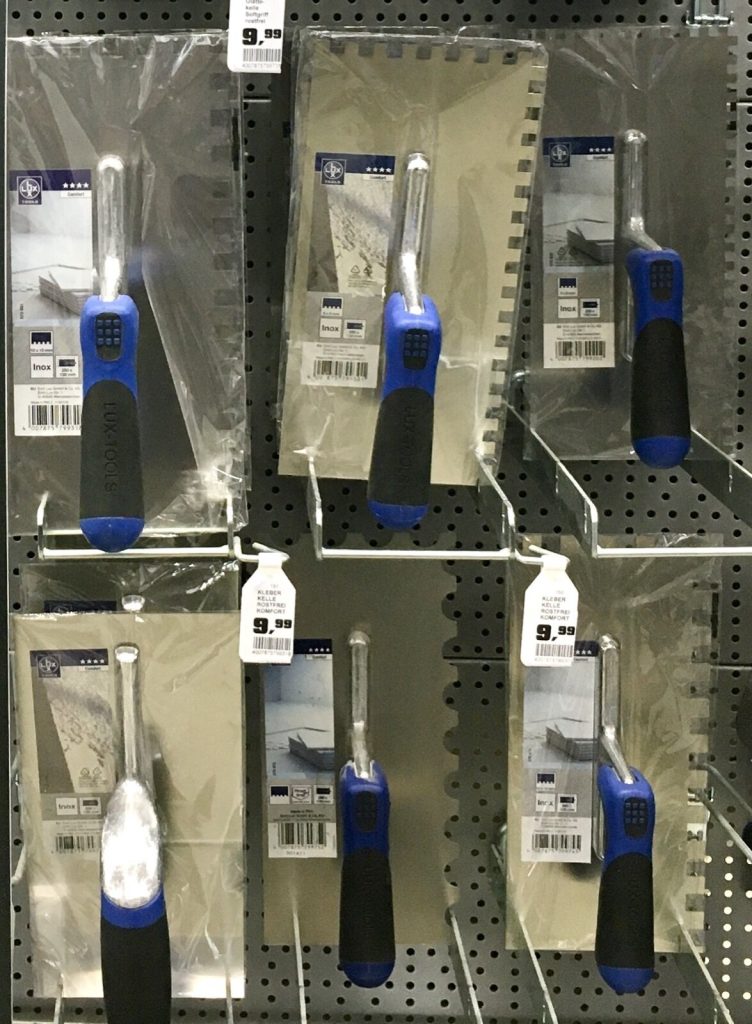
- Bed the fleece. Spread a flexible cementitious adhesive with a 3 x 3 mm or 4 x 4 mm notched trowel. Schlüter gives roughly 1.5 kg of adhesive per m² for this layer. Lay the mat fleece side down and press it in with a float or roller, working in one direction, so the fleece is fully embedded.
- Butt the joints. Lay sheets tight together edge to edge, not overlapping.
- Fill, then comb. For a cavity mat, fill the recesses with the flat side of the trowel first (about 2.0 kg/m² on DITRA), then comb a fresh bed with a notch sized for your tiles. You can start tiling straight away using the thin-bed method.
- Use the right adhesive for big tiles. For tiles with any side over 30 cm, Schlüter recommends a rapid-setting adhesive that binds its water quickly. Make sure every tile has solid bed coverage.
- Grout with a flexible grout.
Uncoupling membranes and underfloor heating
Membranes and heated floors are a natural pairing, but the order of layers matters.
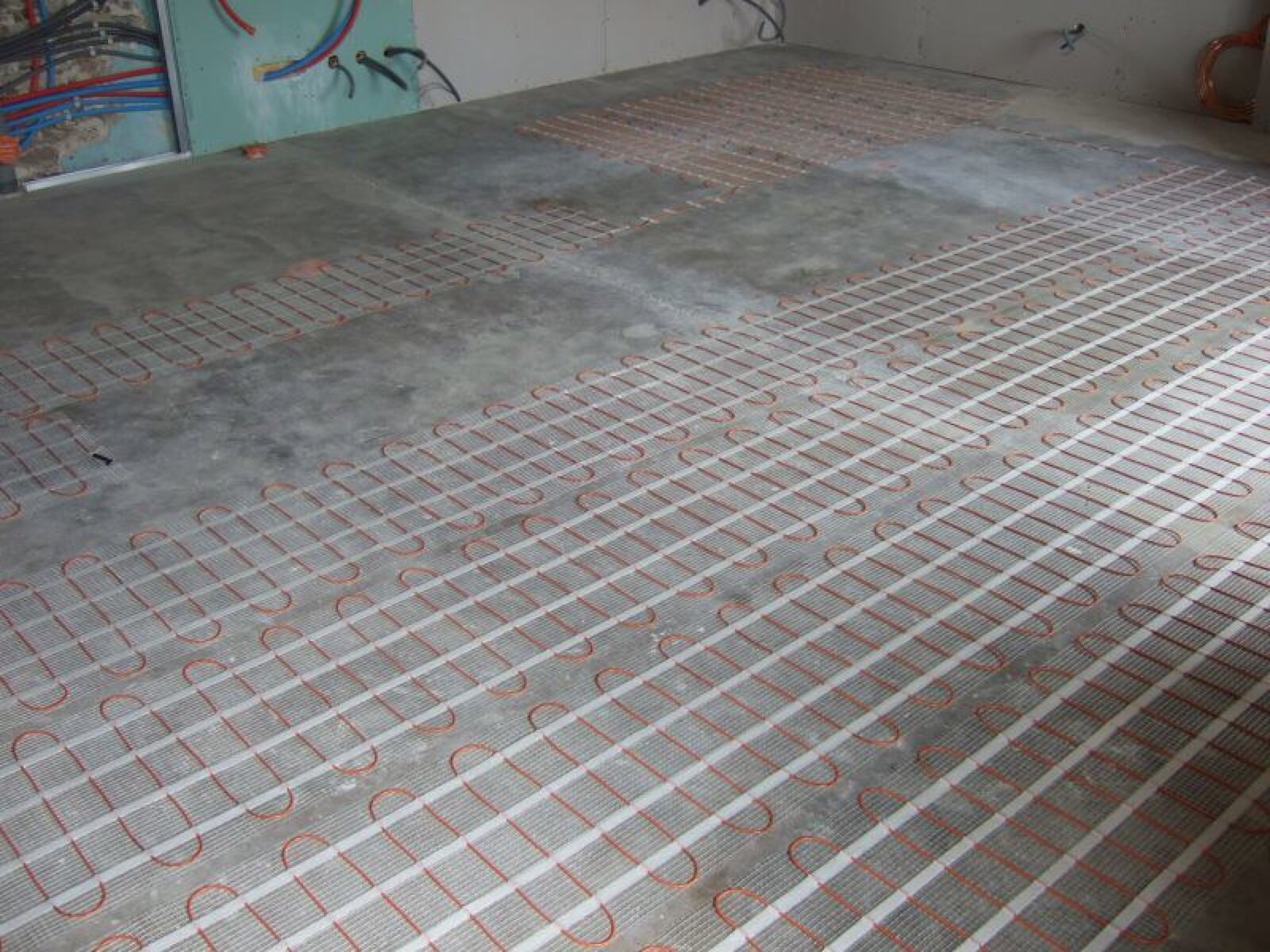
With a thin electric mat, Schlüter says DITRA can go above or below the heating mat, but above gives better uncoupling. Keep the bedding over the heating mat to no more than 10 mm. Schlüter also makes DITRA-HEAT, a mat designed to hold the heating cables itself, so the cable and uncoupling layer are one product.
On a heated screed, Schlüter says the assembly is ready for heating 7 days after completion, starting from 25°C and raising the flow temperature by no more than 5°C a day up to a maximum of 40°C. More in tiling over underfloor heating.
Movement joints and waterproofing over a membrane
A membrane does not remove the need for movement joints. Carry perimeter joints round every wall and fixed upstand, and where the subfloor already has a movement or expansion joint, cut the membrane at that point and bring the joint through the tiles above it.
Some cavity mats can also form part of a waterproof floor. Schlüter says DITRA becomes a bonded waterproofing assembly only when the joints between sheets and the junctions with walls are sealed with its own sealing band, KERDI-KEBA, embedded at least 12.5 cm wide over the joints. A membrane with open joints is not tanking. For showers and wet rooms, plan the waterproofing as a separate job.
One last point that catches people out: Schlüter notes that tiles over DITRA can sound hollow when you walk on them in hard shoes or tap them. That sound alone is not a fault. If you want to know when a hollow tile is a real problem, read our page on hollow sounding tiles.
Frequently asked questions
Do I need an uncoupling membrane on plywood?
Under BS 5385-3:2024, tiling onto plywood and other wood-based boards should have an intermediate layer, and an uncoupling membrane is one of the accepted options alongside reinforced tanking and tile backer board. The plywood itself still needs to be rigid, well screwed and level.
Can I tile straight onto an uncoupling membrane?
Yes. Schlüter says tiles can be laid on DITRA immediately after the mat is bonded, and BAL says Rapid-Mat may be tiled immediately. For cavity mats, fill the recesses with the flat side of the trowel first, then comb the bed for the tiles.
Will a membrane stop a bouncy floor cracking my tiles?
No. Membranes absorb sideways movement, not vertical deflection. A floor that flexes needs bracing, extra fixings or an overlay first, then the membrane on top.
Is an uncoupling membrane waterproof?
Some are, but only as part of a sealed system. DITRA counts as waterproofing only when its joints and wall junctions are sealed with the matching sealing band. With open joints it should not be treated as tanking.
How thick is an uncoupling membrane?
It depends on the type. Schlüter-DITRA is about 3.5 mm across the studs, while thin mats such as BAL Rapid-Mat are under 1 mm. Add the adhesive bed below and above when working out finished floor height.
Can I lay a membrane on a screed that is not fully dry?
Some manufacturers allow it. Schlüter permits tiling over DITRA on a green cement screed once it can bear weight, and on an anhydrite screed from 2 CM% moisture instead of 0.5 CM%. Check the drying rules in how long screed takes to dry before tiling and follow your chosen product’s data sheet.
If you are in Bromley or south east London and want a floor tiled over timber, a new extension screed or underfloor heating, Bromley Tilers can check the subfloor and specify the right build-up before a single tile goes down. Sources: The Tile Association on BS 5385-3:2024 and the Schlüter-DITRA product data.
Related guides
- How to Tile a Bathroom Wall: A UK Step-by-Step Guide
- How Much Does Tiling Cost in the UK? A Realistic Price Guide
- How to Remove Old Wall Tiles Without Damaging the Wall
- Porcelain vs Ceramic Tiles: Which Is Right for Your Bathroom or Kitchen?
- How to Tank and Waterproof a Wet Room Before Tiling: A Bromley Homeowner’s Guide
- Do You Need to Seal Natural Stone Tiles Before Grouting? A Tiler Explains
- How to Tile a Bathroom Floor (Including Around the Toilet)
- How to Tile a Shower: Walls, Niche and Waterproofing
- Construction Trade News: June 2026
- Bathroom Tiling Guide: How to Plan, Prep and Finish a Lasting Job
- Tile Backer Board vs Plasterboard for Bathrooms
- Best Tiles for Small Bathrooms (and How to Make a Space Look Bigger)
- Wall and Floor Tiles for a Wet Room: What Actually Works
- Tiling vs Wall Panels for a Bathroom: Which Is Better?
- Do You Tile the Floor or Walls First in a Bathroom?
- Tiling and Bathroom Trade News: Mid-June 2026
- Kitchen Tiling: Splashbacks, Walls and Floors Explained
- How to Tile a Kitchen Splashback: Step-by-Step Bromley Guide
- How to Tile Around Kitchen Sockets, Switches and Worktops
- Kitchen Splashback Tile Ideas: 12 Looks That Work
- Tiling and Bathroom Trade News: Late June 2026
- How to Lay Metro Tiles in a Herringbone Pattern
- Tiled vs Glass Splashback (and Acrylic): Which Is Best?
- How High Should a Kitchen Splashback Be Tiled? UK Heights Guide
- Tiling and Bathroom Trade News: Early July 2026
- Types of Tiles: The Complete UK Buyer’s Guide
- Porcelain vs Natural Stone Tiles: Which Should You Choose?
- Natural Stone Tiles Explained: Marble, Travertine, Slate and Limestone
- Tiling and Bathroom Trade News: Mid-July 2026
- Mosaic Tiles: Where to Use Them and How They’re Fixed
- Tile Slip Ratings Explained: R Ratings and PTV for UK Floors
- Matt vs Gloss Tiles: Which Finish Is Right for Your Room?
- Cost to Tile a Bathroom in the UK: 2026 Price Breakdown
- Polystyrene Ceiling Tiles: Are They Any Good?
- Cost to Tile a Kitchen in 2026: Floor and Splashback Prices
- Tiling and Bathroom Trade News: Mid-July 2026
- Tiling Cost Per Square Metre 2026: Labour and All-In Prices
- Tiler Day Rate UK: What Tilers Charge Per Day in 2026
- Cost to Regrout a Bathroom in 2026: UK Prices Explained
- Floor Tile Prices UK 2026: What You Will Pay Per Square Metre
- Is It Cheaper to Tile or Use Wall Panels? A UK Cost Comparison
- How to Tile: A Complete Beginner’s Guide (UK)
- How to Cut Tiles: Manual Cutter, Wet Saw and Nippers
- How to Cut Holes in Tiles for Pipes and Taps
- How to Grout Tiles (and Get Clean, Even Lines)
- Cork Flooring: Pros, Cons and Where It Works in UK Homes
- Tiling and Bathroom Trade News: Late July 2026
- How to Mix and Apply Tile Adhesive Correctly
- How to Set Out Tiles for a Perfect Layout
- How to Seal Grout and Tiles in a Bathroom (UK Guide)
- Can You Tile Over Tiles? When It Works and When It Doesn’t
- Tiling Tools List: What You Need for a Professional Finish
- How Much Tile Adhesive Do I Need? Coverage Per Square Metre
- Tiling Trade News: Topps App, Costs Up 6% (Aug 2026)
- Tile Problems: 9 Common Faults and How to Fix Each
- How to Fix Loose Tiles Without Removing Them
- Cracked Grout Repair: Why It Happens and How to Fix It
- Tiling Trade News: TTA Silica Warning, 2% Retentions
- How to Replace a Broken Tile Without Redoing the Wall
- Water Leaking Through Shower Tiles: 6 Causes and Fixes
- Remove Mouldy Silicone Sealant: A 24-Hour Reseal Job
- How to Clean Grout: What Works, and What Etches Stone
- Why Are My Floor Tiles Lifting? The 40m² Bay Rule
- Tiling Trade News: 3,841 Construction Firms Failed
- How to Lay Porcelain Paving: 1:80 Fall, 150mm Below DPC
- Tile Patterns: Why Big Tiles Need a One-Third Offset
- Grout Colour Ideas: How to Get the Shade You Chose
- Can You Paint Tiles? Yes on Walls, No in the Shower
- Decoupling Membrane for Tiles: When You Actually Need One
- Can You Tile Over a Wooden Floor? What Changed in 2024
- Tiling Cost 2026: £25 to £95 per m² Labour, UK Rates
- Tile Ideas: 7 Looks and the One Rule Each Needs
- Metro Tiles: Sizes, Bevels and the 1/3 Offset Rule
- Tile Feature Wall: The Weight Limit That Decides Yours
- Tiling Over Underfloor Heating: 14 Days Before Heat On
- How to Tile a Hallway Floor: Set Out From the Door
- Wood Effect Tiles and Marble Effect: 5 Specs to Check
- Tile Levelling Systems: The 3mm Rule That Decides It
- Tiling Trade News: Repair Work Up 1.7%, Headlam Fails
- Floor Levelling Compound: How Deep and How Long to Dry
- How to Find a Good Tiler: 9 Checks Before You Book
- Tiling Quote: The 10 Lines a Proper One Must Show
- Tile Trim: Sizes, Profiles and the One-Size-Up Rule
- Tile Spacers: 2mm or 3mm, and When to Pull Them Out
- Tiling the Fireplace: 125mm Hearths, Adhesive and Tiles
- Tiling Trade News: Shaws Sinks Reprice on 1 November
- Porcelain vs Stone Paving: Grip, Sealing and Upkeep
- Tiling a Large Floor: Movement Joints Every 10 Metres
- DIY Tiling vs Professional: 6 Jobs to Never Do Yourself
- Terracotta Tiles: Seal Before Grouting, Wait 7 Days
- Tile Drill Bits: Which Bit Won’t Crack Porcelain
- Tiling Corners With Trim: Which Profile, and When to Mitre
- Travertine Tiles: Filled or Unfilled, and How to Seal Them
- Slate Tiles: Calibrated or Riven, and How to Lay Them
- Zellige Tiles: Order 15% Extra and Fix Them Edge to Edge
- Terrazzo Tiles: Real 20mm vs Porcelain, Seal Before Grouting
- Tiling Trade News: 36% Now Add a Bathroom Accent Wall
- Split Face Tiles: Will Your Wall Take 27kg per m²?
- Tile Sealer: Which Tiles Need It and Which Type to Buy
- How to Remove Grout Haze: Which Cleaner for Which Grout
- Efflorescence on Tiles: Why It Comes Back and How to Stop It
- Tile Primer: Which Surfaces Need It and How Much to Dilute
- Epoxy Grout: Where It’s Worth It and How to Apply It
- How to Tile Stairs: Keep Every Riser the Same Height
- Shower Niche: Sizes, Height and Which Wall Can Take One
- How Many Tiles Do I Need? Add 10% to 20% by Layout
- How to Tile a Window Sill: Sill Last, Silicone at the Frame
- Tiling Trade News: Victorian Plumbing Tile Sales Up 76%
- How to Tile Around a Toilet: Lift the Pan or Cut Round It
- Tile to Carpet Transition: Pick the Strip by the Height Gap
- Tile Skirting: Leave a 6mm Gap and Seal, Never Grout
- Tile Backer Board: Cement or Foam, Which Thickness, Fixings
- Quarry Tiles: Seal Them or Not, and How to Clean Them
- Rapid Set Tile Adhesive vs Standard: 30 Mins or 24 Hours
- Can You Tile Onto Plaster? Yes, Up to 20kg per m²
- How to Tile a Balcony: 1.5-2% Fall, Drain Mat, 150mm Upstand
- Electric Tile Cutter: When You Need One and Which Disc
- Victorian Floor Tiles: Sizes, Repairs and When to Replace
- Marble Tiles: White Rapid-Set Adhesive, Seal Before Grouting
- Tiling on Anhydrite Screed: 0.5% Moisture, Sand, Then Prime
- Tiling Trade News: Domus Buyout After Headlam Collapse
- How High to Tile a Bathroom: 1.2m Line vs Floor to Ceiling
- Can You Tile Over Paint? Strip Emulsion, Key Gloss First
- Hollow Sounding Tiles: When to Leave Them, When to Lift
- Tile Movement Joints: Where They Go and the 10m Rule
- Tiling Trade News: Home Improvement Work to Fall 8%
- Outdoor Wall Tiles: 0.5% Absorption and a 100% Adhesive Bed
- Living Room Floor Tiles: Porcelain, Heating and the 3mm Rule
- Pink Tiles: Shades, Grout and Slip Ratings Before You Buy
- Cheap Tiles: 7 Checks Before You Buy From a Clearance Pile
- How Long Does Grout Take to Dry? 3 Hours, 24 Hours, 2 Weeks
- Tile Lippage: How Much Is Acceptable and How to Fix It
- Tile Trowel Size: The Right Notch for Wall and Floor Tiles
- Shower Tray Before or After Tiling? Tray First, Tile Down
- Tiling in Cold Weather: The 5°C Rule and How to Beat It
- Limestone Tiles: Seal Before Grouting, Keep Acids Off